
AI content generation for SEO: boosting visibility effortlessly
AI Content Generation for SEO: Boosting Visibility Effortlessly AI content generation for SEO transforms how businesses create optimized content by automating...
AI Content Generation for SEO: Boosting Visibility Effortlessly
AI content generation for SEO transforms how businesses create optimized content by automating keyword research, content planning, and writing processes while maintaining high quality standards that drive organic traffic and search engine rankings.
The digital marketing world has shifted dramatically. Traditional content creation methods can't keep pace with modern search demands. You need content that ranks, converts, and shows up in AI-powered search results. Many companies are now turning to AI content generation to stay competitive in this rapidly evolving landscape.
Modern marketers face an impossible choice: publish more content or maintain quality. AI content generation solves this dilemma by combining speed with optimization. When you implement AI-driven content strategies correctly, you create a sustainable content engine that continuously improves your search visibility.
This comprehensive guide reveals how AI content generation revolutionizes SEO workflows. You'll discover practical frameworks, proven strategies, and actionable steps to build content systems that scale with your business needs.
1. Understanding AI Content Generation
AI content generation represents a fundamental shift in how content gets created. Instead of starting with blank pages, you begin with intelligent systems that understand your audience, analyze competitor content, and generate optimized drafts.

Traditional content creation follows a linear process. You research keywords, outline topics, write drafts, and optimize for search engines. This approach works but requires significant time investment and expertise.
AI content generation flips this model. Advanced algorithms analyze search patterns, competitor strategies, and user intent simultaneously. They generate content briefs, suggest optimizations, and even draft complete articles based on your specifications.
The difference lies in intelligence and automation. Where human writers might miss keyword opportunities or struggle with technical optimization, AI systems excel at pattern recognition and data-driven decisions. For an SMB looking to scale, this automation is a game-changer for digital growth.
Modern AI content platforms integrate multiple data sources. They pull information from search engine results, social media trends, and industry publications to create comprehensive content strategies. This holistic approach ensures your content addresses real user needs while meeting technical SEO requirements.
The Technology Behind AI Content Generation
Natural language processing (NLP) forms the foundation of AI content generation. These systems understand context, sentiment, and semantic relationships between words and concepts.
Machine learning algorithms continuously improve content quality by analyzing performance data. When your AI-generated content performs well in search results, the system learns from these successes and applies similar patterns to future content.
Large language models like GPT-4 and specialized SEO tools combine general language understanding with specific optimization knowledge. They know how to structure content for featured snippets, optimize for voice search, and create content that satisfies both users and search algorithms.
The most advanced systems integrate real-time data feeds. They monitor search trends, competitor content updates, and algorithm changes to adjust content strategies automatically. This dynamic approach keeps your content relevant and competitive.
2. Benefits of Integrating AI in SEO Strategies
AI content generation transforms SEO from a time-intensive process into an automated system that scales with your business growth. The efficiency gains compound over time, creating competitive advantages that traditional methods cannot match.
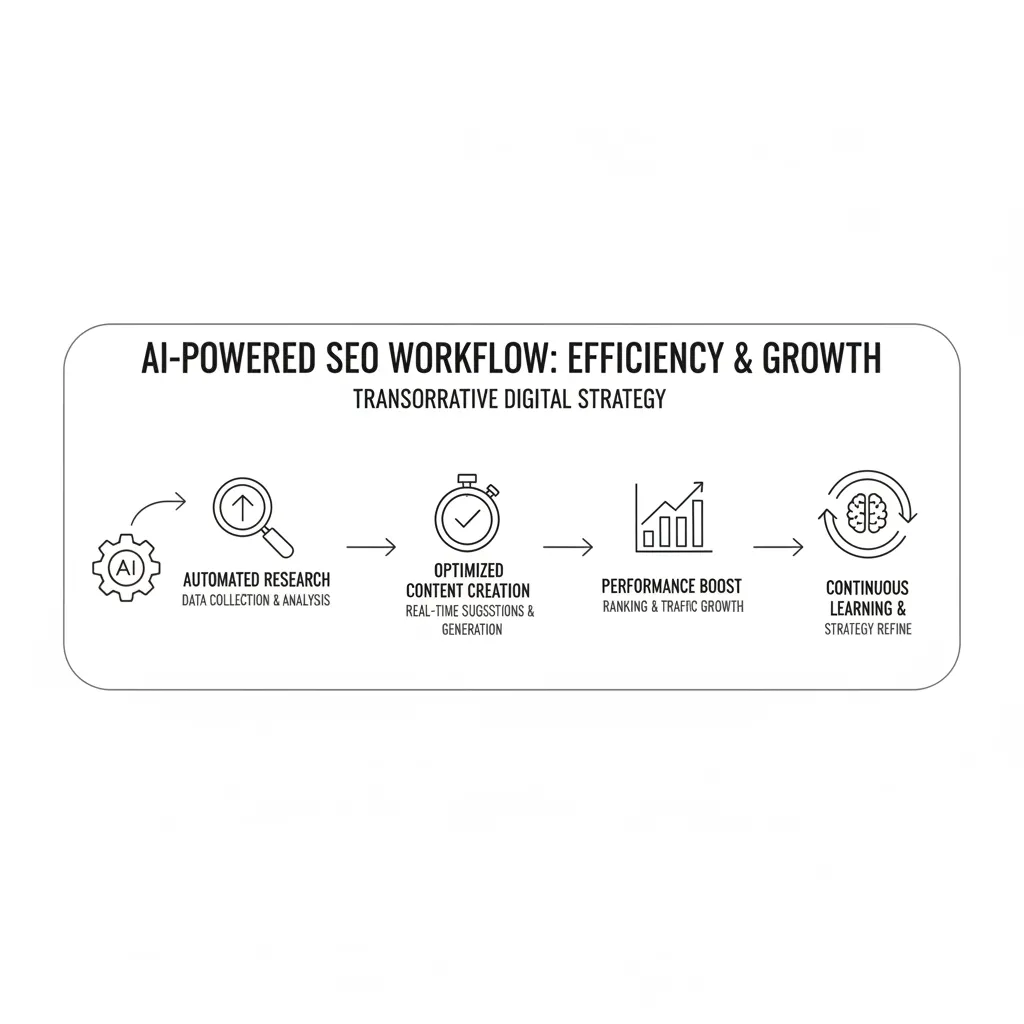
Speed represents the most obvious benefit. Where human writers might produce one optimized article per day, AI systems generate multiple pieces simultaneously. This acceleration allows you to cover more topics, target more keywords, and respond to market changes faster.
Quality consistency becomes achievable at scale. AI systems maintain brand voice, follow style guidelines, and apply SEO best practices uniformly across all content. Human writers naturally vary in skill and attention to detail, but AI maintains consistent standards.
Keyword optimization reaches new levels of sophistication. AI analyzes semantic relationships, identifies long-tail opportunities, and suggests content clusters that build topical authority. These insights often exceed what manual research reveals.
Content personalization becomes practical for businesses of all sizes. AI systems create variations optimized for different audience segments, geographic regions, or search intents without proportional increases in workload. Utilizing an online store strategy that leverages AI can significantly boost product visibility across diverse demographics.
Data-driven decision making replaces guesswork. AI content platforms provide detailed analytics on content performance, keyword rankings, and user engagement. This feedback loop enables continuous optimization and strategic refinements.
Cost-Effectiveness of AI Content Generation
The economics of AI content generation favor businesses that prioritize scalable growth. Initial platform costs often seem significant, but the per-piece content cost drops dramatically as volume increases.
Labor cost reduction represents immediate savings. A single marketing professional using AI tools can produce content volumes that previously required entire teams. This efficiency allows businesses to reallocate resources toward strategy and optimization.
Faster turnaround times accelerate time-to-market for new products, services, or market opportunities. When you can publish comprehensive content within hours instead of weeks, you capture more organic traffic during critical periods.
Reduced revision cycles improve productivity. AI-generated content typically requires fewer edits because it follows optimization guidelines from the start. Human writers often need multiple rounds of SEO optimization, but AI incorporates these requirements during initial generation.
3. Step-by-Step Guide to Integrating AI Content Generation into Your SEO Strategy
Successful AI content integration requires systematic planning and careful tool selection. You cannot simply replace human writers with AI systems and expect immediate success. The transition demands strategic thinking and methodical implementation.
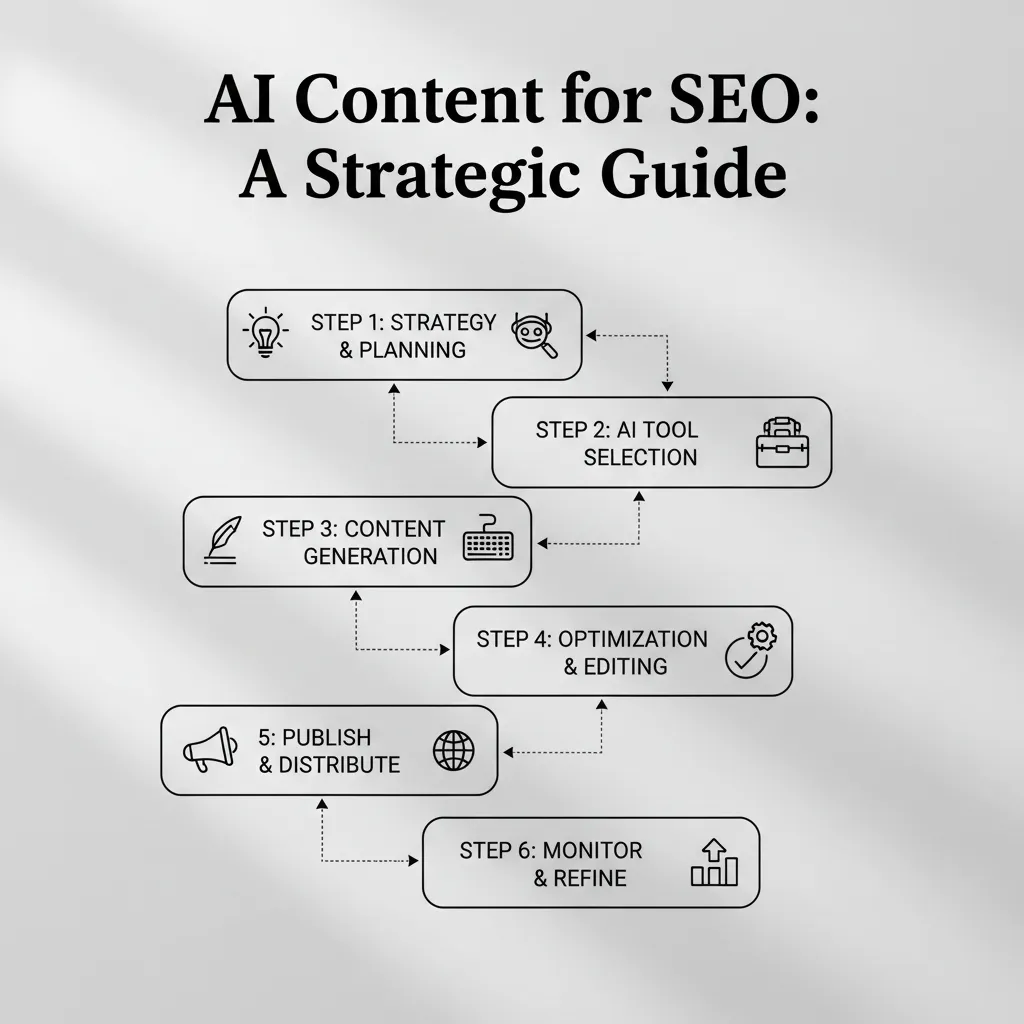
Begin by assessing your current content strategy. Document your existing workflows, identify bottlenecks, and measure baseline performance metrics. This analysis reveals where AI can provide the greatest impact.
Evaluate your content goals and constraints. Different AI tools excel in different areas. Some focus on blog posts, others optimize for e-commerce descriptions, and specialized platforms handle technical documentation. Match tool capabilities with your specific needs.
Consider your team's technical expertise. Some AI platforms require minimal training, while others demand deeper understanding of SEO principles and AI prompt engineering. Choose tools that align with your team's current skill level.
Start with low-risk content types. Product descriptions, FAQ pages, and informational blog posts work well for initial AI experiments. Avoid using AI for high-stakes content like legal disclaimers or medical advice until you understand system limitations.
Establish quality control processes before launching AI content generation. Define approval workflows, fact-checking procedures, and brand voice guidelines. These safeguards prevent publishing content that damages your reputation. Every modern entrepreneur should prioritize these guardrails to maintain brand integrity while scaling.
Implementing AI Tools for Content Creation
Platform selection determines your long-term success with AI content generation. Evaluate tools based on integration capabilities, output quality, and alignment with your SEO strategy.
Look for platforms that integrate with your existing marketing stack. Seamless connections with content management systems, analytics platforms, and SEO tools reduce friction and improve adoption rates.
Test multiple AI platforms with identical content briefs. Compare output quality, optimization suggestions, and ease of use. This comparative analysis reveals which tools best match your content style and requirements.
Train your team on prompt engineering and AI content optimization. Effective AI content generation requires understanding how to communicate requirements clearly and refine outputs efficiently.
Develop standard operating procedures for AI content workflows. Document best practices, common troubleshooting steps, and quality assurance checkpoints. These procedures ensure consistent results as your team scales AI usage.
4. Case Studies of Successful AI Content Generation in SEO
Real-world implementations demonstrate AI content generation's transformative potential. Companies across industries have achieved remarkable results by strategically integrating AI into their SEO workflows.
B2B software companies represent early adopters of AI content generation. These businesses typically need extensive technical documentation, feature explanations, and educational content. Manual creation of this content volume would require large writing teams.
E-commerce platforms leverage AI for product descriptions and category pages. These businesses often manage thousands of products, making manual optimization impractical. AI systems generate unique, optimized descriptions that improve search visibility and conversion rates.
Local service businesses use AI to create location-specific content at scale. Plumbing companies, legal firms, and healthcare providers need similar content optimized for different geographic markets. AI enables this localization without proportional increases in content creation costs.
Content publishers and affiliate marketing sites demonstrate AI's capacity for topic expansion. These businesses identify profitable keyword clusters and generate comprehensive content libraries that establish topical authority and capture long-tail search traffic.
SaaS platforms like AutoRanq showcase advanced AI implementation. These companies use autonomous AI systems that not only generate content but also identify opportunities, audit performance, and optimize strategies in real-time. By automating the SEO process, they allow teams to focus on high-level creative direction.
Lessons Learned from AI Implementation
Successful AI content generation requires avoiding common implementation mistakes. The most frequent error involves treating AI as a complete replacement for human oversight rather than a powerful augmentation tool.
Quality control cannot be eliminated. AI systems occasionally generate factual errors, miss nuanced brand requirements, or produce content that lacks human insight. Establish review processes that catch these issues before publication.
Prompt engineering skills develop over time. Initial AI outputs may seem generic or miss target requirements. Invest time in learning how to communicate effectively with AI systems through detailed, specific prompts.
Integration challenges often exceed expectations. Connecting AI tools with existing workflows, content management systems, and approval processes requires technical planning and sometimes custom development work.
Continuous optimization delivers the best results. AI content generation improves through feedback loops, performance analysis, and iterative refinement. Treat implementation as an ongoing process rather than a one-time setup.
5. Future of AI Content Generation in SEO
The evolution of AI content generation accelerates as search engines become more sophisticated and user expectations rise. Understanding these trends helps you prepare for the next phase of SEO optimization.
Generative Engine Optimization (GEO) represents the next frontier. As AI-powered search results become more prevalent, optimizing for AI citation becomes as important as traditional ranking factors. Content must satisfy both human readers and AI systems that summarize and reference information.
Voice search optimization gains importance as AI assistants become more conversational. Content generation systems must understand natural language patterns and create content that answers spoken queries effectively.
Real-time content adaptation becomes standard. Advanced AI systems monitor search trends, competitor activities, and user behavior to adjust content automatically. This dynamic optimization maintains relevance without manual intervention.
Multimodal content generation emerges as AI systems learn to create text, images, and video simultaneously. This integrated approach produces more engaging content while maintaining optimization across different content types.
Personalization reaches individual user levels. AI systems will generate content variations optimized for specific user segments, geographic regions, and search contexts. This hyper-personalization improves user experience while maintaining SEO effectiveness.
Preparing for the Next Evolution of SEO
Staying ahead requires understanding how search algorithms evolve and adapting content strategies accordingly. The most successful businesses invest in flexible AI systems that can adjust to algorithm changes automatically.
Focus on building topical authority through comprehensive content clusters rather than individual keyword targeting. AI content generation excels at creating interconnected content that establishes expertise across entire subject areas.
Develop expertise in prompt engineering and AI system management. As these tools become more sophisticated, the ability to optimize AI outputs becomes a competitive advantage.
Monitor emerging AI platforms and search engine features. Early adoption of new optimization opportunities often provides significant competitive advantages before markets become saturated. For any company looking to dominate their niche, staying ahead of these trends is non-negotiable.
Invest in measurement and analytics capabilities that track AI content performance across multiple channels. Understanding what works enables continuous improvement and strategic refinement.
Advanced AI Content Generation Strategies
Moving beyond basic implementation, advanced AI content generation strategies focus on systematic optimization and competitive positioning. These approaches transform AI tools from simple content creators into strategic business assets.
Content cluster development represents a sophisticated application of AI content generation. Instead of creating individual articles, you develop comprehensive topic clusters that establish domain authority and capture search traffic across related keyword families.
Competitive content analysis becomes automated when AI systems monitor competitor content strategies, identify gaps, and suggest optimization opportunities. This intelligence enables proactive rather than reactive content planning.
Multi-language content generation scales global SEO efforts efficiently. AI systems translate and localize content while maintaining optimization for different search markets and cultural contexts.
Technical SEO integration ensures AI-generated content follows best practices for site structure, internal linking, and schema markup. These technical optimizations amplify content performance across search engines.
| AI Content Generation Tool | Best Use Case | SEO Integration | Pricing Model |
|---|---|---|---|
| AutoRanq | Autonomous SEO content systems | Real-time optimization | Subscription-based |
| Jasper | Brand-focused content creation | Manual optimization required | Per-user pricing |
| Copy.ai | Short-form marketing content | Basic SEO features | Freemium model |
| Surfer AI | SEO-optimized long-form content | Built-in SERP analysis | Feature-based pricing |
Measuring AI Content Generation ROI
Effective measurement strategies prove AI content generation value and guide optimization decisions. Traditional content metrics often miss the full impact of AI-generated content on business outcomes.
Track content velocity improvements by measuring pieces published per week before and after AI implementation. This metric demonstrates productivity gains and helps justify platform investments.
Monitor search visibility across broader keyword sets. AI content generation often captures long-tail keywords that manual processes miss. Comprehensive keyword tracking reveals this expanded visibility.
Analyze content engagement metrics including time on page, bounce rate, and conversion rates. High-quality AI content should maintain or improve these user experience indicators.
Measure topical authority development through domain expertise scores and featured snippet captures. AI content clusters often build authority faster than individual content pieces.
Calculate cost per acquisition improvements from increased organic traffic. AI content generation typically reduces customer acquisition costs by improving search visibility and conversion optimization.
Common Pitfalls and How to Avoid Them
Understanding common AI content generation mistakes helps you avoid expensive errors and accelerate success. These pitfalls often result from unrealistic expectations or insufficient planning.
Over-reliance on AI without human oversight leads to quality issues and brand inconsistencies. Maintain editorial review processes and fact-checking procedures for all AI-generated content.
Inadequate prompt engineering produces generic content that fails to differentiate your brand. Invest time in developing detailed prompts that capture your unique value proposition and audience needs.
Ignoring E-A-T (Expertise, Authoritativeness, Trustworthiness) factors can harm search rankings. AI content must demonstrate expertise and include proper attribution for claims and statistics.
Neglecting content updates and maintenance reduces long-term performance. AI-generated content requires the same ongoing optimization as manually created content.
Poor integration with existing workflows creates adoption barriers and reduces efficiency gains. Plan technical integrations and team training before implementing AI content generation.
Building Your AI Content Generation Workflow
Systematic workflow development ensures consistent results and continuous improvement. Your AI content generation process should integrate seamlessly with existing marketing operations while providing flexibility for optimization.
Start with content strategy development using AI-powered keyword research and competitive analysis. These insights inform content calendars and topic prioritization decisions.
Create detailed content briefs that specify target keywords, audience segments, content length, and optimization requirements. Well-structured briefs produce better AI outputs and reduce revision cycles.
Implement quality assurance checkpoints at multiple stages. Review AI-generated outlines before full content creation, check drafts for accuracy and brand alignment, and verify optimization before publication.
Establish feedback loops that improve AI performance over time. Track which prompts and settings produce the best results, then standardize these approaches across your content production.
Plan for scalability by documenting processes, training team members, and selecting tools that grow with your content needs. Successful AI content generation becomes more valuable as volume increases.
Integration with Existing Marketing Stack
Seamless integration maximizes AI content generation value by connecting with your existing marketing tools and processes. Poor integration creates data silos and reduces operational efficiency.
Content management system integration enables direct publishing from AI platforms. This connection reduces manual work and ensures consistent formatting across your website.
Analytics platform connections provide performance feedback that improves future content generation. Understanding which AI-created content performs best guides prompt optimization and topic selection.
Social media management tools can distribute AI-generated content across multiple channels. This amplification increases content reach and improves overall marketing ROI.
Customer relationship management integration helps personalize AI content based on audience segments and buyer journey stages. This personalization improves conversion rates and user experience.
Marketing automation platforms can trigger AI content creation based on specific events or schedules. This automation ensures consistent content production without manual oversight.
Conclusion
AI content generation for SEO represents a fundamental shift in how successful businesses approach digital marketing. The technology has matured beyond experimental tools to become essential infrastructure for competitive content strategies.
The benefits extend far beyond simple cost savings or speed improvements. AI content generation enables comprehensive topic coverage, consistent optimization, and strategic positioning that manual processes cannot match at scale.
Key takeaways for implementing AI content generation successfully:
- Start strategically - Audit existing content processes and identify high-impact opportunities for AI integration
- Choose tools wisely - Select platforms that integrate with your existing marketing stack and match your team's capabilities
- Maintain quality control - Establish review processes and quality assurance checkpoints to ensure brand consistency
- Measure comprehensively - Track both traditional SEO metrics and broader business outcomes to demonstrate ROI
- Plan for evolution - Build flexible systems that adapt to changing search algorithms and AI capabilities
- Invest in training - Develop team expertise in prompt engineering and AI content optimization
The future belongs to businesses that embrace AI content generation while maintaining human oversight and strategic direction. Companies that delay adoption risk falling behind competitors who leverage these productivity advantages.
Success requires moving beyond viewing AI as a simple replacement for human writers. Instead, think of AI content generation as a strategic multiplier that amplifies your team's capabilities and accelerates your content marketing results.
Ready to transform your SEO content strategy? Explore how AutoRanq can revolutionize your content production with autonomous AI systems that think, plan, and execute complex SEO workflows while you focus on strategy and growth.