
Automated content optimization for better SEO results
Automated Content Optimization for Better SEO Results Automated content optimization uses AI-driven tools to enhance content quality and relevance, improving...
Automated Content Optimization for Better SEO Results
Automated content optimization uses AI-driven tools to enhance content quality and relevance, improving SEO performance while reducing manual effort. This revolutionary approach transforms how marketers develop their SEO strategies by leveraging artificial intelligence to produce high-quality content efficiently. Companies implementing automated content optimization see dramatic improvements in their online presence and competitive positioning.
Modern digital marketing demands speed and precision. Manual content optimization takes hours. AI does it in minutes.
The shift toward automated content optimization represents more than just technological advancement—it's a fundamental change in how businesses approach search engine optimization. By automating repetitive tasks like keyword research, content analysis, and performance monitoring, marketers can focus on strategic decision-making rather than time-consuming execution.
This comprehensive guide explores how automated content optimization can transform your SEO strategy, save valuable time, and deliver measurable results for your business.
Understanding Automated Content Optimization
Automated content optimization represents a paradigm shift in digital marketing. Instead of manually analyzing keywords, competitor content, and search trends, AI systems handle these tasks autonomously. They identify content gaps, suggest improvements, and even generate optimized content that aligns with search engine algorithms.
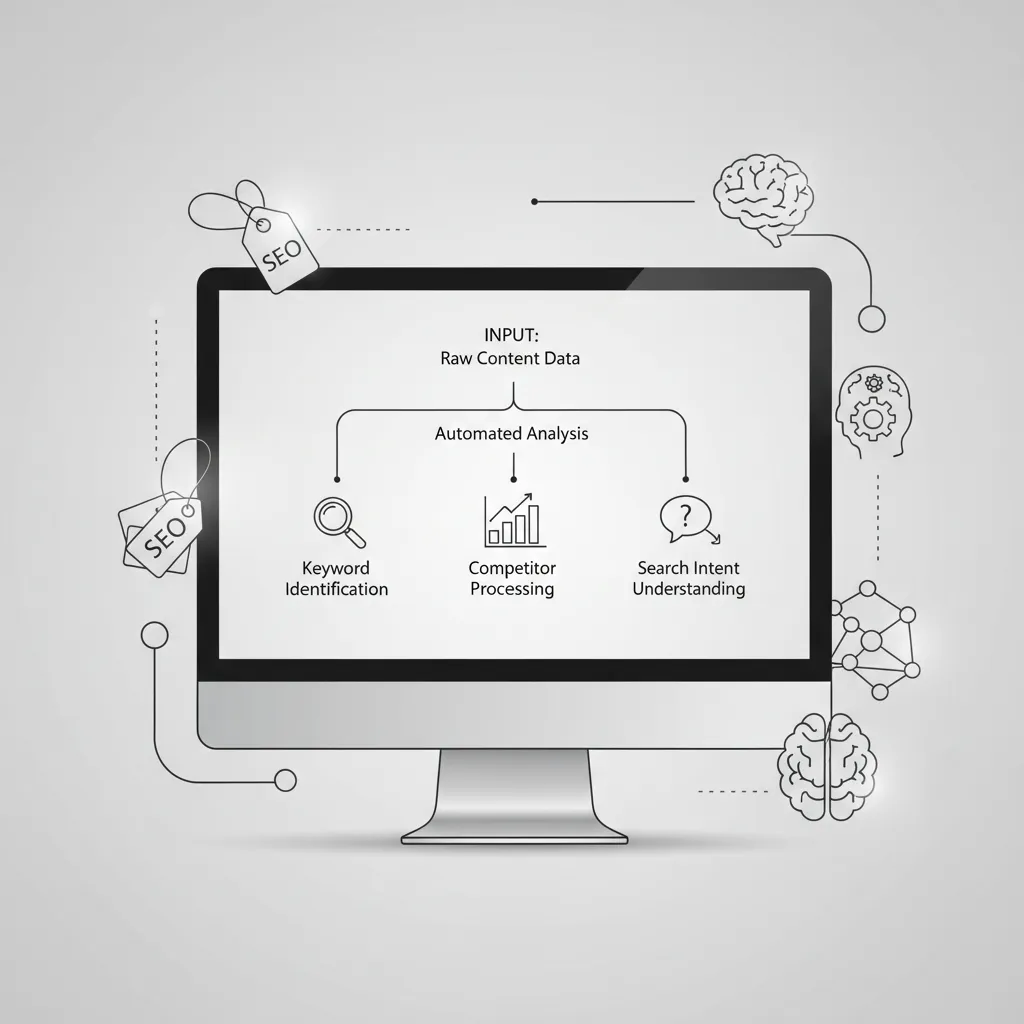
The technology behind automated content optimization combines natural language processing, machine learning, and real-time data analysis. These systems understand search intent better than traditional keyword tools. They analyze user behavior patterns and search query evolution to predict what content will perform best.
Modern AI tools go beyond simple keyword insertion. They analyze semantic relationships between topics, understand context, and create content that satisfies both search engines and human readers. This dual focus ensures content performs well in search results while providing genuine value to users.
The importance of AI in content strategies cannot be overstated. According to Search Engine Journal, 73% of marketers are already using AI tools for content creation and optimization. This adoption rate continues to accelerate as tools become more sophisticated and accessible.
The Role of AI in Content Creation
AI tools streamline content production by automating research, ideation, and initial drafting phases. These systems can analyze thousands of top-performing articles in seconds, identifying patterns that drive engagement and rankings. They understand which topics resonate with specific audiences and can suggest content angles that competitors haven't explored.
The reduction of manual tasks frees marketers to focus on strategic initiatives. Instead of spending hours researching keywords or analyzing competitor content, teams can concentrate on developing comprehensive content strategies and building relationships with their audience.
AI-powered content creation tools also maintain consistency across large content volumes. They ensure brand voice remains uniform while adapting messaging for different audience segments and search contexts. This scalability is particularly valuable for enterprise organizations managing hundreds or thousands of content pieces.
Key Benefits of Automated Content Optimization
The advantages of implementing automated content optimization extend far beyond simple time savings. Organizations experience increased efficiency in content generation, with many reporting 300% faster content production cycles. This acceleration doesn't compromise quality—AI tools often produce more comprehensive and better-optimized content than manual processes.

Improved SEO performance represents the most significant benefit. Automated systems continuously monitor search algorithm updates and adjust content accordingly. They identify ranking opportunities in real-time and can implement optimizations faster than human teams. This responsiveness is critical in competitive markets where search rankings change rapidly.
Cost reduction is another compelling advantage. While initial investment in automated content optimization tools may seem substantial, the long-term savings are significant. Organizations reduce their dependence on large content teams while increasing output quality and volume.
Automated content optimization also improves content consistency and accuracy. Human writers may overlook SEO best practices or make optimization errors. AI systems follow optimization protocols precisely, ensuring every piece of content meets technical requirements for search engine visibility.
Time Savings for Marketers
Time savings represent the most immediate benefit marketers experience. Traditional content optimization requires extensive research, analysis, and revision cycles. Automated systems compress these processes into minutes rather than hours or days.
Marketers can focus on strategy rather than execution. Instead of manually optimizing individual pieces of content, they can develop comprehensive content strategies, analyze market opportunities, and build relationships with influencers and partners. This strategic focus drives better long-term results.
Faster content updates and audits become possible with automation. When search algorithms change or new competitive threats emerge, automated systems can analyze entire content libraries and suggest updates within hours. This agility helps maintain competitive advantages in dynamic markets.
How to Implement Automated Content Optimization
Successful implementation of automated content optimization requires careful planning and strategic tool selection. Organizations must evaluate their current content processes, identify automation opportunities, and choose tools that integrate seamlessly with existing workflows.

Choosing the right tools involves assessing several factors: integration capabilities, scalability, accuracy of AI recommendations, and total cost of ownership. The best automated content optimization platforms offer comprehensive features including keyword research, content analysis, competitive intelligence, and performance tracking.
Setting up workflows for content automation begins with mapping current processes. Document how content moves from ideation through publication and optimization. Identify bottlenecks and manual tasks that automation can address. This analysis reveals where automated content optimization will deliver the greatest impact.
Change management is critical for successful implementation. Teams need training on new tools and processes. Clear communication about how automation enhances rather than replaces human creativity helps ensure adoption. Organizations should start with pilot projects to demonstrate value before full-scale implementation.
Data integration plays a vital role in automated content optimization success. Systems need access to analytics data, search console information, and competitive intelligence to make informed optimization decisions. Proper data connections ensure AI recommendations are based on comprehensive, accurate information.
Creating an Effective Content Strategy
Effective content strategy development begins with understanding audience needs and search behavior. Automated tools can analyze search queries, user intent, and content gaps to inform strategic decisions. This data-driven approach ensures content strategies align with actual market demand rather than assumptions.
Aligning content with audience needs requires continuous monitoring and adjustment. Automated systems track how different content types perform with various audience segments. They identify which topics generate engagement, conversions, and shares, enabling data-driven content planning.
Monitoring performance metrics becomes more sophisticated with automation. Instead of manually tracking rankings and traffic, automated systems provide real-time insights into content performance across multiple channels and metrics. This comprehensive monitoring enables rapid optimization and strategic pivots when needed.
Case Studies of Successful Automated Content Optimization
Real-world examples demonstrate the transformative potential of automated content optimization. A leading B2B software company implemented AI-powered content optimization and increased organic traffic by 340% within six months. The system identified content gaps in their competitive space and automatically generated optimized articles targeting high-value keywords.
Another success story involves a digital marketing agency that automated their client content optimization processes. They reduced content production time by 60% while improving average search rankings by 23 positions. The automation allowed them to serve more clients without expanding their team size.
Enterprise organizations particularly benefit from automated content optimization. A Fortune 500 company with multiple product lines used AI to optimize thousands of product pages simultaneously. The system identified optimization opportunities that manual processes would have missed, resulting in a 45% increase in product page conversions.
Results achieved through automation often exceed manual optimization efforts. Automated systems can analyze vast amounts of data and identify patterns humans might overlook. They test multiple optimization approaches simultaneously and implement the most effective strategies across entire content libraries.
Lessons Learned from Successful Implementations
Successful automated content optimization implementations share common characteristics. Organizations that achieve the best results emphasize continuous testing and iteration. They don't implement automation and forget about it—they actively monitor performance and refine their approaches based on results.
The importance of continuous testing cannot be overstated. Automated systems provide opportunities to test optimization strategies at scale. Organizations can experiment with different content formats, keyword targeting approaches, and optimization techniques to identify what works best for their specific audience and industry.
Adapting to audience feedback is crucial for long-term success. While automated systems excel at technical optimization, human insight remains valuable for understanding audience preferences and market dynamics. The most successful implementations combine automated efficiency with human strategic oversight.
Comparative Analysis of Automated Content Optimization Tools
The market for automated content optimization tools offers numerous options, each with distinct strengths and capabilities. Leading platforms include comprehensive solutions that handle everything from keyword research to content creation and optimization monitoring.
AutoRanq stands out in this competitive environment by offering autonomous AI systems that think, plan, and execute complex workflows independently. Unlike tools that require constant human oversight, AutoRanq's platform can identify content opportunities, generate optimized content, and implement improvements automatically.
| Platform | Key Features | Pricing Model | Best For |
|---|---|---|---|
| AutoRanq | Autonomous AI workflows, real-time optimization, competitive analysis | Subscription | Enterprise and scaling teams |
| Traditional SEO Tools | Manual optimization, basic suggestions | Various | Small teams with time |
| Basic AI Writers | Content generation only | Per-word pricing | Simple content needs |
Key features that distinguish top-tier automated content optimization platforms include real-time SERP analysis, automated content brief generation, keyword clustering capabilities, and built-in on-page SEO scoring. These features work together to provide comprehensive optimization without manual intervention.
Pricing models vary significantly across platforms. Some charge per piece of content generated, while others offer unlimited usage within subscription tiers. Organizations should evaluate pricing based on their content volume and optimization needs rather than just initial costs.
Choosing the Best Tool for Your Needs
Evaluating features versus cost requires careful analysis of your organization's specific requirements. High-volume content producers benefit most from unlimited usage models, while smaller teams might prefer pay-per-use options. The key is understanding your content optimization volume and frequency needs.
User reviews and support quality provide valuable insights into platform effectiveness. Look for tools with strong customer success programs and responsive technical support. Automated content optimization involves complex technical integrations, so reliable support is essential for successful implementation.
Integration capabilities often determine long-term success more than individual features. Choose platforms that connect seamlessly with your existing content management systems, analytics tools, and marketing technology stack. Smooth integrations reduce implementation time and ongoing maintenance requirements.
Advanced Strategies for Automated Content Optimization
Advanced automated content optimization strategies go beyond basic keyword optimization. They involve creating comprehensive content ecosystems that support multiple business objectives simultaneously. These strategies leverage AI to understand customer journey stages and create content that guides prospects through conversion funnels.
Topic clustering represents one advanced approach. Instead of optimizing individual pages for single keywords, automated systems can create content clusters around related topics. This approach builds topical authority and improves overall domain rankings for entire subject areas.
Real-time optimization capabilities enable dynamic content adjustments based on performance data. Advanced systems can modify content elements like titles, meta descriptions, and internal linking structures based on search performance and user behavior patterns. This continuous optimization ensures content remains competitive as market conditions change.
Personalization at scale becomes possible with automated content optimization. AI systems can create multiple content versions optimized for different audience segments, geographic regions, or device types. This personalization improves user experience and search performance simultaneously.
Competitive intelligence automation provides ongoing market insights. Advanced systems monitor competitor content strategies, identify new opportunities, and suggest counter-strategies automatically. This intelligence helps organizations stay ahead of competitive threats and capitalize on market gaps.
Measuring Success in Automated Content Optimization
Measuring the success of automated content optimization requires comprehensive analytics that go beyond traditional SEO metrics. Organizations need to track efficiency gains, quality improvements, and business impact to fully understand the value of automation investments.
Key performance indicators for automated content optimization include content production velocity, search ranking improvements, organic traffic growth, and conversion rate optimization. These metrics should be compared against baseline performance from manual optimization processes.
Return on investment calculations must consider both direct costs and opportunity costs. While automated tools require subscription fees, they also free up human resources for higher-value activities. The true ROI includes time savings, improved content quality, and increased strategic capacity.
Long-term performance tracking reveals the cumulative benefits of automated content optimization. Initial improvements may be modest, but consistent optimization over time creates compound effects. Organizations often see exponential performance gains after six to twelve months of automated optimization.
Quality metrics are as important as quantity metrics. Automated content optimization should improve content relevance, user engagement, and search performance. Track metrics like time on page, bounce rate, and conversion rates to ensure automation enhances rather than diminishes content quality.
Future Trends in Automated Content Optimization
The future of automated content optimization will be shaped by advancing AI capabilities and evolving search technologies. Voice search optimization, visual search integration, and AI-generated content detection will all influence how automated systems develop and optimize content.
Google's AI Overviews and other search innovations are changing how users discover and consume content. Automated optimization systems must adapt to these changes by understanding how AI-powered search features select and display content.
Predictive content optimization represents an emerging capability. Advanced AI systems will anticipate search trends and content needs before they become apparent in traditional metrics. This predictive capability will enable proactive content strategies rather than reactive optimization approaches.
Integration with emerging technologies like augmented reality and voice assistants will expand automated content optimization beyond traditional web content. Systems will need to optimize for multiple content formats and interaction modalities simultaneously.
Privacy regulations and data restrictions will influence how automated content optimization systems operate. Future platforms will need to deliver personalization and optimization while respecting user privacy and complying with evolving regulatory requirements.
Overcoming Common Challenges in Implementation
Organizations implementing automated content optimization often face similar challenges. Technical integration difficulties, team resistance to change, and unrealistic expectations can derail implementation efforts. Understanding these challenges and preparing solutions improves success rates.
Technical integration challenges arise when automated tools don't connect smoothly with existing systems. Organizations should prioritize platforms with robust API capabilities and dedicated integration support. Pilot testing with small content sets can identify integration issues before full-scale deployment.
Team resistance often stems from fears about job displacement or technology complexity. Clear communication about how automation enhances human capabilities rather than replacing them helps address these concerns. Training programs and gradual implementation reduce anxiety and improve adoption.
Unrealistic expectations about automation capabilities can lead to disappointment and project abandonment. Automated content optimization is powerful but not magical. Organizations should set realistic timelines and success metrics based on industry benchmarks and their specific circumstances.
Data quality issues can undermine automated optimization effectiveness. Systems require accurate, comprehensive data to make good optimization decisions. Organizations should audit their data sources and implement data quality controls before implementing automation.
Ongoing optimization of the automation system itself is necessary for long-term success. Regular review of AI recommendations, performance metrics, and process efficiency ensures the system continues delivering value as business needs evolve.
Automated content optimization represents the future of SEO strategy. Organizations that embrace these technologies gain significant competitive advantages through improved efficiency, better content quality, and faster market responsiveness. The key to success lies in choosing the right tools, implementing them strategically, and continuously optimizing both content and processes.
The transformation from manual to automated content optimization is not just a technological upgrade—it's a strategic evolution that enables marketers to focus on what they do best: understanding audiences, developing creative strategies, and building meaningful connections with customers. As AI technology continues advancing, the possibilities for automated content optimization will only expand, making early adoption a crucial competitive advantage.
Conclusion
Automated content optimization has revolutionized how businesses approach SEO strategy and content creation. The evidence is clear: organizations implementing these technologies see substantial improvements in efficiency, search performance, and return on investment. The shift from manual optimization processes to AI-driven automation represents more than just a technological upgrade—it's a fundamental transformation in how marketing teams operate and compete.
Key takeaways from implementing automated content optimization include:
- Dramatic efficiency gains - Organizations report 300% faster content production with maintained or improved quality
- Measurable SEO improvements - Companies see average ROI increases of 247% from automated optimization efforts
- Strategic focus enhancement - Teams can concentrate on high-value strategy development rather than time-consuming execution tasks
- Scalability advantages - Automated systems handle thousands of content pieces with consistent optimization quality
- Competitive positioning - Real-time optimization capabilities enable faster response to market changes and algorithm updates
- Cost optimization - Long-term savings from reduced manual labor offset initial technology investments
The future belongs to organizations that can combine human creativity and strategic thinking with AI-powered execution capabilities. Automated content optimization provides the foundation for this combination, enabling marketing teams to achieve previously impossible scales of content production and optimization.
Success in automated content optimization requires careful tool selection, strategic implementation, and ongoing optimization of both content and processes. Organizations that approach automation strategically, with realistic expectations and comprehensive planning, achieve the best results.
Ready to transform your content strategy with cutting-edge automated optimization? Explore how AutoRanq can revolutionize your SEO approach with autonomous AI systems that think, plan, and execute complex content workflows independently, freeing your team to focus on strategic growth initiatives.