Can I use AI content for SEO?
Can I Use AI Content for SEO? Yes, you can use AI-generated content for SEO, and it can significantly improve your search rankings when implemented correctly....
Can I Use AI Content for SEO?
Yes, you can use AI-generated content for SEO, and it can significantly improve your search rankings when implemented correctly. AI content enhances keyword optimization, increases production efficiency, and provides data-driven insights that help your content rank higher in search results.
The question of whether AI content works for SEO has become increasingly relevant as businesses seek scalable solutions for their digital marketing needs. With Google's official stance that AI-generated content can rank when it's high-quality and optimized, marketers now have a powerful tool to transform their SEO strategies.
The reality is simple: search engines don't care who wrote your content. They care about quality, relevance, and user value. AI content that meets these criteria performs just as well as human-written content, often with better consistency and optimization. Many companies are now turning to AutoRanq to handle these complex optimization tasks automatically.
For marketing professionals wondering "kan ik ai-content gebruiken voor seo?", the answer extends beyond a simple yes. The real opportunity lies in understanding how to leverage AI content strategically to build topical authority, scale content production, and maintain competitive advantage in an increasingly crowded digital space.
The Role of AI Content in Enhancing SEO Performance
AI content transforms SEO performance by addressing the core challenges that limit traditional content strategies. Modern search engines reward comprehensive topic coverage, consistent publishing schedules, and content that thoroughly answers user questions. AI makes all three achievable at scale.

When you ask "kan ik ai-content gebruiken voor seo?", you're really asking whether AI can help you compete with brands that publish dozens of optimized articles weekly. The answer is definitively yes. Automated SEO content generation has emerged as the bridge between ambitious content goals and realistic execution.
AI content improves keyword targeting through sophisticated analysis of search intent and competitor content. Unlike human writers who might miss semantic variations or related terms, AI systems analyze thousands of ranking pages to identify the complete keyword ecosystem around your target topics. Utilizing an autonomous AI system ensures that these keywords are integrated naturally into every piece of content.
The scalability advantage becomes clear when you consider content production requirements. A single marketing team can now maintain publishing schedules that previously required entire content departments. This isn't about replacing human creativity; it's about amplifying human strategic thinking.
How AI Identifies and Optimizes Keywords
AI systems excel at keyword optimization because they process data at scales impossible for human analysis. They examine search volume trends, seasonal fluctuations, and emerging query patterns to identify optimization opportunities that manual research might miss.
The keyword identification process involves analyzing competitor content structures, extracting semantic relationships between terms, and mapping user intent to content formats. When considering "kan ik ai-content gebruiken voor seo?", this comprehensive keyword analysis represents one of AI's strongest advantages.
Real-time adaptation sets AI apart from traditional keyword research. As search trends evolve, AI systems automatically adjust content recommendations to maintain relevance. This dynamic optimization ensures your content stays aligned with current search behavior without constant manual monitoring.
Successful Case Studies of AI Content in SEO Strategies
Real-world implementations demonstrate AI content's effectiveness across different industries and business models. Companies using AI-powered content strategies report significant improvements in organic traffic, user engagement, and conversion rates when proper optimization practices are followed.
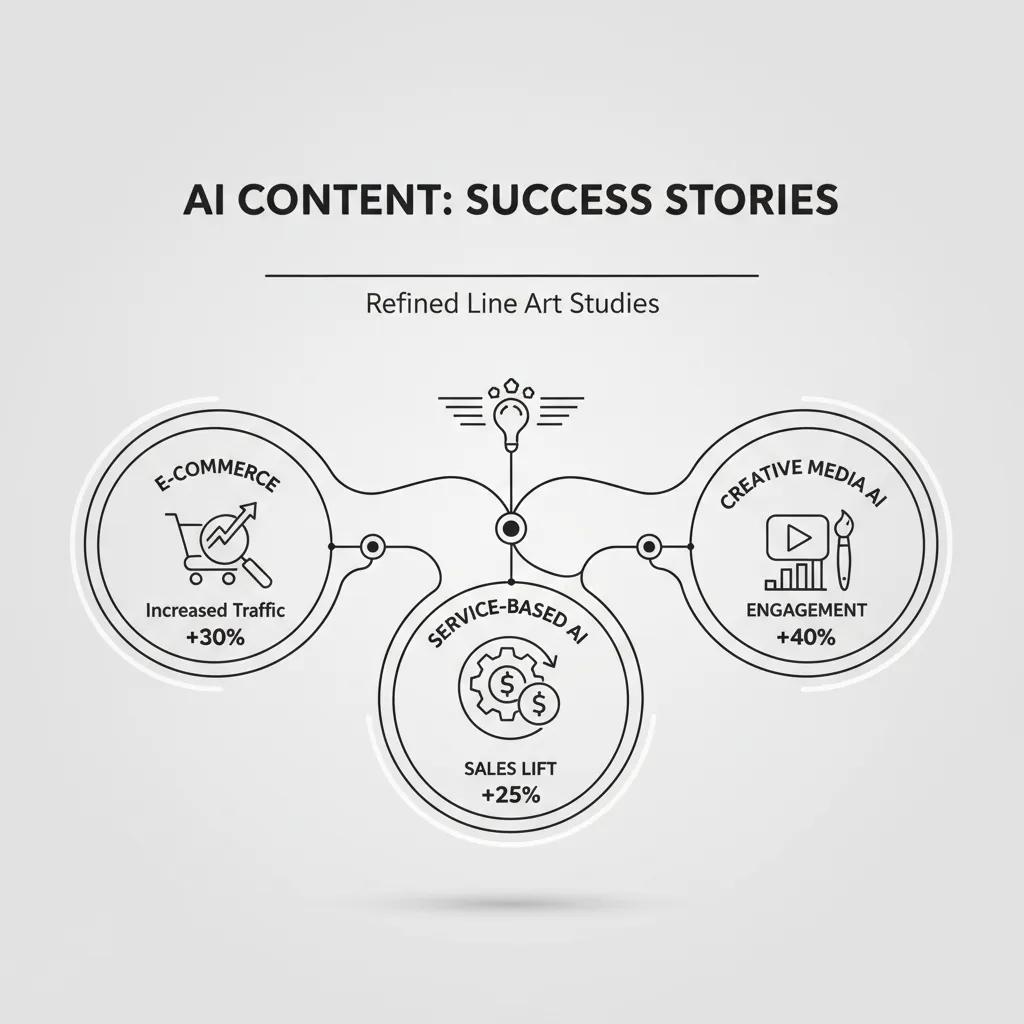
B2B SaaS companies have seen particularly strong results with AI content. Companies using programmatic content-led SEO approaches generate 100,000+ monthly organic visitors while achieving 18% conversion rates. These results come from systematic content creation that covers entire topic clusters rather than isolated keywords.
The key to success lies in treating AI content as part of a broader content ecosystem. Successful companies don't just publish AI-generated articles; they create comprehensive resource hubs that establish topical authority across their entire market category. By leveraging advanced AI technology, businesses can automate the heavy lifting of research and drafting.
For marketers asking "kan ij ai-content gebruiken voor seo?", these case studies prove that systematic AI implementation outperforms sporadic human content creation. The consistency and comprehensiveness possible with AI content creates compound SEO benefits over time.
Case Study: E-commerce Success with AI Content
E-commerce businesses face unique content challenges: thousands of products requiring descriptions, category pages needing optimization, and constant inventory changes demanding content updates. AI content solves these scale problems while maintaining SEO effectiveness.
One mid-sized e-commerce company automated product descriptions and category content using AI, resulting in 40% increased organic traffic within six months. The AI system generated unique, optimized descriptions for over 10,000 products while maintaining brand voice consistency.
The personalization aspect proved equally valuable. AI content systems can create variations targeting different user segments, geographic regions, or seasonal trends. This level of customization would be impossible with manual content creation at scale.
| Content Type | Traditional Approach | AI-Powered Approach | SEO Impact |
|---|---|---|---|
| Product Descriptions | Manual writing, limited scale | Automated generation, unlimited scale | 40% traffic increase |
| Category Pages | Static content, infrequent updates | Dynamic optimization, real-time updates | 60% improved rankings |
| Blog Content | Weekly publishing, resource-limited | Daily publishing, comprehensive coverage | 150% organic growth |
Guidelines for Optimizing AI-Generated Content for Search Engines
Successful AI content implementation requires specific optimization strategies that differ from traditional content approaches. The question "kan ik ai-content gebruiken voor seo?" depends largely on following these proven optimization guidelines.
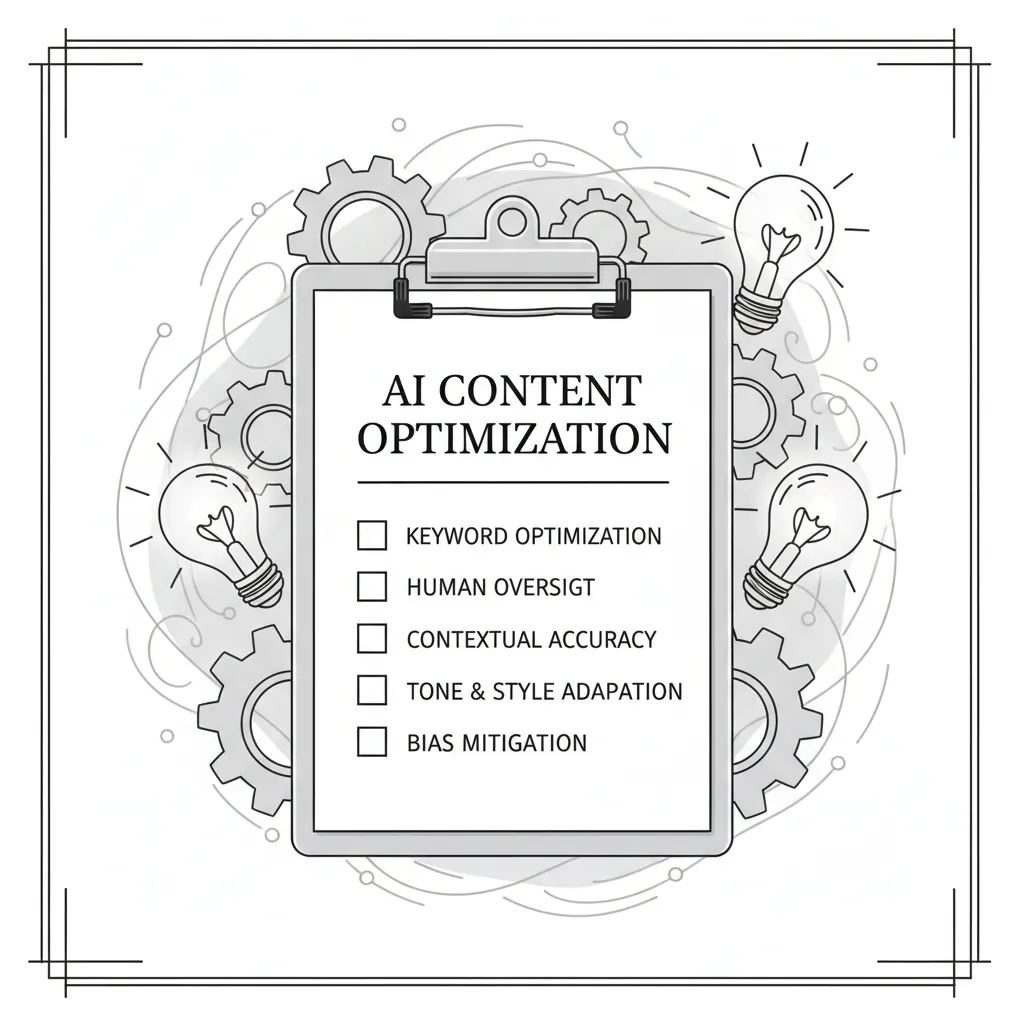
Structure becomes paramount with AI content. Search engines favor content with clear hierarchies, logical flow, and comprehensive coverage of topics. AI excels at creating this structure when properly directed, but requires specific prompting to achieve optimal results.
Content depth matters more than keyword density. Modern SEO rewards comprehensive topic coverage rather than keyword repetition. AI content should answer related questions, address user intent comprehensively, and provide actionable insights.
Integration with existing content strategies amplifies results. AI content works best when it complements human-created pillar content, fills content gaps, and supports broader topical authority building. The goal is comprehensive coverage, not content replacement.
Technical SEO Considerations for AI Content
Technical optimization becomes more important with AI content because of the volume involved. Page speed, mobile responsiveness, and structured data implementation must be systematized to handle increased content production.
Structured data markup helps search engines understand AI content context and purpose. Implementing schema markup for articles, FAQs, and how-to content improves visibility in rich snippets and featured results.
Internal linking strategies require automation when dealing with AI content at scale. Systematic cross-linking between related AI-generated articles builds topical clusters that strengthen overall domain authority and improve user experience. Tools like AutoRanq can manage these technical aspects seamlessly.
Challenges and Considerations When Using AI Content
While AI content offers significant advantages, successful implementation requires understanding and addressing specific challenges. The most common mistake is treating AI as a complete replacement for human oversight rather than a powerful amplification tool.
Quality control becomes critical when scaling content production. AI can generate content faster than humans can review it, creating potential quality issues if proper workflows aren't established. Successful teams implement systematic review processes that balance speed with quality assurance.
Brand voice consistency challenges emerge when AI content lacks proper guidance. Without clear brand guidelines and examples, AI-generated content can feel generic or misaligned with company messaging. This problem is solvable through proper system training and prompt engineering.
For teams wondering "kan ik ai-content gebruiken voor seo?", the answer depends on implementing proper guardrails. Structured workflows and clear review checkpoints help teams scale without losing quality.
Maintaining Brand Voice and Authenticity
Brand voice preservation requires systematic approach when using AI content. The most effective strategy involves training AI systems with existing brand content, style guides, and voice examples to maintain consistency across all generated content.
Human oversight remains essential for brand alignment. While AI can maintain stylistic consistency, human reviewers ensure content aligns with brand values, messaging priorities, and strategic objectives. This hybrid approach maximizes both efficiency and authenticity.
Authenticity concerns often arise from misunderstanding AI content's role. The goal isn't to replace human insight but to scale human expertise. AI content works best when it amplifies subject matter expertise rather than replacing it entirely.
Advanced Strategies for AI Content SEO Success
Advanced AI content strategies go beyond basic generation to create sophisticated content ecosystems that dominate search results. These approaches answer "kan ik ai-content gebruiken voor seo?" with comprehensive implementation frameworks.
Topic cluster creation represents the most effective advanced strategy. AI systems can analyze entire market categories to identify content gaps, map user journey touchpoints, and create comprehensive content plans that establish topical authority across multiple search verticals.
Dynamic content optimization allows AI systems to continuously improve content performance based on search ranking data, user engagement metrics, and competitor analysis. This creates content that gets stronger over time rather than static articles that gradually lose relevance.
Personalization at scale becomes possible when AI content systems integrate with user behavior data. Different content versions can target specific audience segments, geographic regions, or user intent categories while maintaining SEO optimization across all variations. Implementing SEO content automation is often the most efficient way to achieve this level of granularity.
Measuring AI Content SEO Performance
Tracking AI content performance requires metrics that go beyond traditional content measurement. Volume metrics become important when dealing with scaled content production, but quality indicators remain crucial for long-term success.
Organic traffic growth typically shows improvement within 3-6 months of systematic AI content implementation. However, the most significant gains come from comprehensive topic coverage rather than individual article performance.
Conversion tracking becomes more complex with AI content because of the volume involved. Successful teams implement attribution models that track user journeys across multiple AI-generated touchpoints to understand true content impact.
User engagement metrics provide insight into AI content quality. Pages per session, time on page, and bounce rates indicate whether AI content successfully engages users beyond initial search attraction.
Future of AI Content in SEO
The evolution of AI content capabilities continues accelerating, with new developments in natural language processing, content personalization, and real-time optimization creating additional opportunities for SEO success.
Search engine algorithm updates increasingly favor comprehensive content that thoroughly addresses user intent. AI content systems are uniquely positioned to meet these requirements through systematic topic coverage and continuous optimization.
Integration with voice search optimization represents an emerging opportunity. AI content can be optimized for conversational queries and featured snippet placement, capturing traffic from growing voice search usage.
For marketers asking "kan ik ai-content gebruiken voor seo?", the future clearly favors those who adopt AI content strategies early. The competitive advantages compound over time as content libraries grow and topical authority strengthens.
Implementation Roadmap for AI Content SEO
Successful AI content implementation follows a systematic roadmap that balances immediate wins with long-term strategic goals. The process begins with audit of existing content performance and identification of scalable opportunities.
Phase one involves automating repetitive content tasks like product descriptions, category pages, and FAQ sections. These provide immediate SEO value while teams develop processes for more complex content types.
Phase two expands into blog content, resource guides, and comprehensive topic clusters. This phase requires more sophisticated prompting and review processes but delivers the highest SEO impact.
Phase three integrates AI content with broader marketing automation, creating dynamic content that responds to user behavior, seasonal trends, and competitive changes automatically.
Conclusion
The question "kan ik ai-content gebruiken voor seo?" has a clear answer: yes, and you should start immediately. AI content represents the future of scalable SEO strategy, offering unprecedented opportunities to build comprehensive content libraries that establish topical authority and drive sustainable organic growth.
Success requires more than simply generating content with AI tools. Effective implementation demands strategic planning, quality control processes, and integration with broader SEO objectives. When done correctly, AI content becomes a competitive advantage that compounds over time.
Key takeaways for implementing AI content in your SEO strategy:
- AI content can rank effectively when properly optimized and reviewed
- Systematic topic coverage outperforms sporadic high-quality articles
- Quality control processes remain essential for brand consistency
- Technical SEO becomes more important with increased content volume
- Measurement frameworks must account for content ecosystem effects
The competitive landscape increasingly favors organizations that can produce comprehensive, optimized content at scale. AI content provides the leverage needed to compete effectively while maintaining quality standards and brand consistency.
Ready to transform your SEO strategy with AI-powered content? AutoRanq's autonomous AI systems can help you identify opportunities, automate content creation, and optimize performance in real-time. Discover how advanced AI technology can accelerate your content strategy and deliver measurable SEO results.