
How AI enhances SEO performance for digital marketers
How AI Enhances SEO Performance for Digital Marketers AI enhances SEO performance by automating content optimization, identifying keyword opportunities faster...
How AI Enhances SEO Performance for Digital Marketers
AI enhances SEO performance by automating content optimization, identifying keyword opportunities faster than manual methods, and analyzing search trends in real-time. This leads to more efficient strategies, better rankings, and measurable business results for digital marketers.
The digital marketing world has changed forever. What once required weeks of manual keyword research, content optimization, and performance analysis now happens in hours through artificial intelligence. Companies implementing AI-driven SEO strategies report 10-20% revenue increases within their first year of adoption. Many forward-thinking brands are now turning to an AI SEO agent to handle these complex tasks autonomously.
Modern SEO teams face an impossible challenge. Search algorithms update constantly. User behavior shifts toward conversational queries. Competition intensifies daily. Manual processes simply cannot keep pace.
This transformation extends beyond simple automation. AI fundamentally changes how marketers approach search optimization, from initial research through content creation to performance measurement. The result is faster execution, higher quality outputs, and better attribution to actual business outcomes.
1. Automating Content Optimization
Content optimization through AI represents the biggest shift in SEO methodology since Google's algorithm updates began prioritizing user intent. Traditional approaches required manual keyword placement, meta tag writing, and content structure decisions. AI systems now handle these tasks automatically while maintaining brand voice and strategic alignment.

Modern AI platforms analyze existing content performance, identify optimization opportunities, and implement changes in real-time. This includes semantic keyword integration, content gap analysis, and competitive positioning adjustments. The speed difference is remarkable - what previously took content teams days now completes in minutes. By utilizing AI for SEO, companies can scale their organic reach without increasing their headcount.
The automation extends beyond basic optimization. AI systems monitor search trends continuously, adjusting content strategies based on emerging opportunities. They identify when competitors publish new content, analyze performance patterns, and recommend strategic responses. This proactive approach prevents reactive scrambling when market conditions change.
Smart content optimization also addresses technical SEO elements automatically. AI tools generate schema markup, optimize page speed elements, and ensure mobile responsiveness without manual intervention. These technical improvements directly impact search rankings while freeing strategists to focus on higher-level planning.
The Role of AI in Keyword Identification
Keyword research has evolved from simple volume-based selection to intent-driven opportunity mapping. AI systems analyze search patterns across multiple data sources, identifying long-tail opportunities that traditional tools miss. They understand semantic relationships between terms, enabling content strategies that capture entire topic clusters rather than individual keywords.
Advanced AI platforms examine competitor content gaps, seasonal trends, and emerging search behaviors simultaneously. This comprehensive analysis reveals keyword opportunities with high commercial potential but lower competition. The result is more targeted content that ranks faster and converts better.
Real-time keyword monitoring allows immediate strategy adjustments. When AI detects trending topics related to your industry, it suggests content angles and optimization approaches before competitors recognize the opportunity. This first-mover advantage often determines ranking success in competitive markets.
2. Enhancing Data Analysis Capabilities
Data analysis represents AI's most powerful contribution to SEO performance improvement. Traditional analytics tools show what happened after the fact. AI systems predict what will happen next, enabling proactive strategy adjustments that maintain competitive advantages.
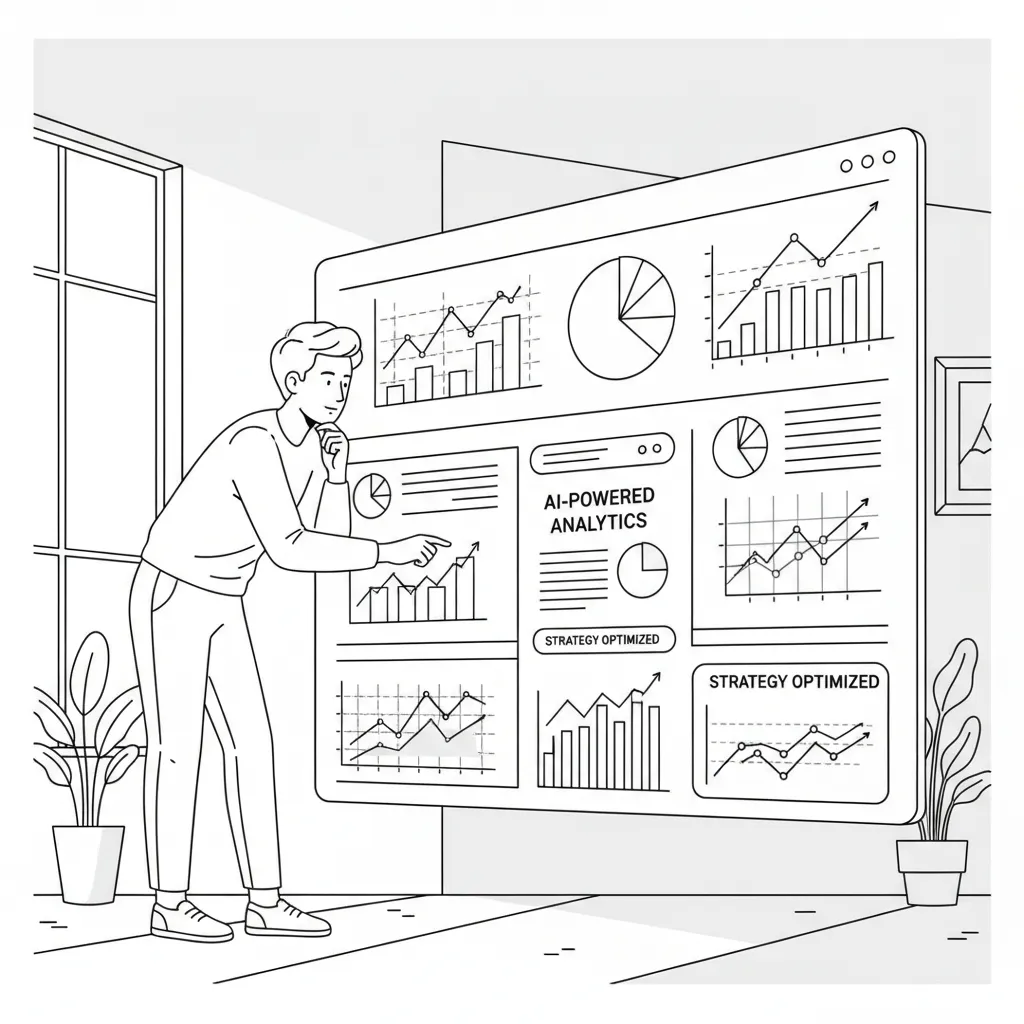
Machine learning algorithms process massive datasets from search consoles, analytics platforms, and third-party tools simultaneously. They identify patterns humans cannot detect, correlating seemingly unrelated factors that influence search performance. This deep analysis reveals optimization opportunities that manual review would never uncover.
Predictive analytics help marketers allocate resources more effectively. AI models forecast which content types will perform best for specific audiences, which keywords will gain momentum, and which optimization efforts will deliver the highest ROI. This intelligence prevents wasted effort on low-impact activities. Implementing automated SEO workflows ensures that these insights are acted upon immediately rather than sitting in a report.
The analysis extends to user behavior patterns across the entire customer journey. AI systems track how search visitors interact with content, identifying which elements drive engagement and conversions. This behavioral data informs content strategy decisions that improve both rankings and business outcomes.
Performance attribution becomes clearer through AI analysis. Instead of generic traffic reports, marketers receive detailed insights about which SEO efforts drive qualified leads, customer acquisitions, and revenue growth. This clarity enables more strategic budget allocation and campaign optimization.
Case Studies of Successful AI Implementations
Real-world implementations demonstrate AI's transformative impact on SEO performance. A SaaS company using automated SEO workflows achieved 4162% organic traffic growth within twelve months through systematic content optimization and keyword targeting.
Another case study shows an e-commerce business reducing content production time by 75% while improving search rankings across 200+ target keywords. The AI system identified content gaps, optimized existing pages, and created new content that aligned perfectly with search intent patterns.
B2B marketing teams report similar success with lead generation improvements. AI-optimized content generates 40% more qualified leads compared to manually optimized pages, primarily through better intent matching and conversion pathway optimization.
3. Comparative Analysis: Traditional SEO vs AI-Enhanced SEO
The differences between traditional and AI-enhanced SEO extend far beyond automation speed. Traditional approaches rely on historical data, manual analysis, and reactive strategy adjustments. AI-enhanced methods use predictive modeling, automated optimization, and proactive opportunity identification.
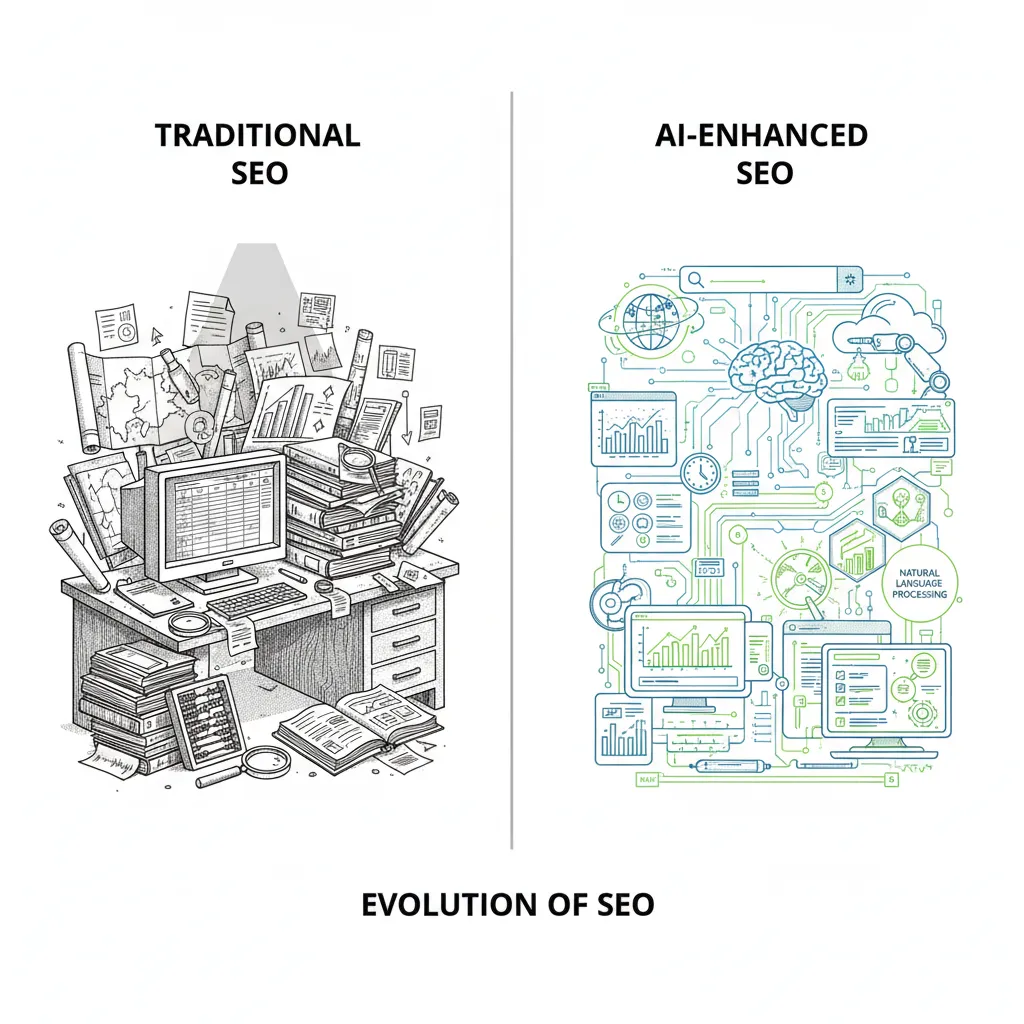
Resource allocation represents the most significant operational difference. Traditional SEO requires substantial human resources for research, analysis, and implementation. AI systems handle routine tasks automatically, allowing strategists to focus on creative problem-solving and strategic planning. This shift is why many SMB owners are adopting AI to compete with larger corporations.
| Aspect | Traditional SEO | AI-Enhanced SEO |
|---|---|---|
| Keyword Research | Manual tool usage, 2-3 days | Automated analysis, 30 minutes |
| Content Optimization | Manual editing, 4-6 hours | Real-time suggestions, 15 minutes |
| Performance Analysis | Weekly reports, reactive | Continuous monitoring, proactive |
| Competitive Intelligence | Quarterly reviews | Daily automated updates |
| Technical SEO | Manual audits, monthly | Automated monitoring, real-time |
Quality consistency improves dramatically with AI assistance. Human editors have variable performance based on workload, expertise, and attention levels. AI systems maintain consistent optimization standards across all content, ensuring every page meets technical and strategic requirements.
Scale represents another critical advantage. Traditional SEO teams struggle to optimize more than 10-20 pages per week effectively. AI-enhanced workflows can optimize hundreds of pages simultaneously while maintaining quality standards and strategic alignment.
Key Differences in Strategy and Execution
Strategic thinking shifts from reactive to predictive with AI implementation. Traditional SEO responds to algorithm changes, competitor moves, and performance drops after they occur. AI systems anticipate these changes, preparing optimized responses before impacts become visible.
Execution speed accelerates exponentially. Manual processes that required weeks now complete in hours or days. This velocity advantage enables rapid testing, faster iteration, and quicker response to market opportunities. Companies can launch comprehensive SEO campaigns while competitors are still planning their approaches.
Risk management improves through continuous monitoring and automated alerts. AI systems detect potential issues before they impact rankings, enabling preventive measures rather than damage control responses.
4. The Future of SEO with AI
Search behavior continues evolving toward conversational, intent-driven queries that require sophisticated content strategies. Voice search, visual search, and AI-powered answer engines are reshaping how users discover information. These changes demand SEO approaches that prioritize semantic understanding over keyword density.
Generative AI integration into search engines fundamentally alters optimization requirements. Content must satisfy both traditional ranking factors and AI citation criteria. This dual optimization challenge requires tools that understand both human and machine evaluation patterns.
Personalization becomes increasingly important as search engines deliver customized results based on user history, location, and preferences. AI systems can optimize content for multiple personalization scenarios simultaneously, ensuring visibility across diverse user segments.
The integration of SEO with other marketing channels accelerates through AI coordination. Smart systems align content optimization with social media strategies, email campaigns, and paid advertising efforts. This holistic approach amplifies overall marketing effectiveness while reducing channel conflicts.
Real-time optimization will become standard practice. Instead of monthly or weekly optimization cycles, AI systems will adjust content continuously based on performance data, user feedback, and competitive intelligence. This constant refinement ensures sustained ranking improvements.
How to Adapt to Changes in SEO
Successful adaptation requires embracing AI tools while maintaining strategic oversight. The most effective approach combines automated execution with human creativity and judgment. AI handles data processing and routine optimization while humans focus on strategy, brand alignment, and creative problem-solving. For those looking to stay ahead, using an autonomous SEO platform can provide the necessary edge.
Investment in AI-powered SEO platforms becomes necessary for competitive survival. Companies that delay adoption risk falling behind competitors who leverage automation for faster, more effective optimization. The performance gap widens quickly as AI capabilities continue advancing.
Continuous learning and skill development ensure teams can maximize AI tool effectiveness. Understanding how to prompt AI systems, interpret automated insights, and guide strategic decisions becomes as important as traditional SEO knowledge.
Conclusion
AI significantly enhances SEO performance through comprehensive automation that transforms how digital marketers approach search optimization. The evidence is clear: companies implementing AI-driven strategies achieve faster results, better rankings, and stronger business outcomes compared to traditional manual approaches.
Key takeaways from this analysis include:
- Automation accelerates execution - Tasks that previously required days now complete in minutes, enabling rapid strategy implementation and testing
- Data analysis capabilities expand exponentially - AI processes vast datasets to identify patterns and opportunities that manual analysis cannot detect
- Predictive insights enable proactive optimization - Instead of reacting to changes, marketers can anticipate trends and prepare optimized responses
- Quality consistency improves across all content - Automated systems maintain optimization standards that human teams struggle to achieve at scale
- Competitive advantages compound over time - Early AI adoption creates performance gaps that become increasingly difficult for competitors to close
The future belongs to marketers who embrace AI as a strategic partner rather than a replacement for human creativity. The most successful SEO strategies will combine automated execution with human insight, creating optimization approaches that neither humans nor machines could achieve independently.
Ready to transform your SEO performance with AI-driven automation? Explore how AutoRanq can revolutionize your content optimization strategy with autonomous AI systems that think, plan, and execute complex SEO workflows while you focus on strategic growth initiatives.