
Implementing AI in marketing processes for maximum efficiency
AI implementation in marketing processes transforms how businesses engage customers and optimize content through automated workflows, predictive analytics, and...
AI implementation in marketing processes transforms how businesses engage customers and optimize content through automated workflows, predictive analytics, and intelligent decision-making systems that deliver measurable results at scale.
Marketing teams face an impossible challenge in 2026. You need to produce more content, engage customers across multiple channels, and deliver personalized experiences while working with the same resources. Traditional marketing approaches can't keep pace with customer expectations or competitive pressure.
The solution lies in strategic AI implementation. Companies that successfully integrate artificial intelligence into their marketing processes see dramatic improvements in efficiency, customer engagement, and revenue growth. This comprehensive guide shows you exactly how to implement AI in your marketing workflows for maximum impact.
1. Understanding the Role of AI in Marketing
AI fundamentally changes how marketing teams operate. Instead of manual processes that consume hours of human time, AI systems handle repetitive tasks while humans focus on strategy and creative direction.

The implementatie van ai in marketingprocessen creates three core advantages. First, AI processes vast amounts of customer data to identify patterns humans miss. Second, it automates time-intensive tasks like content creation, email sequencing, and campaign optimization. Third, it enables real-time personalization at scale.
Modern AI marketing systems operate as autonomous agents. They don't just follow instructions - they make decisions based on performance data and customer behavior. This shift from reactive to predictive marketing represents a fundamental change in how successful teams operate.
Digital Applied's 2026 analysis shows autonomous AI now manages campaigns end-to-end, reducing manual marketing tasks by 30-60%. This isn't about replacing marketers - it's about amplifying their strategic impact.
The Evolution of Marketing with AI
Traditional marketing relied on intuition and manual analysis. Marketers would spend weeks researching audiences, creating campaigns, and measuring results after the fact. AI marketing operates differently.
AI-driven marketing systems continuously analyze customer interactions, test variations, and optimize performance in real-time. Where traditional marketing might run a campaign for weeks before evaluation, AI systems adjust targeting, messaging, and budget allocation every few minutes.
This evolution enables what we call "always-on optimization." Your marketing campaigns improve automatically while you sleep. Customer segments refine themselves based on behavior patterns. Content adapts to audience preferences without manual intervention.
The implementatie van ai in marketingprocessen transforms marketing from a periodic activity to a continuous, self-improving system that gets smarter with every customer interaction.
2. Key Technologies for AI Implementation
Successful AI implementation requires understanding the core technologies that power modern marketing automation. Machine learning algorithms form the foundation, while natural language processing enables content creation and customer communication.
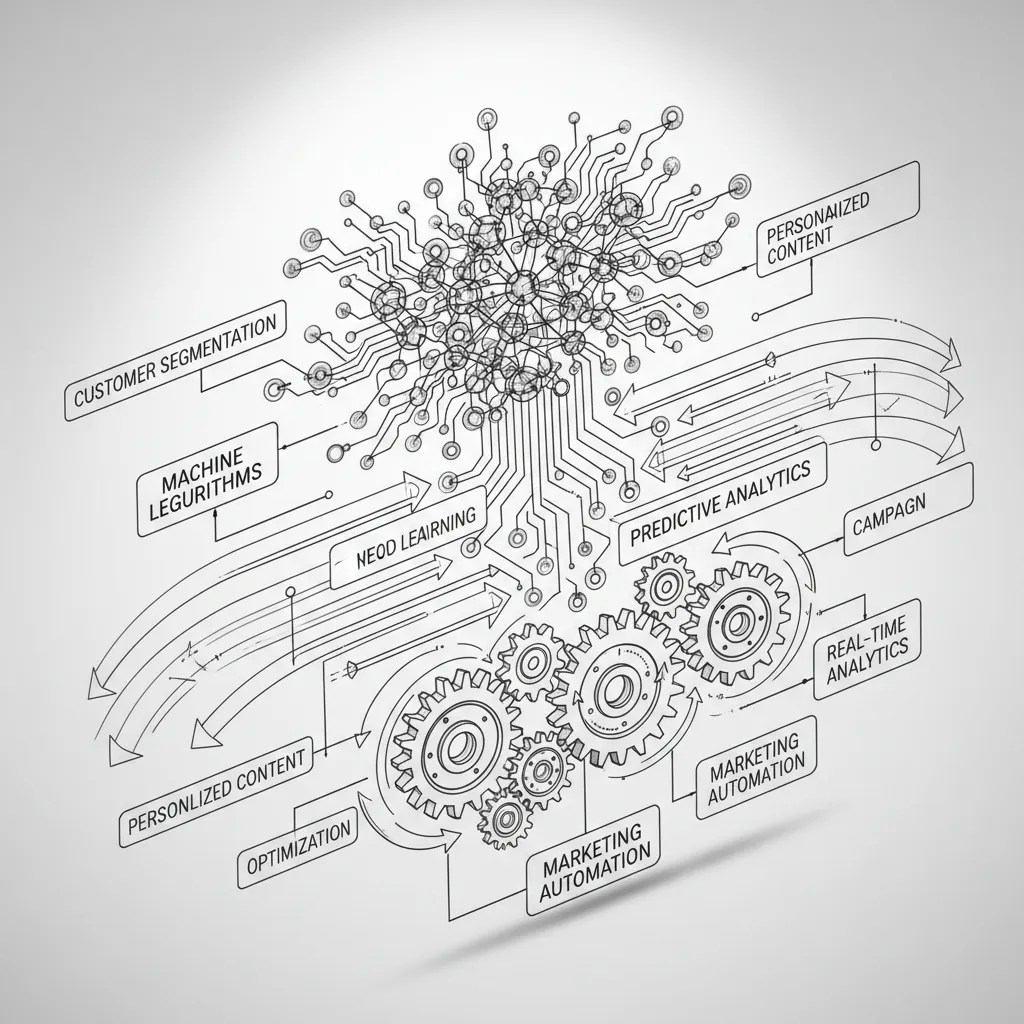
Machine learning algorithms analyze customer behavior to predict future actions. These systems identify which content resonates with specific audience segments, when customers are most likely to convert, and what messaging drives engagement.
Natural language processing (NLP) powers content creation and customer communication. Advanced NLP systems generate blog posts, social media content, email sequences, and even personalized product descriptions that maintain your brand voice while scaling production.
Computer vision technology analyzes visual content performance, automatically tags images, and optimizes visual elements for different platforms. This becomes particularly valuable for social media marketing and e-commerce applications.
Predictive analytics engines forecast customer lifetime value, churn probability, and optimal pricing strategies. These insights enable proactive marketing decisions rather than reactive responses to market changes.
| Technology | Primary Use Case | Implementation Complexity | ROI Timeline |
|---|---|---|---|
| Machine Learning | Predictive analytics | Medium | 3-6 months |
| Natural Language Processing | Content creation | Low | 1-3 months |
| Computer Vision | Visual optimization | High | 6-12 months |
| Predictive Analytics | Customer insights | Medium | 2-4 months |
Choosing the Right AI Tools
Tool selection determines implementation success. The best AI marketing platforms integrate multiple technologies into unified workflows rather than requiring separate point solutions for each function.
Evaluate tools based on four criteria. Integration capabilities determine how well the system works with your existing marketing stack. Scalability ensures the platform grows with your business needs. User experience affects team adoption and productivity. Performance tracking provides the data needed for optimization.
Popular AI marketing platforms include HubSpot's AI-powered features for lead scoring and content optimization, Salesforce Einstein for predictive analytics, and specialized tools like Jasper for content creation and Surfer for SEO optimization.
The implementatie van ai in marketingprocessen works best when tools complement rather than complicate existing workflows. Start with platforms that integrate easily with your current systems before adding specialized tools.
3. Step-by-Step Process for Implementing AI
Successful AI implementation follows a structured approach that minimizes risk while maximizing learning. The process begins with auditing current workflows to identify automation opportunities.
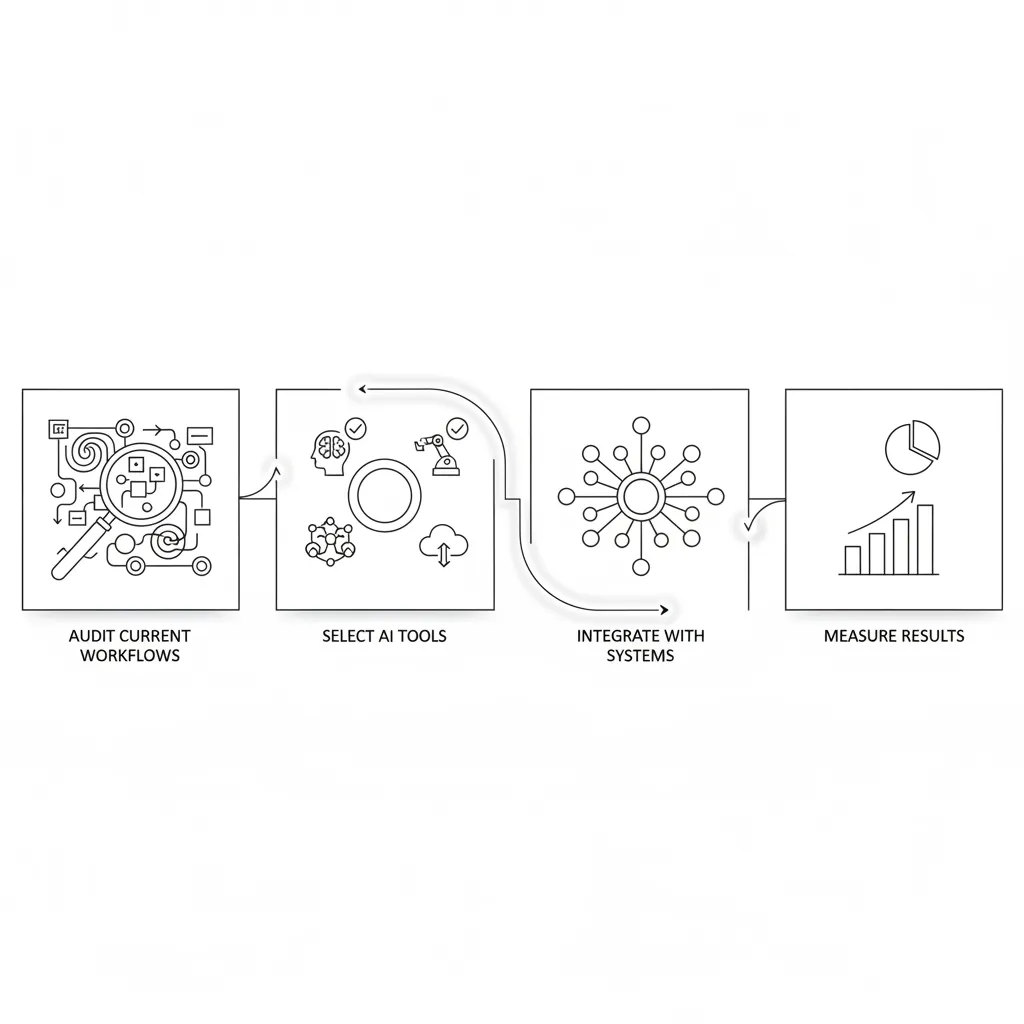
Start by mapping your existing marketing processes. Document how leads move through your funnel, what content gets created, and where manual tasks consume the most time. This audit reveals the highest-impact areas for AI implementation.
Monitoring and Optimizing AI Performance
AI systems require continuous monitoring to maintain performance and identify improvement opportunities. Set up dashboards that track key performance indicators in real-time.
Monitor content quality through engagement metrics, conversion rates, and customer feedback. AI-generated content should maintain your brand voice while improving over time through feedback loops.
Track automation efficiency by measuring time savings, error reduction, and task completion rates. Successful AI implementations typically reduce manual work by 40-70% within six months.
Optimize performance through A/B testing and iterative improvements. AI systems learn from data, so provide feedback on results to improve future outputs. Regular optimization ensures your AI implementation continues delivering value as your business evolves.
4. Case Studies of Successful AI Integration
Real-world examples demonstrate how companies achieve measurable results through strategic AI implementation. These case studies reveal common success patterns and practical lessons for your implementation.
Analyzing the Outcomes
Measuring AI implementation success requires tracking both efficiency gains and business impact. ROI calculations should include time savings, quality improvements, and revenue growth attributable to AI systems.
Short-term metrics include content production speed, campaign setup time, and manual task reduction. These improvements typically appear within 30-90 days of implementation.
Long-term benefits include improved customer engagement, higher conversion rates, and increased customer lifetime value. Industry research shows that enterprise organizations achieve an average ROI of 171% from AI deployments, with 74% seeing returns within the first year.
Track leading indicators like content engagement rates, email open rates, and lead quality scores. These metrics predict future business impact and help optimize AI system performance.
Document lessons learned throughout implementation. Successful AI adoption creates organizational knowledge that accelerates future technology implementations and competitive advantage.
Overcoming Common Implementation Challenges
AI implementation faces predictable obstacles that smart planning can address. Data quality issues, team resistance, and integration complexity represent the most common challenges.
Data quality problems undermine AI performance. Clean, organized data feeds better AI outputs. Invest in data hygiene before implementing AI systems. Poor data creates poor results regardless of technology sophistication.
Team resistance stems from job security concerns and learning curve anxiety. Address these issues through transparent communication about AI's role in augmenting rather than replacing human capabilities. Provide training and support to build confidence with new tools.
Integration complexity increases when adding AI tools to existing marketing stacks. Choose platforms that offer robust APIs and pre-built integrations. Plan integration carefully to avoid workflow disruptions.
Budget constraints limit implementation scope. Start with high-impact, low-cost applications like content creation tools. Demonstrate ROI before expanding to more expensive enterprise platforms.
The implementatie van ai in marketingprocessen succeeds when teams anticipate these challenges and plan accordingly. Successful implementations require technical preparation, change management, and realistic timelines.
Building Your AI Marketing Team
AI implementation requires new skills and roles within marketing teams. Traditional marketing roles evolve while new positions emerge to manage AI systems and data analysis.
Marketing technologists bridge the gap between marketing strategy and AI implementation. These professionals understand both marketing objectives and technical capabilities, ensuring AI tools align with business goals.
Data analysts become increasingly important as AI systems generate vast amounts of performance data. These team members interpret AI outputs and identify optimization opportunities.
Content strategists focus on high-level creative direction while AI handles execution. Their role shifts from writing individual pieces to developing content frameworks and brand guidelines that guide AI systems.
AI prompt engineers optimize how teams interact with AI tools. They develop prompts, templates, and workflows that maximize AI output quality and efficiency.
Existing team members need training in AI tool usage and interpretation. Invest in education to help your team adapt to AI-augmented workflows and maintain competitive advantage.
Future-Proofing Your AI Strategy
AI technology evolves rapidly, requiring flexible implementation strategies that adapt to new capabilities. Future-proof your approach by focusing on foundational elements that remain valuable regardless of specific tools.
Data infrastructure provides the foundation for any AI implementation. Invest in clean, organized, accessible data systems that can feed multiple AI applications over time.
Skill development ensures your team can leverage new AI capabilities as they emerge. Focus on analytical thinking, prompt engineering, and AI-human collaboration rather than specific tool training.
Governance frameworks guide AI usage while maintaining brand consistency and regulatory compliance. Establish clear guidelines for AI content creation, customer data usage, and decision-making authority.
Performance measurement systems track AI impact across multiple metrics and timeframes. Robust analytics help you optimize current implementations and evaluate new AI opportunities.
The implementatie van ai in marketingprocessen requires long-term thinking that balances immediate needs with future opportunities. Successful companies build flexible foundations that support continuous AI evolution.
Measuring Success and ROI
AI implementation success requires comprehensive measurement that tracks both operational efficiency and business outcomes. Establish baseline metrics before implementation to measure improvement accurately.
Efficiency metrics include content production speed, campaign setup time, and manual task reduction. These improvements typically appear quickly and demonstrate immediate AI value.
Quality metrics assess AI output through engagement rates, conversion performance, and customer satisfaction scores. AI systems should maintain or improve quality while increasing output volume.
Business impact metrics connect AI implementation to revenue growth, customer acquisition costs, and lifetime value improvements. These measurements justify continued AI investment and guide expansion decisions.
SEOPro AI's research shows that teams implementing systematic AI workflows see content production increases of 3-5x while maintaining quality standards through human editorial oversight.
Track leading and lagging indicators to understand AI impact fully. Leading indicators predict future performance while lagging indicators confirm results. This dual approach enables proactive optimization and accurate ROI calculation.
The implementatie van ai in marketingprocessen delivers measurable value when teams focus on outcomes rather than activities. Successful implementations create sustainable competitive advantages through improved efficiency and effectiveness.
Getting Started with AutoRanq
AutoRanq exemplifies next-generation AI marketing platforms that handle complex workflows autonomously. The platform's recursive exploration capabilities identify content opportunities and optimize performance without constant human intervention.
AutoRanq's autonomous AI systems think, plan, and execute complex SEO workflows independently. This allows marketing teams to focus on strategic decisions while the platform handles keyword research, content optimization, and performance auditing automatically.
The platform's unique value proposition lies in its ability to accelerate implementation through opportunity identification and real-time optimization. Rather than requiring extensive manual setup, AutoRanq begins delivering value immediately while learning your specific business requirements.
Key features include automatic topic landscape exploration, content gap identification, and emerging trend detection. These capabilities ensure your content strategy stays ahead of market changes and customer needs.
Real-time content optimization adjusts articles for search performance while maintaining brand voice and quality standards. This continuous improvement approach delivers better results than static, one-time optimization efforts.
The implementatie van ai in marketingprocessen becomes significantly easier with platforms like AutoRanq that handle complexity behind simple interfaces while delivering enterprise-grade results.
Conclusion
The implementatie van ai in marketingprocessen represents a fundamental shift in how successful marketing teams operate. AI transforms marketing from a reactive, manual discipline to a predictive, automated system that continuously improves performance.
Key takeaways from this comprehensive guide:
- Start strategically: Begin with high-impact, low-risk applications like content creation before expanding to complex autonomous systems
- Focus on integration: Choose AI tools that work seamlessly with existing workflows rather than creating new silos
- Measure consistently: Track both efficiency gains and business outcomes to demonstrate ROI and guide optimization
- Build capabilities: Invest in team training and data infrastructure that support long-term AI evolution
- Maintain human oversight: Use AI to amplify human creativity and strategic thinking rather than replace it entirely
Companies that successfully implement AI in marketing processes gain significant competitive advantages through improved efficiency, better customer engagement, and faster growth. The window for early-mover advantage continues narrowing as AI adoption accelerates across all market segments.
Ready to transform your marketing processes with AI? Explore how AutoRanq can help you implement autonomous AI systems that identify opportunities, automate workflows, and optimize performance while you focus on strategic growth initiatives.