
Mastering conversational search intent analysis
Mastering Conversational Search Intent Analysis Conversational search intent analysis transforms how marketers understand user queries by focusing on natural...
Mastering Conversational Search Intent Analysis
Conversational search intent analysis transforms how marketers understand user queries by focusing on natural language patterns rather than traditional keyword matching. This approach enables businesses to optimize content for AI-driven search engines that prioritize context and user intent over keyword density.
Search behavior has fundamentally changed. Users no longer type fragmented keywords like "best running shoes" into search bars. Instead, they ask complete questions: "What are the best running shoes for a beginner with flat feet who runs mostly on pavement?" This shift demands a new approach to understanding and optimizing for user intent. For many companies, leveraging an autonomous AI SEO platform is the most efficient way to keep pace with these rapid behavioral changes.
The rise of AI assistants, voice search, and conversational interfaces has created an environment where traditional SEO strategies fall short. Modern search engines use natural language processing to understand context, intent, and the relationships between concepts. This evolution requires marketers to think beyond keywords and focus on conversations.
For SAAS companies and digital marketers, mastering conversational search intent analysis becomes a competitive advantage. It allows you to create content that directly answers user questions, improves visibility in AI search results, and drives more qualified traffic to your platform.
1. The Evolution of Search Intent Analysis
The transformation from keyword-based to conversational queries represents the biggest shift in search behavior since the internet began. Traditional SEO focused on identifying high-volume keywords and optimizing content around those specific terms. This approach worked when search engines relied primarily on keyword matching algorithms.

Today's search landscape operates differently. Generative engines rank based on understanding rather than keyword frequency. They analyze dialogue patterns, reasoning flow, and contextual relevance to determine which content best answers user queries.
The impact of AI on search behavior extends beyond simple query processing. Machine learning models trained on billions of conversation turns now power search engines. These models understand the nuances of human communication, including implied context, follow-up questions, and the relationship between different concepts within a single query. To stay visible, an entrepreneur must ensure their content strategy aligns with these neural search patterns.
This evolution affects how businesses approach content creation and optimization. Instead of targeting individual keywords, successful companies now focus on topic clusters and comprehensive answers that address entire user journeys. The goal shifts from ranking for specific terms to becoming the authoritative source for complete conversations around topics.
Understanding User Behavior Changes
Voice search and virtual assistants have accelerated the adoption of conversational queries. When users speak to Siri, Alexa, or Google Assistant, they naturally use complete sentences and questions. This behavior has influenced typed searches as well, creating a more conversational approach across all search interfaces.
The rise of AI chatbots and search assistants has trained users to expect natural dialogue with technology. They ask follow-up questions, provide additional context, and expect nuanced answers that consider their specific situation. This behavioral shift requires content creators to anticipate and address these conversational patterns.
Modern users also expect search engines to understand implied context. When someone searches for "best project management software for remote teams," they expect results that consider factors like team size, budget constraints, integration requirements, and industry-specific needs without explicitly stating these criteria.
2. Key Components of Conversational Search Intent
Understanding conversational search intent requires analyzing multiple layers of user communication. The surface-level query represents only the beginning of the user's actual information need. Effective analysis must consider the context, implied requirements, and underlying goals that drive the search behavior.
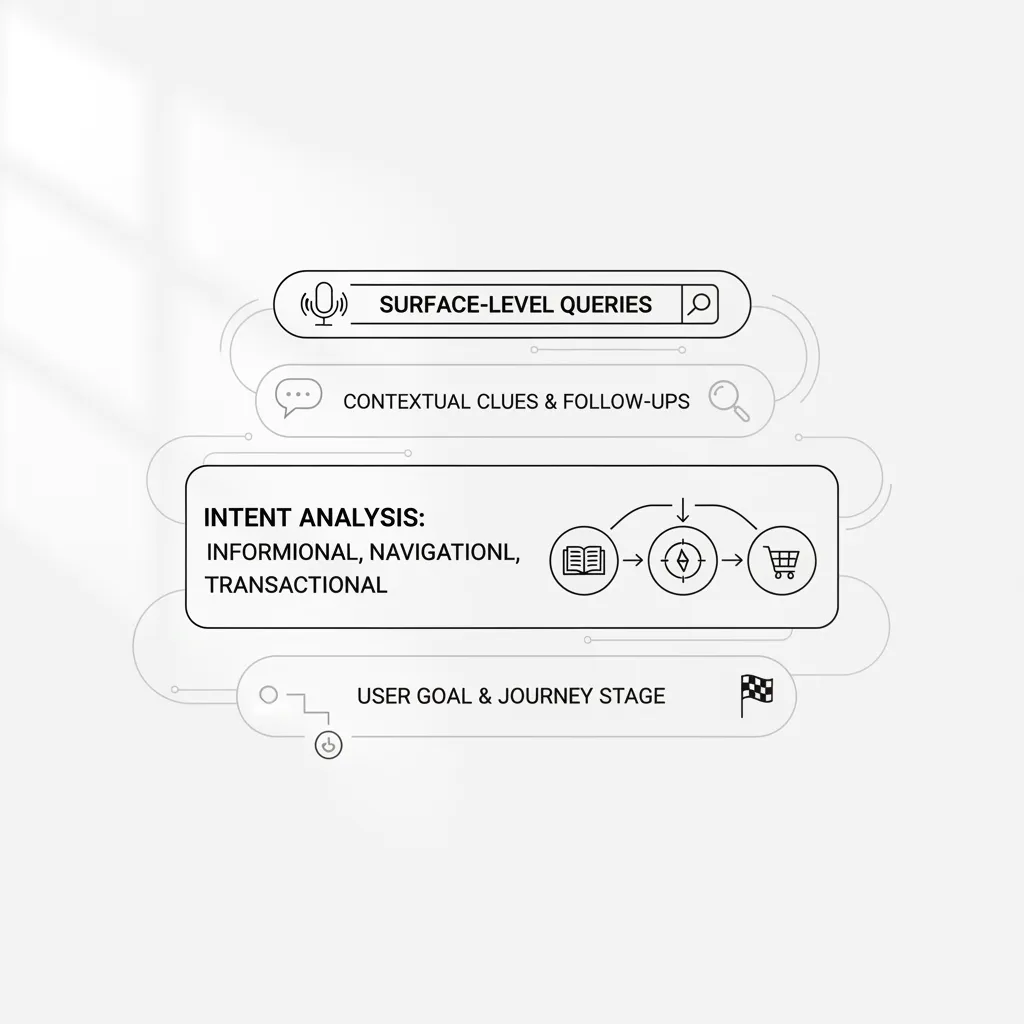
Contextual understanding forms the foundation of conversational search intent analysis. Users bring personal circumstances, industry knowledge, and specific challenges to every search query. A marketing director searching for "content automation tools" has different needs than a freelance writer with the same query, even though the surface-level search appears identical. For an SMB looking to scale, capturing this nuanced intent is vital for converting high-quality leads.
The user intent behind questions extends beyond the literal interpretation of words. When someone searches "How do I improve my website's search rankings," they might actually need guidance on content strategy, technical SEO, link building, or conversion optimization. Successful conversational search intent analysis identifies these underlying needs and addresses them comprehensively.
Emotional context also plays a crucial role in conversational queries. Users express frustration, urgency, curiosity, or specific pain points through their language choices. Recognizing these emotional indicators helps create content that resonates with users' actual state of mind and provides appropriate solutions.
The Role of Context in Search
Context influences search results in multiple dimensions. Geographic context affects local business recommendations and region-specific information. Temporal context considers current events, seasonal trends, and time-sensitive needs. Personal context includes user history, preferences, and behavioral patterns that inform result relevance.
Search engines now analyze the relationship between current queries and previous searches within the same session. If a user searches for "email marketing platforms" followed by "integration with CRM systems," the search engine understands the connection and provides results that address both needs simultaneously.
Industry context significantly impacts how users phrase queries and what information they consider valuable. B2B software buyers use different terminology and have different evaluation criteria than consumer product purchasers. Understanding these contextual differences enables more effective content optimization for specific audiences.
3. Implementing Strategies for Conversational Search Intent
Creating content that answers user queries requires a fundamental shift in content strategy. Instead of focusing on keyword density and technical optimization, successful content addresses the complete user journey and anticipates follow-up questions that naturally arise during the research process.

Modern content optimization focuses on answering natural questions and anticipating follow-up queries rather than targeting specific keyword variations. This approach creates more comprehensive, useful content that serves both user needs and search engine requirements.
Natural language processing techniques help identify the conversational patterns within your target audience's search behavior. Analyzing customer support tickets, sales conversations, and user feedback reveals the actual language people use when discussing your industry, products, or services. Implementing an AI SEO strategy allows you to automate this analysis and update content in real-time.
Content structure becomes critical for conversational search optimization. Information should flow logically from basic concepts to advanced applications, addressing different knowledge levels and use cases within the same piece. This approach helps capture users at various stages of their research journey.
Question-based content organization works particularly well for conversational search intent. Structure articles around the questions users actually ask, using these questions as headings and providing direct, actionable answers. This format aligns with how AI systems process and cite information.
Content Structuring for Better Engagement
FAQ sections and conversational tones in writing create content that feels natural and accessible to users. Instead of formal, corporate language, use the same terminology and phrasing that your audience uses when discussing challenges and solutions in your industry.
Anticipate and address objections, concerns, and follow-up questions within your content. When discussing a software feature, explain not just what it does but why it matters, how it compares to alternatives, and what implementation looks like in practice.
Use examples and case studies that reflect real user scenarios. Generic examples fail to resonate with users who need specific guidance for their unique situations. Industry-specific examples and use cases demonstrate understanding of user context and build trust with potential customers.
4. Measuring the Effectiveness of Conversational SEO
Analyzing user engagement metrics reveals how well your content addresses conversational search intent. Traditional metrics like page views and keyword rankings provide limited insight into content effectiveness. Modern measurement requires examining user behavior patterns, engagement depth, and conversion quality.
Time on page and scroll depth indicate whether users find your content valuable and comprehensive. High engagement metrics suggest that your content successfully addresses the complete user query rather than just providing surface-level information.
Tracking keyword performance requires expanding beyond traditional keyword rankings to include featured snippets, AI overview citations, and voice search results. These newer result formats often provide better indicators of conversational search success than traditional organic rankings.
User journey analysis helps identify how conversational content influences the complete customer experience. Track how users move through your site after landing on conversational content, noting which pages they visit next and where they convert or exit. For any company, understanding this flow is the key to optimizing the digital sales funnel.
Conversion quality metrics matter more than conversion quantity for conversational search optimization. Users who arrive through conversational queries often have higher intent and better product-market fit, leading to higher lifetime value and lower churn rates.
Tools for Tracking Performance
Analytics platforms must evolve to measure conversational search effectiveness. Google Search Console provides insights into query performance, including the specific questions users ask before finding your content. This data helps identify gaps and opportunities for content expansion.
Heat mapping and user session recording tools reveal how users interact with conversational content. These insights show whether your content structure supports natural reading patterns and whether users find the information they need quickly.
AI-powered analytics tools can analyze user queries and content performance to identify patterns and optimization opportunities. These tools help predict which conversational topics will drive the most valuable traffic and conversions for your business.
5. Future Trends in Conversational Search Intent
The integration of AI and machine learning in search continues accelerating, creating new opportunities and challenges for content creators. Search engines increasingly prioritize content that demonstrates deep understanding of user intent over content optimized for specific keywords.
Multimodal search capabilities will expand conversational search beyond text to include voice, image, and video inputs. Users will ask questions about images, request explanations of complex diagrams, and expect search engines to understand context across different media types.
Personalization will become more sophisticated as AI systems learn individual user preferences, communication styles, and information needs. Search results will adapt not just to query content but to the user's preferred learning style, expertise level, and decision-making process.
Real-time conversation capabilities will enable search engines to engage in back-and-forth dialogue with users, asking clarifying questions and providing increasingly specific answers. This evolution will require content creators to think about their content as part of dynamic conversations rather than static information repositories.
The rise of specialized AI assistants for different industries and use cases will create new opportunities for niche content optimization. B2B software companies will need to optimize for industry-specific AI tools that understand technical terminology and business processes.
Preparing for Changes in User Behavior
Adapting SEO strategies to future trends requires building flexibility into content creation and optimization processes. Create content frameworks that can accommodate different query types, user contexts, and search interfaces without requiring complete rewrites.
Invest in understanding your audience's natural language patterns and communication preferences. Conduct user interviews, analyze support conversations, and monitor social media discussions to identify how your target market discusses challenges and solutions.
Develop content that works across multiple formats and interfaces. Written content should translate well to voice responses, visual summaries, and interactive experiences. This versatility ensures your content remains valuable as search interfaces continue evolving.
| Traditional SEO | Conversational SEO |
|---|---|
| Keyword density optimization | Natural language patterns |
| Individual keyword targeting | Topic cluster coverage |
| Page-level optimization | Journey-based content |
| Search volume focus | Intent quality focus |
| Ranking position metrics | Engagement and conversion metrics |
Advanced Implementation Techniques
Successfully implementing conversational search intent analysis requires sophisticated content planning and execution strategies. Start by mapping your customer journey and identifying the specific questions users ask at each stage. This mapping process reveals content gaps and optimization opportunities that traditional keyword research often misses.
Create content clusters that address complete topics rather than individual queries. When users search for information about email marketing automation, they need guidance on strategy, tool selection, implementation, measurement, and optimization. Comprehensive topic coverage increases your chances of being cited by AI systems and provides more value to users.
Use semantic keyword research to identify related concepts and terminology that support your main topics. Modern keyword research prioritizes semantic relationships and user intent over search volume metrics, helping you discover zero-search-volume queries that drive high-quality traffic.
Implement structured data markup that helps search engines understand your content context and relationships. Schema markup for FAQ sections, how-to guides, and product information increases the likelihood of appearing in featured snippets and AI-generated responses.
Content Optimization for AI Citations
AI systems cite content that provides clear, authoritative answers to user questions. Structure your content to include direct answers immediately after headings, followed by supporting details and context. This "answer-first" approach aligns with how AI assistants process and present information.
Create content that stands alone while connecting to broader topics. Each section should provide complete value independently while contributing to the overall topic coverage. This approach helps AI systems extract relevant information for specific queries while maintaining topical authority.
Use conversational transitions and natural language patterns throughout your content. Instead of abrupt topic changes, guide readers through logical progressions that mirror how people naturally think about and discuss complex topics.
Include relevant examples, case studies, and practical applications that demonstrate real-world value. AI systems favor content that provides actionable guidance rather than theoretical information, making practical examples crucial for citation success.
Technical Implementation Considerations
Page speed and mobile optimization become even more critical for conversational search success. Voice search users and AI assistants prioritize fast-loading, mobile-friendly content that provides immediate value without technical barriers.
Implement proper heading structure (H1, H2, H3) that reflects natural question hierarchies. Use headings that mirror actual user questions, making it easy for both users and AI systems to navigate your content structure.
Create internal linking strategies that support conversational user journeys. Link related topics and questions in ways that anticipate user needs and provide logical next steps in their research process.
Optimize for local and contextual search when relevant. Include location-specific information, industry contexts, and situational details that help search engines understand when your content applies to specific user circumstances.
Measuring Long-term Success
Track brand mention increases and thought leadership indicators that result from conversational search optimization. When your content successfully addresses user intent, it often gets referenced in discussions, shared on social media, and cited by other content creators.
Monitor customer acquisition quality metrics to understand how conversational search traffic converts compared to traditional search traffic. Users who find you through conversational queries often have higher intent and better product-market fit.
Understanding search intent helps identify which keywords drive business results rather than just traffic, enabling more strategic content investments and better ROI measurement.
Analyze the relationship between conversational content performance and overall business metrics like lead quality, sales cycle length, and customer lifetime value. This analysis helps justify investment in conversational search optimization and guides future content strategy decisions.
Conclusion
Mastering conversational search intent analysis represents a fundamental shift in how businesses approach SEO and content marketing. This evolution from keyword-focused to conversation-focused optimization aligns with how users naturally communicate and how AI systems process information.
The key takeaways for implementing effective conversational search intent analysis include:
- Focus on user context and intent rather than keyword density and technical optimization
- Create comprehensive topic coverage that addresses complete user journeys and anticipates follow-up questions
- Structure content for natural dialogue using question-based organization and conversational language patterns
- Measure engagement quality and conversion effectiveness rather than just traffic volume and keyword rankings
- Prepare for AI-driven search evolution by building flexible, conversation-ready content frameworks
- Implement technical optimizations that support fast, mobile-friendly access to conversational content
The future of search belongs to businesses that understand and optimize for conversational intent. As AI assistants become more sophisticated and voice search continues growing, the ability to create content that naturally answers user questions will determine long-term search success.
Ready to transform your content strategy for conversational search intent analysis? AutoRanq's AI-powered platform can help you identify conversation patterns, optimize content for natural language queries, and track performance across traditional and AI-driven search channels. Discover how autonomous AI systems can streamline your conversational SEO implementation and keep you ahead of evolving search behaviors.