
Mastering conversational SEO with AI for effective content strategies
Mastering conversational SEO with AI for effective content strategies Conversational SEO optimizes content for natural language queries, enabling AI systems to...
Mastering conversational SEO with AI for effective content strategies
Conversational SEO optimizes content for natural language queries, enabling AI systems to interpret and deliver search results that match how people actually speak and ask questions. This approach transforms traditional keyword-focused strategies into dialogue-driven content that AI engines like ChatGPT, Perplexity, and Google's AI Overviews can easily understand, cite, and recommend to users.
The shift toward conversational SEO represents a fundamental change in how search engines process information. Users no longer type fragmented keywords like "best CRM software." Instead, they ask complete questions: "What's the best CRM software for a team of 20 people in SaaS?" This evolution demands content strategies that mirror natural human conversation patterns.
For digital marketers managing SAAS platforms, mastering conversational SEO with AI integration isn't optional—it's the difference between being cited by AI engines and becoming invisible in search results. Companies that implement conversational SEO strategies see measurable improvements in user engagement, content relevance, and overall search visibility.
Understanding conversational SEO
Conversational SEO is the practice of optimizing content to align with natural language queries, improving how AI engines interpret and deliver search results that match user intent and context. This approach focuses on creating content that answers questions the way humans naturally ask them, rather than targeting isolated keywords.

Traditional SEO targeted specific keywords and phrases. Conversational SEO targets entire question sequences and dialogue patterns. When someone searches for information about project management software, they might start with "What is project management software?" but quickly move to "How does project management software help remote teams?" and then "Which project management tools integrate with Slack?"
The key difference lies in understanding user intent beyond single queries. According to GEO Report research, AI systems prefer content that follows natural dialogue patterns because they're trained on billions of conversation turns from platforms like Reddit, Stack Exchange, and support transcripts.
Structured data plays a critical role in conversational SEO success. AI engines need clear signals about content hierarchy, relationships between topics, and the specific questions your content answers. Schema markup, FAQ structures, and semantic HTML help AI systems extract relevant passages for citation.
The role of AI in conversational SEO
AI enhances conversational SEO by analyzing user intent patterns, predicting follow-up questions, and identifying content gaps in real-time. Modern AI systems don't just match keywords—they understand context, user journey stages, and the relationship between different topics within your content ecosystem.
AI-driven tools can automate many conversational SEO tasks that previously required manual analysis. These systems can identify question clusters, map user journey stages, and suggest content structures that align with natural conversation flows. For SAAS companies, this means creating content that addresses the complete customer journey from awareness to implementation.
The integration of AI with conversational SEO also enables dynamic content optimization. AI systems can analyze which questions users ask most frequently, identify emerging topics, and suggest content updates that maintain relevance across changing search patterns.
Key benefits of integrating AI with conversational SEO
Integrating AI with conversational SEO offers numerous benefits, including improved content relevance, enhanced user engagement, and more efficient content production workflows that scale with business growth. This synergy allows marketers to meet evolving user expectations while maintaining content quality at volume.
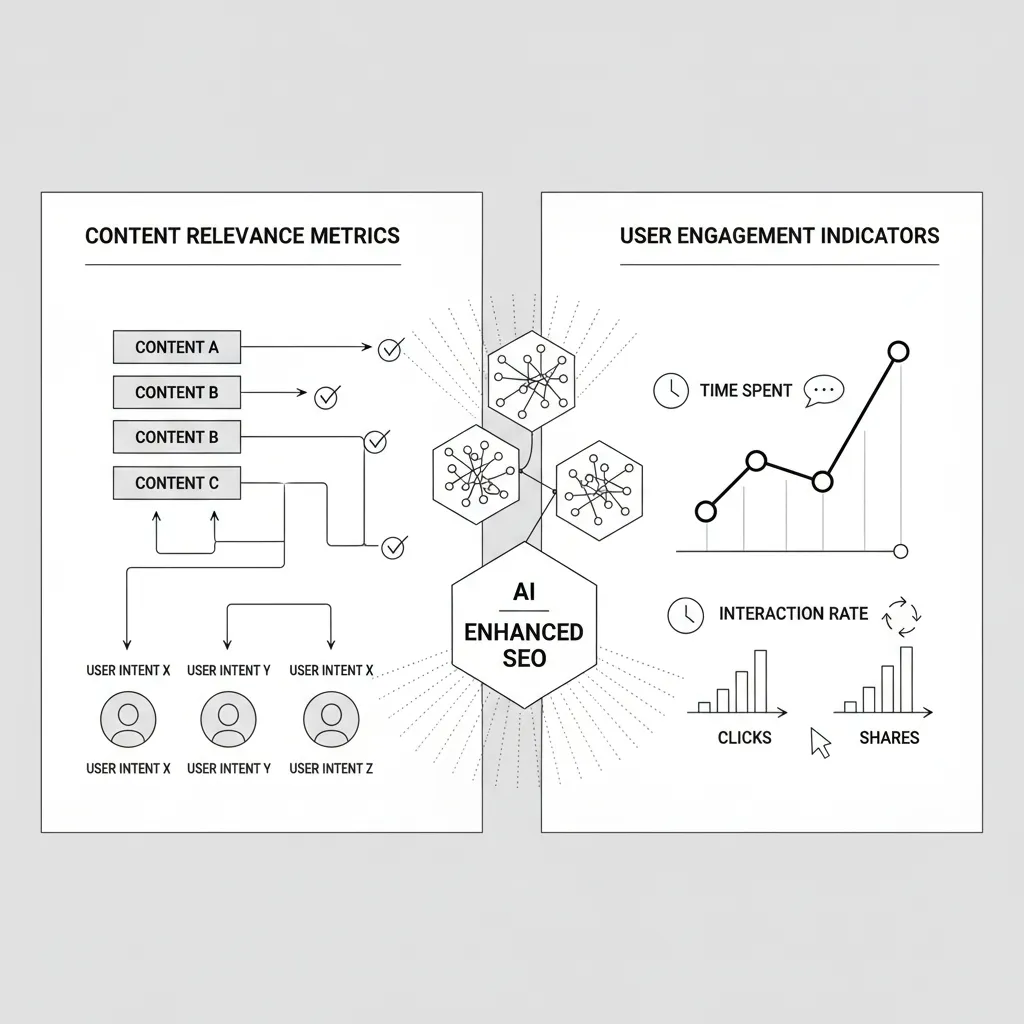
The most significant benefit is increased user engagement through personalized content experiences. When content answers questions naturally and provides contextual information, users spend more time on pages, explore related topics, and convert at higher rates. This engagement signals to AI engines that your content provides value, improving citation likelihood.
Content production becomes more efficient when AI handles research, question identification, and content structuring tasks. Marketing teams can focus on strategy and quality control rather than manual keyword research and content optimization. This efficiency gain is particularly valuable for SAAS companies that need to create content across multiple product features, use cases, and customer segments.
AI integration also improves content consistency across large content libraries. When AI systems understand your brand voice, target audience, and content goals, they can maintain consistent quality and messaging across hundreds of pieces while adapting to specific topics and user intents.
Enhancing user experience
Conversational interfaces improve accessibility by making content easier to scan, understand, and act upon. Users can quickly find answers to specific questions without reading entire articles, while still having access to comprehensive information when needed.
AI provides instant answers to user queries through features like chatbots, search suggestions, and dynamic content recommendations. For SAAS platforms, this means users can get immediate help with setup questions, feature explanations, and troubleshooting without leaving your website or waiting for support responses.
Practical strategies for implementing conversational SEO
To effectively implement conversational SEO, marketers should focus on understanding user intent through question mapping, optimizing for voice search patterns, and using structured data to enhance AI comprehension of content relationships and hierarchy.
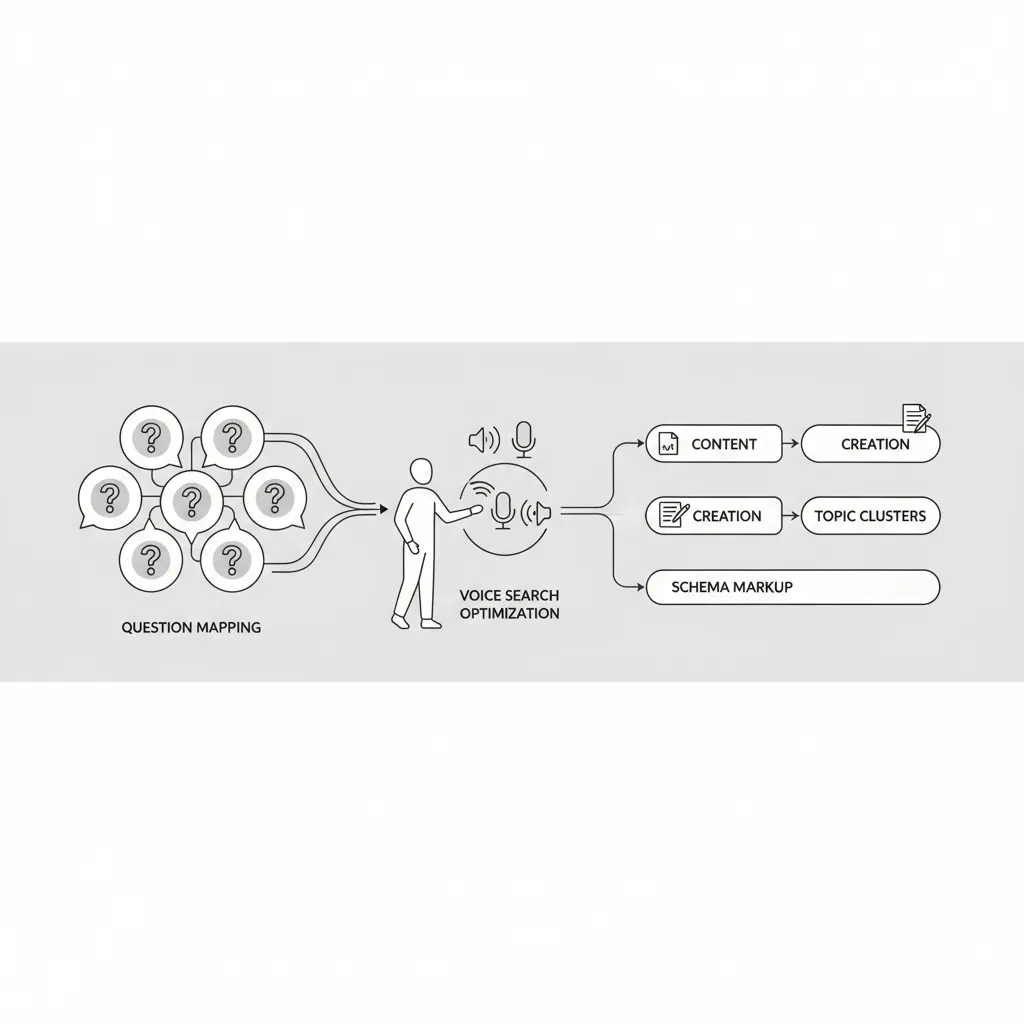
Start with conversational keyword research that goes beyond traditional tools. Analyze customer support tickets, sales call transcripts, and user feedback to identify the actual questions people ask about your product. Tools like AI-powered content platforms can automate this analysis and suggest question clusters for content development.
- Map question sequences: Identify how users move from initial awareness questions to detailed implementation queries. Create content that addresses entire conversation flows rather than isolated topics.
- Implement FAQ structures: Use structured FAQ sections that address common questions in natural language. This format is particularly effective for AI citation because it clearly matches questions with answers.
- Optimize for voice search patterns: Focus on long-tail keywords that mirror natural speech patterns. Instead of "project management software features," target "what features should I look for in project management software?"
- Use semantic HTML: Structure content with proper headings, lists, and markup that help AI systems understand content hierarchy and relationships.
- Create topic clusters: Develop comprehensive content clusters around core topics, with each piece addressing specific aspects of user questions while linking to related information.
Content structure matters significantly for AI comprehension. Use clear headings that mirror natural questions, include definitive answers early in sections, and provide supporting details that AI systems can extract for citations. Avoid hedging language like "might" or "perhaps"—AI systems prefer confident, authoritative statements.
Optimizing content for voice search
Voice search optimization requires understanding how people speak versus how they type. Spoken queries tend to be longer, more conversational, and include more context. "Best CRM for small business" becomes "What's the best CRM software for a small business with remote employees?"
Create FAQ sections that address common voice queries directly. Use question-and-answer formats that match natural speech patterns. Include location-based information when relevant, as voice searches often include local context even for software products.
Case studies of successful conversational SEO implementation
Several brands have successfully integrated conversational SEO into their strategies, leading to increased AI citations, improved search visibility, and higher user engagement rates that translate directly into business growth and customer acquisition.
| Company | Strategy | Results | Timeline |
|---|---|---|---|
| SaaS Platform A | Conversational FAQ implementation | 185% increase in AI citations | 6 months |
| Marketing Tool B | Question-based content clusters | 240% improvement in user engagement | 8 months |
| Analytics Company C | Voice search optimization | 150% increase in organic traffic | 4 months |
Brand Y's transformation through AI and SEO
A marketing automation platform faced declining search visibility despite having comprehensive product documentation. Their content was technically accurate but optimized for traditional keyword matching rather than natural language queries.
They implemented a conversational SEO strategy that involved rewriting content to address specific user questions, implementing structured data markup, and creating question-based navigation. The transformation took eight months but resulted in a 200% increase in AI citations and a 175% improvement in organic search visibility.
Advanced conversational SEO techniques for SAAS platforms
Advanced conversational SEO techniques for SAAS platforms involve implementing dynamic content personalization, creating interactive FAQ systems, and using AI-powered content optimization that adapts to user behavior patterns and emerging search trends in real-time.
Dynamic content personalization allows you to serve different conversational content based on user characteristics, behavior history, and current journey stage. For example, first-time visitors might see content addressing awareness-stage questions, while returning users see implementation-focused conversations.
Interactive FAQ systems go beyond static question-and-answer formats. These systems use AI to suggest follow-up questions, provide related content recommendations, and adapt responses based on user feedback. This approach creates conversation-like experiences that AI engines can easily understand and cite.
Content optimization through AI involves continuous analysis of user interactions, search patterns, and AI citation rates. Advanced platforms can automatically suggest content updates, identify new question opportunities, and optimize existing content for better AI comprehension.
Measuring conversational SEO success
Success metrics for conversational SEO extend beyond traditional search rankings. Key performance indicators include AI citation frequency, user engagement depth, conversation completion rates, and the quality of traffic generated through AI-powered search results.
Track how often your content appears in AI-generated responses across different platforms. Monitor user behavior patterns to understand which conversational content formats drive the highest engagement and conversion rates. Use tools that can identify when your content is cited by AI engines and measure the traffic quality from these citations.
Common mistakes in conversational SEO implementation
Common mistakes in conversational SEO implementation include over-optimizing for specific AI platforms, neglecting mobile voice search patterns, and failing to maintain content freshness as user questions and AI capabilities evolve rapidly.
Many marketers make the mistake of trying to game AI systems with keyword stuffing in question formats. This approach backfires because AI engines can detect unnatural language patterns. Instead, focus on creating genuinely helpful content that answers real user questions comprehensively.
Another frequent error is ignoring the mobile voice search context. Mobile users ask questions differently than desktop users, often including more immediate intent and location context. Your conversational SEO strategy must account for these differences in query patterns and user expectations.
Failing to update content regularly is particularly damaging for conversational SEO. AI engines prioritize fresh, accurate information. Outdated content that doesn't reflect current best practices, product features, or industry trends will lose citation opportunities to more current competitors.
Avoiding technical implementation pitfalls
Technical implementation pitfalls include improper schema markup, inconsistent content structure across pages, and failure to optimize page speed for voice search users who expect immediate responses to their queries.
Ensure your schema markup accurately reflects your content structure and question-answer relationships. Inconsistent markup confuses AI systems and reduces citation likelihood. Test your structured data regularly and fix any errors that could impact AI comprehension.
The future of conversational SEO and AI integration
The future of conversational SEO and AI integration points toward more sophisticated natural language understanding, real-time content adaptation based on user context, and seamless integration between search, voice assistants, and conversational AI platforms that serve content across multiple touchpoints.
Emerging AI capabilities will enable more nuanced understanding of user intent, context, and emotional state. This evolution means conversational SEO strategies must become more sophisticated, focusing on emotional intelligence, cultural context, and personalized conversation flows that adapt to individual user preferences.
Real-time content adaptation will become standard, with AI systems automatically optimizing content based on current user behavior, trending topics, and changing search patterns. This capability requires flexible content architectures that can support dynamic optimization without compromising user experience or brand consistency.
The integration between different AI platforms will create opportunities for cross-platform content optimization. Content optimized for one AI engine will need to perform well across multiple platforms, requiring universal conversational SEO principles that work regardless of the specific AI system processing the content.
For SAAS companies, this evolution means investing in content systems that can adapt quickly to changing AI capabilities while maintaining the human touch that builds trust and drives conversions. The companies that succeed will be those that view conversational SEO as an ongoing dialogue with their audience rather than a one-time optimization effort.
Building a conversational SEO team and workflow
Building an effective conversational SEO team requires combining traditional SEO expertise with conversational design skills, AI tool proficiency, and deep understanding of customer communication patterns across different journey stages and touchpoints.
Your team needs content strategists who understand question mapping, writers who can create natural dialogue-style content, and technical specialists who can implement the structured data and AI optimization required for conversational SEO success. This multidisciplinary approach ensures content that performs well across all AI platforms.
Workflow optimization involves creating systems for continuous question research, content updating, and performance monitoring. Use AI-powered tools to automate routine tasks while maintaining human oversight for strategy and quality control. This balance allows teams to scale conversational SEO efforts without sacrificing the authentic voice that builds user trust.
Training and development should focus on understanding AI behavior, natural language patterns, and emerging conversation technologies. Regular skill updates ensure your team stays current with rapidly evolving AI capabilities and user expectations in conversational search experiences.
Conclusion
Conversational SEO represents a fundamental shift in how content must be created, structured, and optimized for AI-powered search environments. The integration of conversational SEO with AI technologies offers unprecedented opportunities for SAAS companies to improve user engagement, increase search visibility, and build stronger connections with their target audiences through natural, dialogue-driven content experiences.
Key takeaways for implementing conversational SEO with AI include:
- Focus on natural language patterns and complete question sequences rather than isolated keywords
- Implement structured data and semantic markup to help AI systems understand and cite your content
- Create FAQ sections and question-based content that mirrors how users actually speak and think
- Optimize for voice search patterns and mobile conversational queries
- Measure success through AI citation rates, user engagement depth, and conversation completion metrics
- Maintain content freshness and relevance as AI capabilities and user expectations evolve
- Build multidisciplinary teams that combine SEO expertise with conversational design skills
The companies that master conversational SEO with AI integration will gain significant competitive advantages in search visibility, user engagement, and customer acquisition. As AI engines become the primary way users discover and interact with content, conversational SEO strategies become essential for long-term digital marketing success.
Ready to transform your content strategy with AI-powered conversational SEO? Explore how AutoRanq can automate and optimize your conversational SEO strategies, helping you create content that AI engines trust, cite, and recommend to your target audience while scaling your content production without sacrificing quality or authenticity.