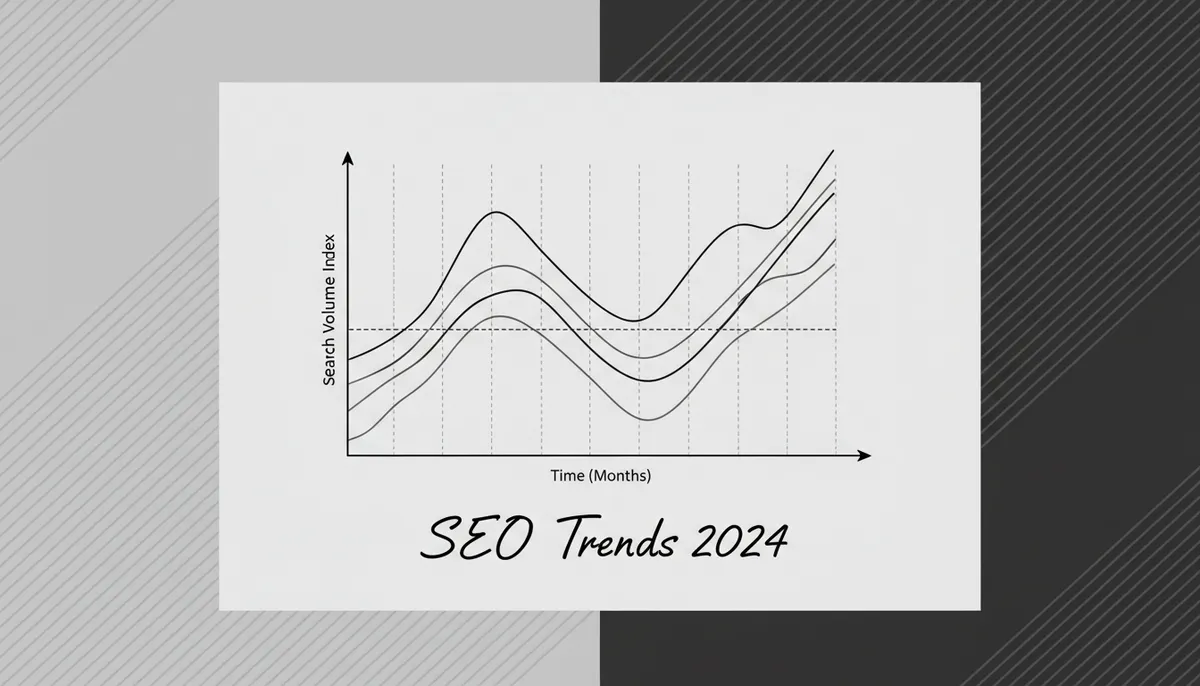
Mastering keyword trend analysis for effective SEO strategies
Mastering Keyword Trend Analysis for Effective SEO Strategies Keyword trend analysis is the systematic process of tracking and interpreting search term...
Mastering Keyword Trend Analysis for Effective SEO Strategies
Keyword trend analysis is the systematic process of tracking and interpreting search term popularity over time to identify opportunities, predict user behavior, and optimize content strategies for maximum SEO impact.
Understanding search patterns transforms your SEO approach from reactive to predictive. Modern marketers who master keyword trend analysis gain competitive advantages by identifying emerging topics before competitors, adapting content strategies to shifting user intent, and capitalizing on seasonal opportunities that drive traffic and conversions.
The digital landscape evolves rapidly. Search behaviors change. New technologies emerge. Consumer interests shift. Without proper keyword trend analysis, you're essentially flying blind through these changes, missing opportunities that could significantly boost your online visibility and business growth. Many entrepreneurs use these insights to pivot their marketing efforts toward high-growth niches before they become saturated.
This comprehensive guide reveals how to implement effective keyword trend analysis strategies that transform your SEO performance. You'll discover proven tools, automation techniques, and real-world case studies that demonstrate the measurable impact of strategic trend tracking.
1. Importance of Keyword Trend Analysis in SEO
Keyword trend analysis serves as the foundation for data-driven SEO strategies. By monitoring how search terms perform over time, you gain insights into user behavior patterns, seasonal fluctuations, and emerging market opportunities that traditional keyword research often misses.

The primary benefits of keyword trend analysis include enhanced content relevance, improved timing for content publication, and better understanding of audience needs. When you track keyword performance over months and years, patterns emerge that reveal the best times to target specific topics and the lifecycle of trending terms.
Modern SEO success requires more than static keyword lists. Search engines increasingly favor fresh, relevant content that addresses current user interests. Keyword trend analysis helps you identify these interests as they develop, giving you first-mover advantages in competitive markets.
Understanding Search Behavior
User behavior changes constantly due to external factors like news events, seasonal patterns, technological advances, and cultural shifts. Effective keyword trend analysis captures these changes and translates them into actionable SEO strategies.
Search behavior analysis reveals three critical patterns: cyclical trends that repeat annually, linear trends that show steady growth or decline, and spike trends triggered by specific events. Each pattern requires different content strategies and timing considerations.
For SMB owners, understanding these behavioral patterns proves especially valuable. B2B search patterns often follow business cycles, with increased activity during budget planning periods, conference seasons, and fiscal year transitions. Tracking these patterns enables more strategic content calendar planning.
The importance of adapting to behavioral changes cannot be overstated. Companies that ignore shifting search patterns often see declining organic traffic, reduced engagement, and missed opportunities to capture high-intent prospects during peak interest periods.
2. Tools for Effective Keyword Trend Analysis
Modern keyword trend analysis relies on sophisticated tools that process vast amounts of search data and identify meaningful patterns. The most effective approaches combine multiple data sources to create comprehensive trend pictures that inform strategic decisions.

Google Trends remains the foundational tool for understanding search volume changes over time. It provides relative popularity data, geographic insights, and related query suggestions that help identify emerging opportunities. However, Google Trends works best when combined with other analytical tools for complete trend analysis.
SEMrush, Ahrefs, and similar platforms offer historical keyword data, competitor analysis, and trend forecasting capabilities. These tools excel at providing specific search volume numbers, difficulty scores, and competitive landscape insights that complement Google Trends' broader pattern recognition.
Advanced marketers increasingly leverage AI-powered solutions that automate trend identification and analysis. These systems process multiple data streams simultaneously, identifying correlations between search trends, content performance, and business outcomes that human analysts might miss.
Comparative Analysis of Tools
Different keyword trend analysis tools excel in specific areas, making tool selection critical for effective analysis. Understanding each tool's strengths and limitations helps you build comprehensive analysis workflows that capture all relevant trend data.
| Tool | Best For | Key Strength | Limitation |
|---|---|---|---|
| Google Trends | Broad trend patterns | Real-time data | No absolute volumes |
| SEMrush | Competitive analysis | Historical data depth | Expensive for small teams |
| Ahrefs | Backlink correlation | Content gap analysis | Learning curve complexity |
| AI Platforms | Automation and scale | Pattern recognition | Requires integration |
The most effective keyword trend analysis strategies combine multiple tools to create comprehensive trend pictures. Free tools like Google Trends provide broad directional insights, while paid platforms offer detailed metrics and competitive intelligence that inform strategic decisions.
Integration capabilities become increasingly important as analysis workflows mature. Tools that export data easily, provide API access, and integrate with content management systems enable more sophisticated automation and analysis processes.
3. Case Studies on Successful Keyword Trend Analysis
Real-world implementations of keyword trend analysis demonstrate the tangible business impact of strategic trend tracking. These case studies reveal specific tactics, tools, and timing strategies that successful companies use to capitalize on search trends.

A leading project management SAAS company leveraged keyword trend analysis to identify the emerging "remote work tools" trend six months before it peaked. By creating comprehensive content around remote work keywords during the early trend phase, they captured significant market share and maintained rankings even as competition intensified.
The strategy involved monitoring related keywords, tracking social media mentions, analyzing competitor content gaps, and timing content publication to coincide with trend acceleration phases. This proactive approach resulted in 400% traffic growth for remote work-related queries within eight months.
Another successful case involved an email marketing platform that used seasonal keyword trend analysis to optimize their content calendar. By identifying that "email automation" searches peaked during Q4 budget planning periods, they concentrated high-value content creation during Q3, capturing prospects during their research phase.
The email marketing company's approach included analyzing three years of historical trend data, identifying seasonal patterns, creating content clusters around trending topics, and implementing automated tracking systems that alerted them to unexpected trend changes.
Key Strategies from Case Studies
Successful keyword trend analysis implementations share common strategic elements that can be adapted across industries and company sizes. These proven strategies provide frameworks for developing your own trend analysis programs.
The most effective strategies focus on early trend identification rather than following established patterns. Companies that succeed with keyword trend analysis typically implement monitoring systems that detect 20-30% increases in search volume before trends become obvious to competitors.
Content timing emerges as a critical success factor across multiple case studies. Publishing comprehensive content during trend acceleration phases, rather than peak periods, provides better ranking opportunities and more sustainable traffic growth over time.
Cross-platform validation proves essential for avoiding false signals. Successful companies verify trend data across multiple sources, including social media monitoring, industry publications, and customer feedback channels, before committing significant resources to trend-based content strategies.
4. Automating Keyword Trend Tracking
Automation transforms keyword trend analysis from a time-intensive manual process into a systematic, scalable operation that provides continuous insights without constant human intervention. Modern automation tools enable real-time monitoring, alert systems, and automated reporting that keeps teams informed of important trend changes.
The benefits of automated keyword trend tracking extend beyond time savings. Automated systems provide consistent monitoring coverage, eliminate human error in data collection, and enable faster response times to emerging opportunities. This consistency proves especially valuable for teams managing large keyword portfolios or multiple client accounts.
AutoRanq's AI-powered platform exemplifies advanced automation capabilities by combining real-time trend detection, competitive analysis, and content optimization recommendations into unified workflows. The system monitors thousands of keywords simultaneously, identifies trend patterns, and generates actionable insights that inform content strategies.
Effective automation systems incorporate multiple data sources, including search console data, competitor monitoring, social media trends, and industry-specific signals. This comprehensive approach ensures that trend analysis captures all relevant indicators rather than relying on single data streams that might miss important patterns.
Integrating Automation into Your Workflow
Successful automation implementation requires careful planning, proper tool selection, and systematic workflow integration that enhances rather than replaces human strategic thinking. The goal is automating data collection and basic analysis while preserving human oversight for strategic decisions.
Implementation begins with defining monitoring parameters, including target keywords, competitor lists, trend thresholds, and alert criteria. Clear parameters ensure that automated systems focus on relevant data and provide actionable insights rather than overwhelming teams with unnecessary information.
Best practices for maintaining accuracy include regular system calibration, cross-validation of automated insights, and periodic manual audits that verify system performance. These practices ensure that automation enhances decision-making quality rather than introducing errors or blind spots.
Integration with existing content management and SEO workflows proves critical for maximizing automation value. Systems that connect directly with content calendars, publishing platforms, and performance tracking tools enable seamless workflow optimization that improves overall marketing efficiency.
Advanced Keyword Trend Analysis Techniques
Sophisticated keyword trend analysis goes beyond basic volume tracking to include semantic analysis, user intent evolution, and predictive modeling that anticipates future search behaviors. These advanced techniques provide deeper insights that inform more strategic SEO decisions.
Semantic clustering reveals how related keywords trend together, helping identify comprehensive content opportunities that capture multiple search variations. By analyzing keyword relationships rather than individual terms, you can develop content strategies that address entire topic ecosystems rather than isolated queries.
Intent analysis examines how search motivations change over time, revealing shifts from informational to transactional queries that indicate market maturation. Understanding these intent shifts helps optimize content for different funnel stages and user journey phases.
Predictive modeling uses historical trend data to forecast future search patterns, enabling proactive content planning that positions you ahead of emerging opportunities. Advanced AI systems can identify trend acceleration patterns and predict peak timing with increasing accuracy.
Regional and Industry-Specific Considerations
Keyword trend analysis must account for geographic, cultural, and industry-specific factors that influence search behaviors. Different regions show varying seasonal patterns, cultural preferences, and technology adoption rates that affect keyword performance.
For US markets, keyword trend analysis should consider regional business cycles, holiday patterns, and cultural events that drive search behaviors. B2B keywords often peak during business hours and weekdays, while consumer-focused terms show different temporal patterns.
Industry-specific considerations include regulatory changes, conference seasons, budget cycles, and technology adoption patterns that create unique trend opportunities. Every company must monitor software release cycles, industry publications, and competitive announcements that influence search behaviors.
Cross-industry trend analysis reveals broader patterns that affect multiple sectors simultaneously. Economic indicators, technology trends, and social movements often create keyword opportunities that span industries and provide first-mover advantages for prepared companies.
Measuring and Optimizing Trend Analysis Performance
Effective keyword trend analysis requires systematic performance measurement that evaluates both the accuracy of trend predictions and the business impact of trend-based strategies. Regular optimization ensures that analysis methods improve over time and deliver increasing value.
Key performance indicators include trend prediction accuracy, content performance correlation, traffic growth attribution, and conversion rate improvements from trend-based content. These metrics provide objective measures of trend analysis effectiveness and identify areas for improvement.
A/B testing different trend analysis approaches reveals which methods work best for specific industries, keyword types, and content formats. Systematic testing enables continuous optimization of analysis methods and strategic approaches.
Performance optimization involves refining data sources, adjusting analysis parameters, improving automation rules, and enhancing integration workflows. Regular optimization ensures that trend analysis capabilities evolve with changing search behaviors and business needs.
Future of Keyword Trend Analysis
The evolution of search technologies, AI capabilities, and user behaviors continues reshaping keyword trend analysis requirements and opportunities. Understanding future directions helps prepare strategies that remain effective as the landscape evolves.
AI-powered search engines like ChatGPT and Perplexity are changing how people find information, requiring new approaches to keyword trend analysis that consider answer engine optimization alongside traditional SEO. This shift demands monitoring conversational queries and featured snippet opportunities.
Voice search growth influences keyword trend patterns by increasing long-tail, conversational queries that require different analysis approaches. Natural language processing capabilities enable better understanding of these evolving search patterns.
Real-time personalization affects keyword trend analysis by creating more individualized search experiences. Future analysis methods must account for personalization factors while identifying broader trend patterns that inform content strategies.
Conclusion
Keyword trend analysis represents a fundamental shift from reactive to predictive SEO strategies that enable sustainable competitive advantages. By systematically tracking search pattern evolution, you can identify opportunities before competitors, optimize content timing, and build authority in emerging topic areas.
The most successful implementations combine multiple data sources, leverage automation for scale and consistency, and maintain human oversight for strategic decisions. This balanced approach ensures comprehensive trend coverage while preserving the strategic thinking that drives business results.
Key takeaways for implementing effective keyword trend analysis include:
- Start with clear objectives and monitoring parameters that align with business goals
- Combine multiple tools and data sources for comprehensive trend coverage
- Implement automation systems that scale analysis without sacrificing accuracy
- Focus on early trend identification rather than following established patterns
- Validate trends across multiple channels before committing significant resources
- Measure performance systematically and optimize analysis methods continuously
- Prepare for evolving search technologies and changing user behaviors
Success with keyword trend analysis requires consistent application, continuous learning, and adaptation to changing search landscapes. Companies that master these capabilities gain sustainable advantages in competitive digital markets.
Ready to transform your SEO strategy with advanced keyword trend analysis? Explore how AutoRanq's AI-powered platform can automate your trend tracking, identify emerging opportunities, and optimize your content strategy for maximum impact. Start your journey toward predictive SEO success today.