Mastering semantic keyword clustering for SEO success
Mastering Semantic Keyword Clustering for SEO Success Semantic keyword clustering is the strategic process of grouping related keywords based on their...
Mastering Semantic Keyword Clustering for SEO Success
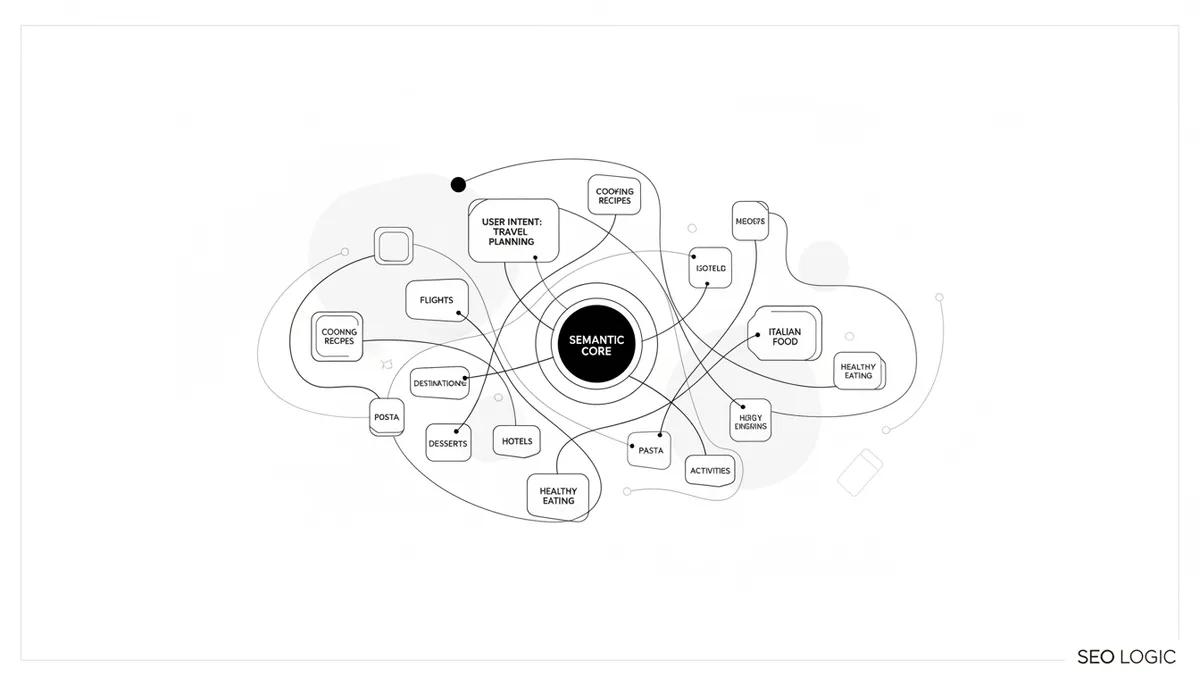
Semantic keyword clustering is the strategic process of grouping related keywords based on their contextual meaning, user intent, and topical relationships rather than simple word matching. This advanced SEO technique allows marketers to create comprehensive content that addresses multiple related search queries while building topical authority and improving search visibility.
Modern search engines have evolved far beyond simple keyword matching. They now understand context, intent, and semantic relationships between words. When you implement semantic keyword clustering, you align your content strategy with how search algorithms actually interpret and rank content.
This approach transforms scattered keyword targeting into cohesive content strategies. Instead of creating separate pages for closely related terms, you build authoritative resources that comprehensively cover entire topics. The result? Higher rankings, increased organic traffic, and stronger competitive positioning. Many SMB owners are now adopting these strategies to compete with larger enterprises in search results.
Digital marketers who master semantic keyword clustering gain significant advantages in today's competitive search environment. You'll discover how to group keywords effectively, create content that ranks for multiple terms simultaneously, and establish your brand as an authoritative voice in your industry.
Understanding Semantic Keyword Clustering
Semantic keyword clustering represents a fundamental shift in how we approach keyword research and content planning. This methodology groups keywords based on their underlying meaning and user intent rather than surface-level similarities or exact match variations.

Traditional keyword clustering often relies on mechanical grouping - putting together keywords that share similar words or phrases. Semantic clustering goes deeper. It considers the conceptual relationships between terms and the actual intent behind user searches.
For example, keywords like "cloud security software," "enterprise cybersecurity solutions," and "business data protection tools" might seem different at first glance. However, they share semantic relationships around business security needs. A semantic clustering approach would group these together, allowing you to create one comprehensive piece of content that addresses all these related searches.
This technique has become increasingly important as search engines have developed more sophisticated natural language processing capabilities. Google's BERT algorithm and subsequent updates have made search engines much better at understanding context and intent.
The importance of semantic keyword clustering in modern SEO strategies cannot be overstated. Search engines now prioritize content that demonstrates comprehensive coverage of topics rather than pages that simply target individual keywords in isolation. For a modern company, this shift means moving away from thin content toward high-value topical hubs.
How It Differs from Traditional Keyword Clustering
Traditional keyword clustering typically groups keywords based on shared words or phrases. This mechanical approach often misses the nuanced relationships between search terms and can lead to content gaps or unnecessary duplication.
Semantic clustering focuses on user intent over isolated keywords. It asks: "What is the searcher really trying to accomplish?" and "What information do they need to achieve their goal?" This intent-driven approach creates more logical content groupings.
Consider the difference when clustering keywords for a project management software company. Traditional clustering might separate "project management tools" and "team collaboration software" into different groups because they don't share exact words. Semantic clustering recognizes that users searching for either term often have similar underlying needs - they want to improve team productivity and project outcomes.
The semantic approach also considers the customer journey stage. Keywords indicating research intent get grouped differently from those showing purchase intent, even if they're topically related. This nuanced understanding leads to more targeted content strategies.
Benefits of Implementing Semantic Keyword Clustering
Implementing semantic keyword clustering delivers measurable improvements across multiple SEO and content marketing metrics. The most significant benefit is improved content relevance and depth, which search engines reward with higher rankings and increased visibility.
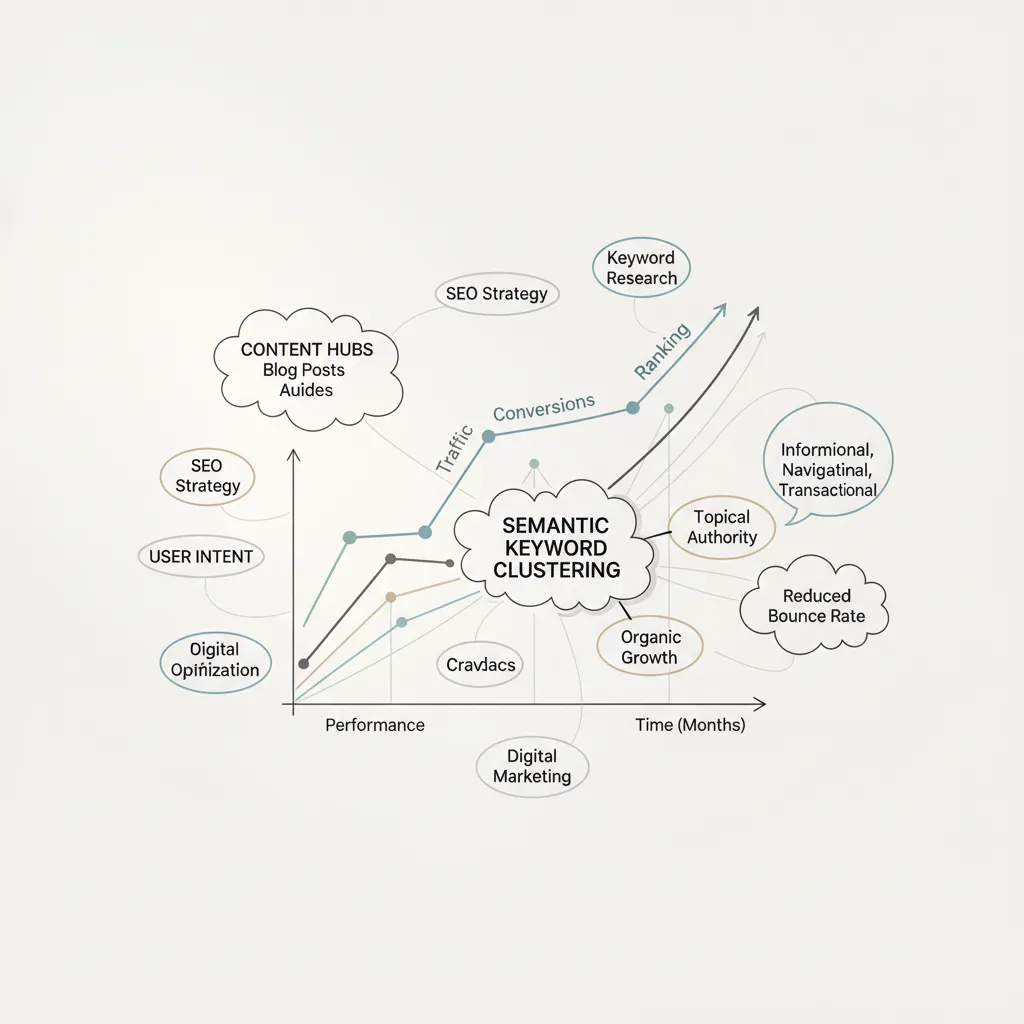
When you group semantically related keywords, you create opportunities to address user questions more comprehensively. This approach naturally leads to longer, more detailed content that covers topics from multiple angles. Search engines interpret this comprehensive coverage as a signal of expertise and authority.
Enhanced search engine visibility represents another major advantage. Instead of competing for individual keywords, you position your content to rank for entire clusters of related terms. This strategy dramatically expands your potential search visibility while reducing the competition for any single keyword.
The approach also improves user experience metrics. When visitors find comprehensive answers to their questions on a single page, they spend more time on your site, explore additional content, and are more likely to convert. These positive user signals further reinforce your search rankings. Every entrepreneur looking to scale their digital presence should prioritize these engagement signals.
Resource efficiency represents a practical benefit that many marketers overlook. Semantic clustering reduces the need to create multiple pieces of content for closely related keywords. You can cover more ground with fewer resources while maintaining higher quality standards.
Building Topical Authority
Establishing expertise in specific niches becomes much more achievable when you implement semantic keyword clustering. This approach helps you identify all the subtopics and related concepts within your area of expertise, ensuring comprehensive coverage.
Topical authority isn't just about having lots of content - it's about demonstrating deep understanding of your subject matter. Semantic clustering reveals the connections between different aspects of your topic, helping you create content that showcases this understanding.
Search engines use topical authority as a ranking factor, particularly for competitive keywords. When your site consistently provides comprehensive, well-organized information about related topics, search engines begin to view you as an authoritative source in that domain.
Step-by-Step Guide to Implementing Semantic Keyword Clustering
Implementing semantic keyword clustering requires a systematic approach that combines keyword research, intent analysis, and strategic grouping. The process begins with identifying relevant keywords through comprehensive research across your target topics.
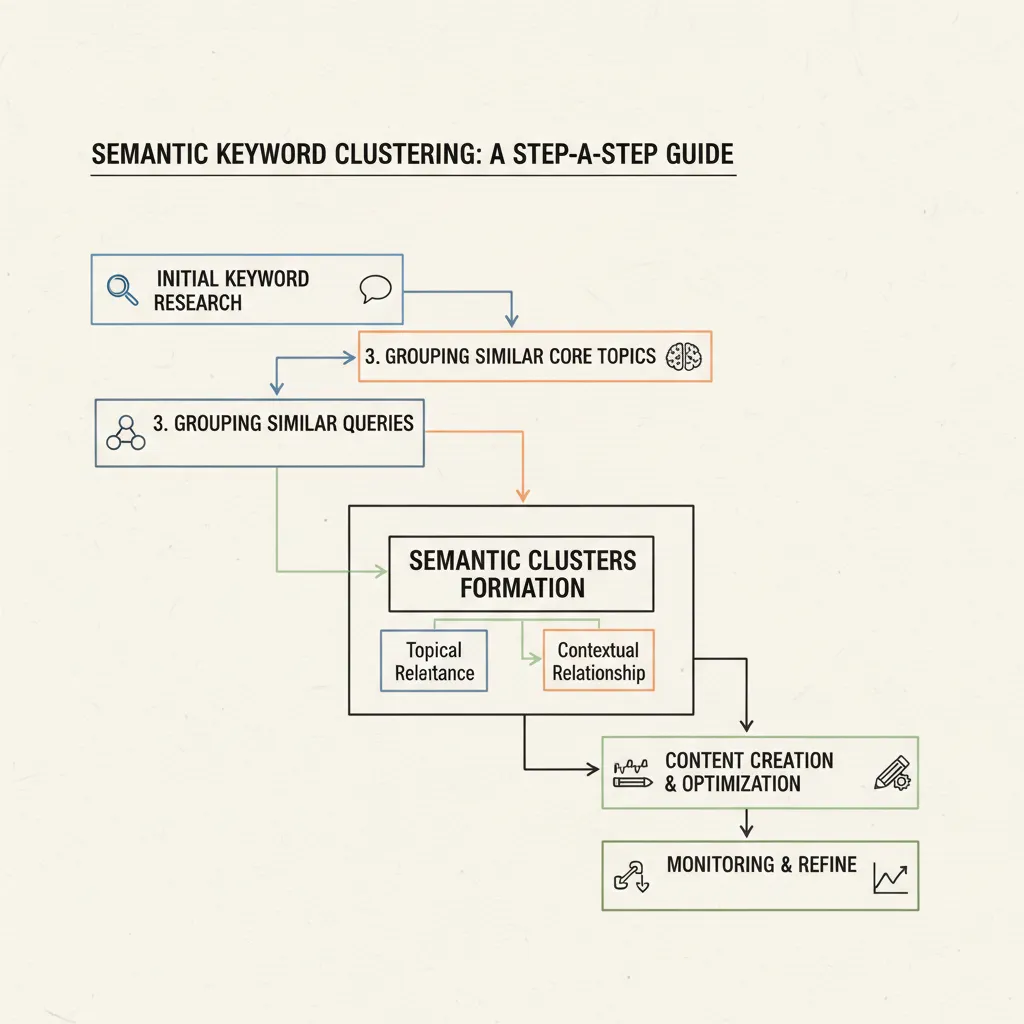
Start by gathering a broad list of keywords related to your business, products, or services. Use multiple keyword research tools to ensure comprehensive coverage. Don't limit yourself to obvious terms - include long-tail keywords, questions, and related phrases that your audience might use.
Next, analyze each keyword for user intent. Ask yourself: What is the searcher trying to accomplish? Are they researching a problem, comparing solutions, or ready to make a purchase? This intent analysis forms the foundation of your semantic grouping.
Group keywords based on intent and topical relationships rather than word similarity. Keywords that address the same user need or represent different aspects of the same topic should be clustered together, even if they don't share common words.
Validate your clusters by examining search engine results pages (SERPs) for your grouped keywords. If the same websites consistently rank for multiple keywords in your cluster, this confirms that search engines view these terms as semantically related. This validation is a core part of a professional SEO workflow.
Create content maps that outline how each cluster will be addressed. Determine whether each cluster requires a single comprehensive piece of content or multiple related pieces that link to each other strategically.
Tools for Effective Clustering
AI-powered clustering tools have revolutionized the semantic keyword clustering process. These platforms use natural language processing and machine learning to identify semantic relationships that would be difficult to detect manually.
Keyword Insights offers SERP-based clustering that analyzes actual search results to group keywords. This approach ensures your clusters reflect how search engines actually view keyword relationships.
Other effective tools include SEMrush's Keyword Magic Tool, which provides semantic grouping features, and Ahrefs' Keywords Explorer, which shows related keywords and topics. The key is choosing tools that go beyond simple word matching to analyze true semantic relationships.
Case Studies of Successful Semantic Keyword Clustering
Real-world implementations of semantic keyword clustering demonstrate the significant impact this strategy can have on SEO performance. Companies across various industries have achieved remarkable results by shifting from traditional keyword targeting to semantic clustering approaches.
A B2B software company specializing in customer relationship management implemented semantic clustering for their content strategy. Instead of creating separate pages for "CRM software," "customer management tools," and "sales automation platform," they developed comprehensive guides that addressed all related search intents within single, authoritative resources.
The results were impressive. Within eight months, their organic traffic increased by 340%, and their average time on page improved by 65%. More importantly, their conversion rate from organic traffic increased by 28%, demonstrating that semantic clustering not only drives more traffic but also attracts more qualified visitors.
Another notable example involves an e-commerce company in the fitness equipment space. They used semantic clustering to identify that keywords like "home gym equipment," "compact workout machines," and "apartment fitness gear" all addressed the same core user need - space-efficient exercise solutions.
By creating comprehensive buying guides that addressed all these related searches, they captured traffic from multiple keyword variations while providing more value to their audience. Their organic revenue from content marketing increased by 180% within six months. This is especially effective for an online store looking to dominate niche categories.
A SaaS company offering project management solutions provides another compelling case study. They discovered through semantic analysis that their target audience used dozens of different terms to describe their core product category. Instead of competing separately for each term, they created pillar content that comprehensively addressed project management needs.
Lessons Learned from These Implementations
Key takeaways for marketers emerge from analyzing successful semantic clustering implementations. The most important lesson is that comprehensive content consistently outperforms scattered, keyword-specific pages in both rankings and user engagement.
Successful implementations also demonstrate the importance of understanding user intent beyond surface-level keyword analysis. Companies that invested time in truly understanding their audience's needs and search behaviors achieved better results than those who relied solely on automated clustering tools.
Another critical lesson involves the importance of internal linking within semantic clusters. The most successful implementations created strong topical hubs with strategic internal linking that helped search engines understand the relationships between related content pieces.
Comparative Analysis: Traditional vs. Semantic Keyword Strategies
The advantages of semantic clustering over traditional methods become clear when you examine performance metrics across different approaches. Traditional keyword strategies often lead to content cannibalization, where multiple pages compete for the same search terms, diluting your overall ranking potential.
Semantic clustering eliminates this competition by consolidating related keywords into comprehensive content pieces. This approach allows you to capture traffic from multiple related searches while avoiding internal competition that weakens your overall SEO performance.
Long-term benefits for content strategies include improved content ROI and reduced maintenance overhead. When you create comprehensive content that addresses multiple related searches, each piece of content has greater potential impact and longer useful life.
| Aspect | Traditional Keyword Strategy | Semantic Keyword Strategy |
|---|---|---|
| Content Planning | One page per keyword | Comprehensive coverage per topic |
| Competition | Internal cannibalization | Consolidated authority |
| User Experience | Fragmented information | Complete topic coverage |
| Resource Efficiency | High content volume needed | Quality over quantity |
| Ranking Potential | Limited to specific terms | Multiple related rankings |
The semantic approach also provides better scalability for growing businesses. As you expand into new topics or markets, the clustering methodology helps you identify content gaps and opportunities more effectively than traditional keyword-by-keyword analysis.
From a competitive perspective, semantic clustering often reveals opportunities that competitors miss. While others focus on obvious high-volume keywords, semantic analysis uncovers related terms and intent patterns that provide easier ranking opportunities.
When to Choose Semantic Clustering
Best scenarios for implementing semantic clustering include competitive markets where traditional keyword targeting has become saturated. When multiple competitors are targeting the same obvious keywords, semantic clustering helps you capture related traffic that others overlook.
The approach also works particularly well for complex B2B topics where users employ varied terminology to describe similar concepts. Technical industries, professional services, and SaaS companies often benefit significantly from semantic clustering approaches.
Content-heavy strategies also benefit from semantic clustering. If your marketing approach relies heavily on content marketing and thought leadership, clustering helps you organize and optimize your content more effectively while building stronger topical authority.
Advanced Semantic Clustering Techniques
Advanced practitioners of semantic keyword clustering employ sophisticated techniques that go beyond basic grouping. These methods involve analyzing search result patterns, user behavior data, and competitive intelligence to create more effective clusters.
SERP analysis clustering examines which websites rank for multiple keywords to identify true semantic relationships. When the same pages consistently appear for different keywords, this indicates strong semantic connections that search engines recognize.
Intent-based clustering goes deeper than topical relationships to group keywords by user journey stage. This approach creates content strategies that guide users through awareness, consideration, and decision phases with semantically related content.
Competitive gap analysis within semantic clusters reveals opportunities where competitors have incomplete topic coverage. You can identify related keywords within clusters that competitors haven't addressed, providing easier ranking opportunities.
Machine learning approaches to semantic clustering use natural language processing to identify relationships that human analysis might miss. These tools can process thousands of keywords simultaneously, identifying patterns and connections at scale.
The most sophisticated implementations combine multiple clustering methods. They start with semantic analysis, validate with SERP data, and refine based on user behavior metrics to create highly effective content strategies.
Measuring Semantic Clustering Success
Tracking the success of your semantic keyword clustering efforts requires monitoring specific metrics that reflect the unique benefits of this approach. Traditional SEO metrics remain important, but semantic clustering success shows up in additional ways.
Keyword ranking diversity represents a key metric for semantic clustering success. Instead of tracking individual keyword rankings, monitor how many related keywords each piece of content ranks for. Successful semantic clustering should increase the keyword coverage per page.
Organic traffic growth from long-tail keywords indicates effective semantic clustering. These strategies often improve rankings for related terms that you didn't explicitly target, expanding your overall search visibility.
Content engagement metrics provide insight into whether your comprehensive approach resonates with users. Look for improvements in time on page, scroll depth, and internal link clicks as indicators that your content successfully addresses multiple related user needs.
Conversion rate improvements from organic traffic suggest that semantic clustering is attracting more qualified visitors. When content comprehensively addresses user intent, it tends to attract visitors who are better aligned with your offerings.
Future of Semantic Keyword Clustering
The evolution of semantic keyword clustering continues as search engines become more sophisticated and user search behaviors change. Artificial intelligence and machine learning will play increasingly important roles in both clustering techniques and search algorithm development.
Voice search optimization represents a growing application for semantic clustering. Voice queries tend to be more conversational and varied in phrasing, making semantic relationships even more important for capturing this traffic.
Visual search integration creates new opportunities for semantic clustering. As search engines better understand image content and context, visual elements become part of the semantic clustering equation.
Real-time clustering adaptation will become more important as search trends and user behavior evolve rapidly. Future clustering strategies will need to adapt dynamically to changing search patterns and emerging topics.
The integration of user experience signals into semantic clustering will deepen as search engines place greater emphasis on user satisfaction metrics. Clustering strategies will need to consider not just topical relationships but also user journey optimization.
Implementation Challenges and Solutions
Implementing semantic keyword clustering presents several challenges that marketers must address for successful execution. The most common challenge involves scaling the analysis process when dealing with large keyword datasets.
Manual semantic analysis becomes impractical with thousands of keywords, requiring automated tools and processes. However, automated clustering tools sometimes miss nuanced relationships that human analysis would catch, creating the need for hybrid approaches.
Content creation complexity increases with semantic clustering because comprehensive content requires more research, planning, and expertise. Writers must understand not just individual keywords but the entire topic ecosystem and user intent patterns.
Resource allocation challenges emerge when shifting from simple keyword targeting to comprehensive topic coverage. Organizations must adjust their content production processes and timelines to accommodate more thorough content development.
Quality control becomes more complex when content must address multiple related keywords and user intents. Traditional content review processes may need updating to ensure comprehensive topic coverage without keyword stuffing.
Technical implementation challenges include updating content management systems and SEO tools to support cluster-based strategies. Many traditional SEO platforms are designed around individual keyword tracking rather than cluster performance monitoring.
Conclusion
Semantic keyword clustering represents a fundamental evolution in SEO strategy that aligns content creation with how modern search engines actually understand and rank content. This approach moves beyond mechanical keyword targeting to create comprehensive, user-focused content strategies that build topical authority and improve search visibility.
The benefits of implementing semantic keyword clustering extend far beyond traditional SEO metrics. You gain improved content relevance, enhanced search engine visibility, better resource efficiency, and stronger competitive positioning. Most importantly, you create content that genuinely serves user needs while achieving business objectives.
Key takeaways for successful implementation include:
- Focus on user intent and topical relationships rather than surface-level keyword similarities
- Use AI-powered tools to scale your clustering analysis while maintaining human oversight for quality
- Create comprehensive content that addresses multiple related search queries within single authoritative resources
- Monitor cluster-specific metrics like keyword diversity and engagement depth to measure success
- Build internal linking strategies that reinforce topical relationships and guide users through related content
The future of SEO belongs to marketers who understand that search engines reward comprehensive topic coverage over scattered keyword targeting. Semantic keyword clustering provides the framework for creating content strategies that satisfy both search algorithms and user needs.
As search engines continue to evolve and user search behaviors become more sophisticated, the importance of semantic relationships in content strategy will only increase. Organizations that master semantic keyword clustering now will be better positioned to adapt to future changes in search technology and user expectations.
Ready to transform your SEO strategy with advanced semantic keyword clustering? Explore how AutoRanq can streamline your semantic keyword clustering process with AI-driven solutions that automate complex analysis tasks while maintaining the strategic insight your content strategy needs to succeed.