
Overcoming marketing automation challenges for SMBs
Overcoming Marketing Automation Challenges for SMBs Marketing automation challenges for SMBs include tool sprawl, data integration issues, lack of skilled...
Overcoming Marketing Automation Challenges for SMBs
Marketing automation challenges for SMBs include tool sprawl, data integration issues, lack of skilled personnel, and difficulty proving ROI. These barriers prevent 63% of marketers from achieving effective automation implementation, requiring strategic solutions to streamline operations and maximize technology investments.
Marketing automation can revolutionize SMB operations, yet many struggle with its complexities. Understanding these challenges is the first step toward effective solutions.
Small and medium businesses face mounting pressure to compete with enterprise-level marketing sophistication. The promise of marketing automation - streamlined workflows, personalized customer journeys, and data-driven decision making - remains tantalizing. However, the path to successful implementation is riddled with obstacles that can derail even the most well-intentioned automation initiatives.
You're not alone if your marketing automation efforts feel overwhelming. The landscape has become increasingly complex, with new tools emerging daily and existing platforms adding features at breakneck speed. This complexity creates a perfect storm of challenges that can paralyze decision-making and waste valuable resources.
The stakes have never been higher. Companies that master marketing automation gain significant competitive advantages, while those that struggle risk falling behind in customer acquisition and retention. The key lies in recognizing these challenges early and implementing strategic solutions that align with your business goals and resources.
1. Tool Sprawl Complicates Automation Efforts
Tool sprawl represents one of the most pervasive marketing automation challenges facing SMBs today. Your marketing stack likely includes separate platforms for email marketing, social media management, customer relationship management, analytics, and content creation. Each tool promises to solve specific problems, but together they create a fragmented ecosystem that hampers efficiency.
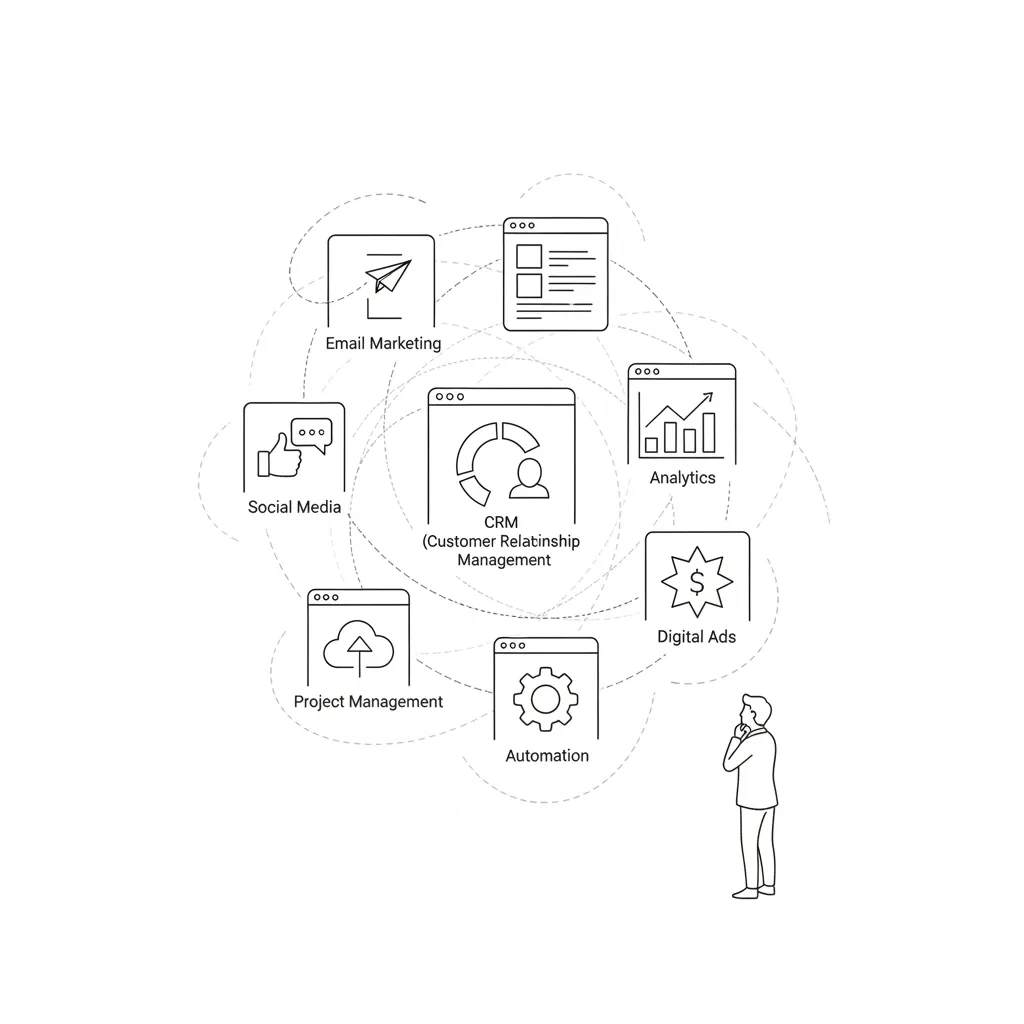
Multiple tools lead to inefficiencies that compound over time. You spend valuable hours switching between platforms, manually transferring data, and trying to maintain consistency across different systems. This context switching doesn't just waste time - it increases the likelihood of errors and creates gaps in your marketing funnel where prospects can slip through unnoticed.
Integration issues create data silos that prevent you from getting a complete picture of your customers. When your email platform doesn't communicate with your CRM, and your social media analytics remain isolated from your website data, you lose the ability to create cohesive, data-driven marketing strategies. These silos force you to make decisions based on incomplete information, reducing the effectiveness of your automation efforts.
The financial impact of tool sprawl extends beyond subscription costs. Hidden expenses include training time for new team members, reduced productivity due to system complexity, and the opportunity cost of delayed campaign launches while teams navigate multiple platforms.
Strategies to Streamline Tools
Consolidate tools by conducting a comprehensive audit of your current marketing stack. List every platform you're currently using, along with its primary functions, monthly cost, and integration capabilities. Look for overlapping features and identify tools that serve similar purposes. You might discover that three different platforms handle tasks that could be managed by a single, more robust solution.
Implement an integrated platform approach by prioritizing tools that offer native integrations or comprehensive API connectivity. Modern marketing automation platforms like HubSpot or Marketo provide multiple functions within a single ecosystem, reducing the need for numerous point solutions. This consolidation simplifies your workflow and improves data consistency across all marketing activities.
Consider platforms that offer modular functionality, allowing you to start with core features and add capabilities as your needs grow. This approach prevents over-purchasing while ensuring scalability for future expansion.
2. Data Integration Challenges Hinder Performance
Data integration represents a critical bottleneck in marketing automation success. Inconsistent data formats across different platforms create significant challenges when trying to build comprehensive customer profiles or trigger automated workflows based on customer behavior. When your email platform stores customer data differently than your CRM, automation rules break down and personalization efforts fail.

Difficulties in data sharing across platforms compound these marketing automation challenges. Legacy systems often lack modern API capabilities, forcing teams to rely on manual data exports and imports. This manual process introduces delays, increases error rates, and makes real-time automation impossible. When customer data takes hours or days to sync between systems, your automation workflows operate on outdated information.
Data quality issues emerge when information passes through multiple systems without proper validation. Customer records become duplicated, contact information becomes outdated, and behavioral tracking becomes fragmented. These problems directly impact automation effectiveness, leading to irrelevant messaging, missed opportunities, and frustrated customers who receive duplicate or incorrectly targeted communications.
The complexity of data mapping between different systems requires technical expertise that many SMBs lack internally. Field names, data types, and formatting requirements vary significantly between platforms, creating integration challenges that can take weeks or months to resolve without proper planning.
Best Practices for Data Management
Standardize data formats by establishing clear guidelines for how customer information should be structured across all platforms. Create a data dictionary that defines field names, acceptable values, and formatting requirements. This standardization should cover everything from contact information and demographic data to behavioral tracking and engagement metrics.
Utilize API connections wherever possible to enable real-time data synchronization between platforms. Modern APIs allow systems to share information instantly, ensuring that customer actions in one platform immediately trigger appropriate responses in others. When evaluating new tools, prioritize those with robust API documentation and proven integration capabilities.
Implement data validation rules at the point of entry to prevent poor-quality information from entering your systems. Use form validation, data cleansing tools, and regular audits to maintain data integrity. Consider investing in a customer data platform (CDP) that can serve as a central hub for all customer information, reducing the complexity of managing multiple data sources.
3. Lack of Skilled Personnel Limits Automation Success
The shortage of trained marketers who understand both marketing strategy and technical implementation creates a significant barrier to automation success. Marketing automation requires a unique skill set that combines traditional marketing knowledge with technical proficiency in platform management, data analysis, and workflow design. Finding professionals with this combination of skills remains challenging in today's competitive job market.

High turnover rates impact continuity in automation programs. When key team members leave, they take institutional knowledge about workflow configurations, integration setups, and optimization strategies with them. New hires require extensive onboarding to understand complex automation sequences, during which time campaigns may suffer from reduced performance or maintenance issues.
The learning curve for marketing automation platforms can be steep, especially for team members without technical backgrounds. Advanced features like lead scoring, dynamic content, and multi-channel campaign orchestration require significant training and hands-on experience to master. This learning period can last several months, during which productivity remains below optimal levels.
Budget constraints often prevent SMBs from hiring senior-level marketing automation experts, forcing them to rely on junior staff or generalists who must learn on the job. This approach can work but requires significant investment in training and mentorship to achieve desired results.
Developing Talent Within the Team
Invest in training programs that combine platform-specific education with broader marketing automation strategy. Many automation platforms offer certification programs that provide structured learning paths for team members. Supplement these with external training from organizations like the Marketing Automation Institute or industry conferences that focus on practical implementation strategies.
Encourage knowledge sharing through regular team meetings where automation specialists can share insights, troubleshoot challenges, and discuss optimization strategies. Create documentation for all automation workflows, including setup instructions, optimization history, and performance benchmarks. This documentation serves as institutional knowledge that survives personnel changes.
Consider partnering with external consultants or agencies for complex implementations while building internal capabilities. This hybrid approach allows you to launch sophisticated automation programs while your team develops the skills needed for long-term management and optimization.
4. Proving ROI Remains a Significant Challenge
Difficulty in tracking performance metrics across multiple touchpoints makes it challenging to demonstrate the value of marketing automation investments. Traditional attribution models often fail to capture the complex customer journeys that automation enables, leading to undervaluation of automation's true impact on revenue generation.
Confusion over attribution models compounds these marketing automation challenges. When prospects interact with multiple automated touchpoints before converting, determining which interactions deserve credit becomes complex. First-touch attribution undervalues nurturing campaigns, while last-touch attribution ignores the awareness-building efforts that made conversion possible.
Long sales cycles in B2B environments make it difficult to connect automation activities with eventual revenue outcomes. When the time between initial engagement and purchase spans several months, proving that specific automated campaigns contributed to final conversions requires sophisticated tracking and analysis capabilities that many SMBs lack.
The challenge extends beyond revenue attribution to include measuring softer metrics like brand awareness, customer satisfaction, and long-term customer value. These outcomes are equally important but harder to quantify, making it difficult to build comprehensive ROI cases for automation investments.
Methods to Effectively Measure ROI
Set clear KPIs that align with your business objectives and can be directly influenced by automation activities. Focus on metrics like lead quality scores, conversion rates at each funnel stage, customer acquisition costs, and lifetime value. Establish baseline measurements before implementing new automation workflows to enable accurate before-and-after comparisons.
Use analytics tools for tracking that provide multi-touch attribution capabilities. Platforms like Google Analytics 4 offer advanced attribution modeling that can help you understand how different touchpoints contribute to conversions. Implement UTM tracking consistently across all automated campaigns to enable detailed performance analysis.
Create custom dashboards that combine data from multiple sources to provide comprehensive ROI visibility. Include both leading indicators (like engagement rates and lead scores) and lagging indicators (like revenue and customer acquisition costs) to get a complete picture of automation performance.
| ROI Metric | Measurement Method | Typical Benchmark | Automation Impact |
|---|---|---|---|
| Lead Quality Score | Behavioral tracking + scoring models | 20-30% qualified leads | 40-60% improvement |
| Email Open Rates | Email platform analytics | 20-25% average | 15-25% increase |
| Conversion Rate | Landing page + CRM tracking | 2-5% website visitors | 20-40% improvement |
| Customer Acquisition Cost | Total spend / new customers | Varies by industry | 25-50% reduction |
5. Keeping Up with Evolving Technology Trends
Rapid advancements in AI and automation tools create constant pressure to evaluate and potentially adopt new technologies. The marketing automation landscape evolves continuously, with artificial intelligence, machine learning, and predictive analytics becoming standard features rather than premium add-ons. Staying current with these developments while maintaining operational stability presents ongoing challenges for SMB marketing teams.
Staying Informed on Trends
Subscribe to industry publications that provide regular updates on marketing automation developments. Resources like Marketing Land, MarTech Today, and vendor-specific blogs offer insights into new features, best practices, and industry trends. Set aside time weekly to review these resources and identify developments relevant to your business.
Attend webinars and conferences that focus on practical implementation rather than just product announcements. Events like MarTech Conference and platform-specific user conferences provide opportunities to learn from peers who face similar marketing automation challenges. These interactions often reveal practical solutions that aren't documented in official product materials.
Join professional communities and user groups where marketing automation practitioners share experiences and solutions. LinkedIn groups, Slack communities, and platform-specific user forums provide ongoing access to collective knowledge and troubleshooting support. Participating in these communities keeps you connected to real-world implementation challenges and solutions.
Autonomous AI: The Next Frontier in Marketing Automation
The evolution from traditional rule-based automation to autonomous AI systems represents a fundamental shift in how marketing automation challenges are being addressed. Modern AI-powered platforms can now independently analyze data, identify optimization opportunities, and adjust campaigns without human intervention. This capability addresses many of the personnel and expertise challenges that have historically limited SMB automation success.
Autonomous AI systems think, plan, and execute complex workflows that previously required extensive manual configuration and ongoing optimization. These systems can automatically explore topic landscapes, identify content gaps, and detect emerging search trends through recursive exploration methods that would be impossible for human teams to replicate at scale.
The automation of tasks like generating outlines, identifying profitable keywords, real-time content optimization, and SEO performance audits removes many technical barriers that have prevented SMBs from fully leveraging marketing automation. When AI handles execution details, human teams can focus on strategic direction and creative vision.
This technological advancement directly addresses the skilled personnel shortage by reducing the technical expertise required to implement sophisticated automation strategies. AI systems can execute complex multi-channel campaigns while learning and optimizing performance based on real-time data analysis.
"The shift from AI as a creative assistant to AI as an autonomous operator is no longer theoretical. It is happening across every major marketing platform."
— Digital Applied, Marketing Automation 2026 Report
Building Resilient Automation Strategies
Successful navigation of marketing automation challenges requires building resilient strategies that can adapt to technological changes while maintaining operational stability. Start with clear documentation of your current processes, pain points, and objectives. This foundation enables you to evaluate new solutions objectively and make strategic decisions based on actual needs rather than feature excitement.
Focus on building internal capabilities alongside technology adoption. The most successful automation implementations combine powerful tools with skilled human oversight. Invest in training that develops both technical platform knowledge and strategic thinking about customer journey optimization and data analysis.
Develop vendor relationships that extend beyond simple software licensing. Choose automation platform providers that offer robust support, training resources, and strategic guidance. These relationships become valuable assets when facing implementation challenges or evaluating new capabilities.
Create governance frameworks that balance innovation with stability. Establish processes for evaluating new tools, testing automation workflows, and measuring performance impacts. These frameworks prevent hasty decisions while ensuring you don't miss valuable opportunities for improvement.
Integration Strategies for Maximum Impact
Effective integration strategies address multiple marketing automation challenges simultaneously by creating cohesive systems that maximize data value and operational efficiency. Begin by mapping your customer journey across all touchpoints to identify integration requirements and data flow needs.
Prioritize integrations that enable real-time data sharing between your most critical platforms. Customer relationship management systems, email marketing platforms, and analytics tools should communicate seamlessly to enable sophisticated automation workflows and accurate performance measurement.
Consider middleware solutions or customer data platforms that can serve as central hubs for integration management. These solutions reduce the complexity of maintaining multiple point-to-point integrations while providing additional data processing and analysis capabilities.
Plan for scalability by choosing integration approaches that can accommodate future platform additions or changes. API-based integrations typically offer more flexibility than hard-coded connections, making it easier to adapt your automation stack as business needs evolve.
Measuring Success Beyond Traditional Metrics
Comprehensive measurement of marketing automation success requires expanding beyond traditional conversion metrics to include operational efficiency, customer experience quality, and long-term business impact. Develop measurement frameworks that capture both quantitative performance data and qualitative insights about customer satisfaction and team productivity.
Track automation-specific metrics like workflow completion rates, data quality scores, and system uptime alongside traditional marketing metrics. These operational metrics often reveal optimization opportunities that aren't visible through conversion analysis alone.
Implement customer feedback mechanisms that can help you understand how automation impacts customer experience. Surveys, support ticket analysis, and direct customer interviews provide insights into whether your automation efforts enhance or detract from customer relationships.
Create regular reporting cycles that combine automated data collection with human analysis and interpretation. While automation can generate comprehensive performance reports, human insight remains essential for understanding context, identifying trends, and making strategic adjustments.
Future-Proofing Your Automation Investment
Future-proofing marketing automation investments requires balancing current needs with anticipated technological developments. Focus on platforms and strategies that demonstrate adaptability and innovation while maintaining backward compatibility with existing systems and processes.
Evaluate automation platforms based on their development roadmaps and commitment to emerging technologies like artificial intelligence, machine learning, and predictive analytics. Platforms that actively incorporate these capabilities will provide better long-term value than those that rely solely on traditional rule-based automation.
Build internal expertise that spans both current platform capabilities and emerging trends. Team members who understand automation principles can adapt to new platforms and features more easily than those who only know specific tool configurations.
Maintain flexibility in your automation architecture by avoiding over-customization that could complicate future migrations or upgrades. Standard configurations and widely-supported integration methods provide more options for future development than heavily customized implementations.
Conclusion
Marketing automation challenges for SMBs are complex but not insurmountable. Success requires strategic thinking, careful planning, and ongoing commitment to learning and optimization. The companies that thrive will be those that view these challenges as opportunities to build competitive advantages through superior customer experiences and operational efficiency.
The key takeaways for overcoming marketing automation challenges include:
- Tool sprawl complicates efforts - Consolidate platforms and prioritize integration capabilities over feature abundance
- Data integration is fundamental - Invest in standardization and real-time connectivity to enable sophisticated automation workflows
- Skilled personnel remain essential - Develop internal capabilities through training while leveraging external expertise for complex implementations
- Measuring ROI requires comprehensive approaches - Combine traditional metrics with automation-specific measurements and customer experience indicators
- Staying updated on technology is crucial - Build learning frameworks that help you evaluate and adopt relevant innovations without disrupting operational stability
- Autonomous AI systems are transforming possibilities - Leverage intelligent automation to address skill gaps and operational complexity
The future belongs to organizations that can harness marketing automation's full potential while maintaining human strategic oversight. By addressing these challenges systematically and building resilient automation strategies, SMBs can compete effectively with larger organizations and deliver exceptional customer experiences at scale.
Empower your marketing strategies with AutoRanq's AI-driven solutions for seamless automation. Our autonomous AI systems handle the complex technical execution while you focus on strategic direction and creative vision, transforming marketing automation challenges into competitive advantages.