Top AI tools for research in 2025
Top AI Tools for Research in 2025 Fact: The best AI tools for research in 2025 are ResearchRabbit for literature discovery, Scite for citation analysis, Elicit...
·February 18, 2026
Top AI Tools for Research in 2025
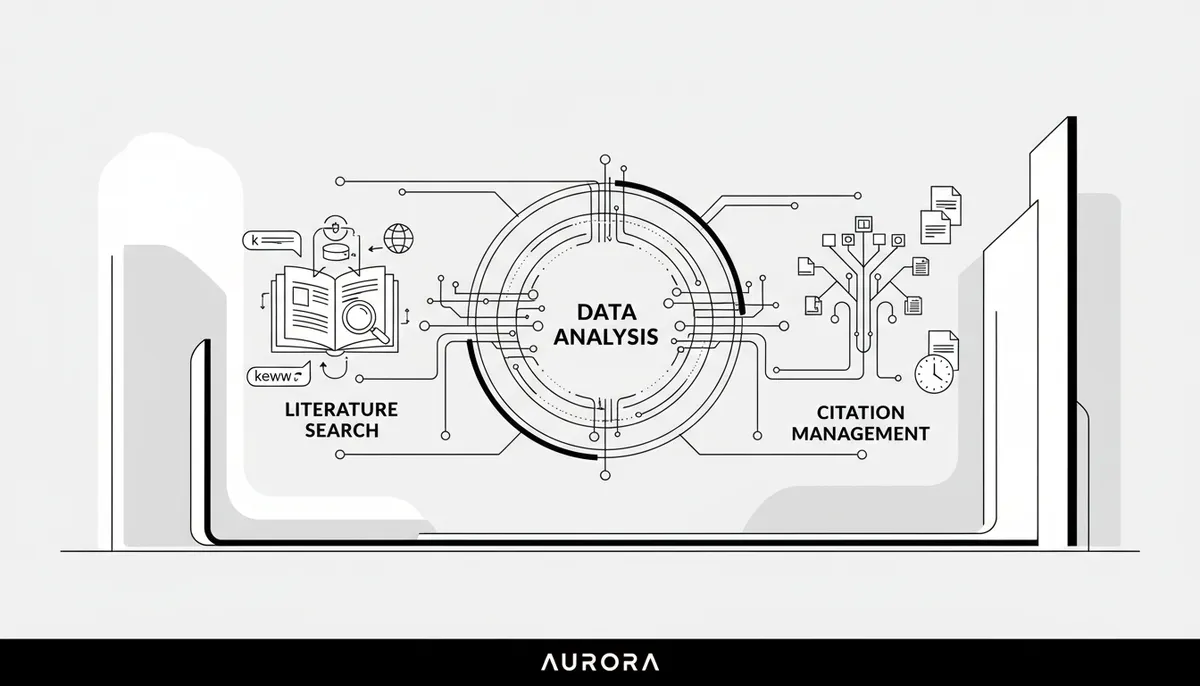
Research workflows have transformed dramatically. You no longer need to spend weeks manually sifting through academic databases or wrestling with complex search queries. Modern AI tools can compress months of literature review into days, extract structured data from hundreds of PDFs, and even verify whether cited papers have been supported or contradicted by subsequent research. The challenge isn't finding information anymore. It's choosing the right AI tool for your specific research needs. Whether you're conducting systematic reviews, analyzing citations, or discovering hidden connections between studies, the right AI assistant can multiply your productivity exponentially. For many professionals, integrating an AI-powered platform into their daily routine is the first step toward reclaiming valuable time. This guide evaluates the most powerful AI research tools available in 2025, tested across real academic workflows and measured against practical research scenarios. You'll discover which tools excel at literature discovery, which provide the most accurate citation analysis, and how to build a complete AI-powered research workflow.1. Sonix - The Ultimate Transcription and Analysis Tool

Key Features of Sonix
Automated transcription transforms how you handle qualitative data. Instead of spending hours manually transcribing interviews, you can focus on analysis and interpretation. Sonix integrates seamlessly with popular research tools like NVivo, Atlas.ti, and Dedoose. The platform offers advanced editing features that let you correct transcripts while maintaining timestamp accuracy. You can add custom vocabulary for technical terms, ensuring domain-specific language gets transcribed correctly. This proves particularly valuable for medical, legal, or technical research where precision matters. By leveraging automated workflow optimization, researchers can ensure their data remains organized from the initial recording to the final report. Collaboration features allow multiple team members to review and annotate transcripts simultaneously. Comments and highlights sync across all users, streamlining the qualitative analysis process for research teams.2. ResearchRabbit - Streamline Your Literature Discovery

How ResearchRabbit Enhances Research Efficiency
Hidden connections between studies often reveal the most interesting research opportunities. ResearchRabbit's network analysis identifies papers that cite similar sources but haven't cited each other, suggesting potential knowledge gaps or synthesis opportunities. The platform's automated search functionality continuously monitors new publications in your areas of interest. You receive notifications when relevant papers are published, ensuring you never miss important developments. This passive discovery approach saves hours of manual database monitoring. Collaborative features allow research teams to build shared collections and receive recommendations based on the entire team's reading history. This collective intelligence approach often surfaces papers that individual researchers might overlook.3. Scite - Citation Analysis Made Easy
Benefits of Using Scite
Literature review quality improves dramatically when you understand citation contexts. Instead of simply listing papers that mention your topic, you can identify which studies actually support your arguments and which raise questions about established findings. The platform facilitates better understanding of research impact by showing how ideas evolve over time. You can track how specific theories or methodologies gain or lose support as new evidence emerges. This longitudinal view helps you position your research within ongoing academic debates. Scite's browser extension integrates with your normal research workflow. When you're reading papers online, the extension automatically displays citation context for the paper you're viewing. This real-time validation helps you assess source credibility without leaving your reading environment.4. Elicit - Your Research Assistant
Elicit represents the next generation of AI research assistants, designed specifically for systematic reviews and evidence synthesis. The platform can analyze thousands of papers simultaneously, extracting structured data and identifying patterns that would take human researchers months to discover. The tool excels at answering specific research questions by analyzing large volumes of literature. You input a research question, and Elicit searches through millions of papers to find relevant studies. The AI then extracts key information from each paper, creating structured tables that compare methodologies, sample sizes, findings, and limitations across studies. This automated data extraction eliminates one of the most time-consuming aspects of systematic reviews. Instead of manually reading hundreds of abstracts and extracting data points, you get standardized tables that make it easy to identify patterns and gaps in the literature. Elicit's AI understands research methodology and can filter studies based on specific criteria like study design, population characteristics, or outcome measures. This methodological awareness makes it particularly valuable for evidence-based research in medicine, psychology, and education.How Elicit Changes the Research Landscape
Data collection and analysis become streamlined when AI handles the mechanical aspects of literature review. Elicit can process papers faster than any human researcher, allowing you to focus on interpretation and synthesis rather than data extraction. The platform enhances collaboration among researchers by creating standardized data formats that team members can easily share and build upon. Multiple researchers can work on different aspects of a systematic review simultaneously, with Elicit ensuring consistency across all data extraction efforts. Quality control features help maintain research standards even with automated processes. Elicit flags potential inconsistencies in extracted data and highlights papers that might require manual review. This hybrid approach combines AI efficiency with human oversight.5. Semantic Scholar - AI-Powered Literature Search
Semantic Scholar leverages advanced machine learning to understand the meaning and context of academic papers, not just keyword matches. Developed by the Allen Institute for AI, the platform analyzes the full text of millions of papers to provide more intelligent search results than traditional academic databases. The platform's semantic search capabilities understand synonyms, related concepts, and contextual relationships between ideas. When you search for "machine learning in healthcare," Semantic Scholar doesn't just find papers with those exact terms. It identifies papers about AI diagnosis, algorithmic treatment recommendations, and predictive modeling in medicine. Citation graph visualizations help you understand the intellectual lineage of ideas. You can see how concepts evolved over time, which papers introduced key innovations, and how different research communities have built upon foundational work. This network view often reveals unexpected connections between seemingly unrelated fields. The platform provides comprehensive paper summaries that highlight key contributions, methodologies, and findings. These AI-generated abstracts help you quickly assess paper relevance without reading full texts. For highly relevant papers, you can access the full text through institutional subscriptions or open access repositories.Unique Features of Semantic Scholar
Semantic search capabilities distinguish Semantic Scholar from keyword-based databases. The AI understands that "neural networks" and "artificial neural networks" refer to the same concept, and that papers about "deep learning" are relevant to searches about "machine learning." This conceptual understanding dramatically improves search precision. Easy access to paper abstracts and citations streamlines the initial screening process for systematic reviews. You can quickly scan dozens of papers to identify the most relevant ones for detailed analysis. The platform's recommendation engine suggests related papers based on your search history and reading patterns. Integration with reference managers and note-taking tools fits seamlessly into existing research workflows. You can export citations in multiple formats and sync your reading lists across devices. Browser extensions allow you to save papers for later review without interrupting your research flow.| Tool | Primary Function | Best For | Pricing | Key Advantage |
|---|---|---|---|---|
| Sonix | Transcription & Analysis | Qualitative Research | $10/hour | 95%+ Accuracy |
| ResearchRabbit | Literature Discovery | Network Analysis | Free | Visual Mapping |
| Scite | Citation Analysis | Evidence Validation | $20/month | Context Classification |
| Elicit | Systematic Reviews | Data Extraction | $10/month | 70% Automation |
| Semantic Scholar | Literature Search | Concept Discovery | Free | Semantic Understanding |
Choosing the Right AI Tool for Your Research Needs
Your research methodology determines which AI tools will provide the most value. Qualitative researchers who work with interviews and focus groups should prioritize Sonix for transcription accuracy. Quantitative researchers conducting meta-analyses will find Elicit's automated data extraction invaluable. For comprehensive literature reviews, combine ResearchRabbit's discovery capabilities with Semantic Scholar's semantic search. This dual approach ensures you capture both established papers and emerging research trends. Scite adds a validation layer by helping you understand how the research community has responded to key findings. Budget considerations also influence tool selection. ResearchRabbit and Semantic Scholar offer powerful free tiers that cover most basic research needs. Premium tools like Scite and Elicit provide advanced features that justify their cost for intensive research projects. Many SMBs and independent researchers find that an AI-driven content strategy helps them maximize their research output without breaking the bank. Integration capabilities matter for long-term workflow efficiency. Choose tools that export to your preferred reference manager and work with your existing note-taking system. The best AI tools enhance your current workflow rather than forcing you to adopt entirely new processes.Building an AI-Powered Research Workflow
Successful AI integration requires strategic thinking about where automation adds the most value. Start with time-consuming tasks like literature discovery and data extraction. These mechanical processes benefit most from AI assistance while preserving human judgment for interpretation and analysis. Create standardized workflows that leverage multiple AI tools in sequence. Begin with ResearchRabbit for discovery, use Semantic Scholar for comprehensive searching, validate findings with Scite, and extract data with Elicit. This systematic approach ensures you don't miss critical information while maintaining research quality. Quality control remains essential even with AI assistance. Always verify AI-extracted data against original sources, especially for systematic reviews or meta-analyses. Use AI tools to accelerate your research, not replace critical thinking and methodological rigor. Document your AI tool usage for transparency and reproducibility. Include information about which tools you used, what parameters you set, and how you validated AI-generated results. This documentation helps other researchers understand and replicate your methodology.Common Pitfalls and How to Avoid Them
Over-reliance on AI recommendations can create blind spots in your research. AI tools reflect the biases present in their training data, which may favor certain types of research or publication venues. Supplement AI discovery with manual searches to ensure comprehensive coverage. Citation accuracy requires verification, even with advanced AI tools. Always check that cited papers actually support the claims attributed to them. AI systems can misinterpret complex arguments or miss nuanced distinctions between similar findings. Database coverage varies across AI tools, potentially creating gaps in your literature review. Some tools focus on recent publications while others emphasize highly-cited papers. Use multiple tools to ensure you capture the full spectrum of relevant research. Technical limitations can affect AI performance in specialized domains. Tools trained primarily on general academic literature may struggle with highly technical terminology or emerging research areas. Be prepared to supplement AI tools with domain-specific databases when necessary.Future Trends in AI Research Tools
Multimodal analysis capabilities are emerging as AI tools begin processing images, graphs, and data visualizations alongside text. This advancement will enable more comprehensive analysis of research papers that rely heavily on visual information. Real-time collaboration features are becoming standard as research teams become more distributed. Future AI tools will support simultaneous editing, commenting, and analysis across multiple users and time zones. Integration with laboratory information systems will connect AI research tools directly to experimental data, enabling real-time analysis and hypothesis testing. This integration promises to accelerate the research cycle from question to publication. Predictive analytics will help researchers identify promising research directions before they become mainstream. AI tools will analyze funding patterns, collaboration networks, and publication trends to suggest emerging opportunities.Measuring the Impact of AI Tools on Research Productivity
Time savings represent the most immediate benefit of AI research tools. Track how much time you spend on literature discovery, data extraction, and citation analysis before and after implementing AI tools. Most researchers report 30-50% time savings on these tasks. Research quality improvements are harder to measure but equally important. AI tools can help you identify more relevant papers, validate citations more thoroughly, and discover connections you might have missed. These qualitative improvements often lead to stronger publications and more impactful research. Collaboration efficiency increases when teams use standardized AI tools and workflows. Shared databases, consistent data extraction formats, and automated progress tracking help research teams work more effectively together. Publication success may improve as AI tools help you build more comprehensive literature reviews and stronger evidence bases. While correlation doesn't prove causation, many researchers report increased acceptance rates after adopting AI research tools.Conclusion
The research environment has fundamentally changed. AI tools now handle the mechanical aspects of literature discovery, data extraction, and citation analysis, freeing you to focus on interpretation and original thinking. The key is choosing the right combination of tools for your specific research needs. Key takeaways: • ResearchRabbit excels at literature discovery through visual network mapping • Scite provides unmatched citation context analysis for evidence validation • Elicit automates systematic reviews with 70% efficiency gains • Semantic Scholar delivers superior search through semantic understanding • Sonix offers the most accurate transcription for qualitative research Success with AI research tools requires strategic implementation rather than wholesale adoption. Start with one or two tools that address your biggest time constraints, then gradually build a comprehensive AI-powered workflow. Remember that these tools enhance human intelligence rather than replace it. The question "welke ai tool voor onderzoek" no longer has a single answer. Your research methodology, budget, and workflow preferences determine the optimal combination of AI tools. The researchers who thrive in 2025 will be those who thoughtfully integrate AI assistance while maintaining methodological rigor and critical thinking. By utilizing an AI-powered SEO platform, you can also ensure that your findings reach the widest possible audience once published.Frequently asked questions
What is the best AI tool for literature discovery?
ResearchRabbit is the leading AI tool for literature discovery, enabling researchers to uncover hidden connections between studies. It streamlines the process of finding relevant papers, significantly reducing the time spent on literature reviews.
How does Scite assist with citation analysis?
Scite is an AI tool that provides citation analysis by indicating whether cited papers have been supported, contradicted, or retracted. It helps researchers understand the context of citations, enhancing the reliability of their references.
What does Elicit do for systematic reviews?
Elicit automates systematic reviews by extracting structured data from over 125 million academic papers. It simplifies the literature review process, allowing researchers to focus on analysis rather than manual data gathering.
What is the role of Semantic Scholar in research?
Semantic Scholar is an AI-powered search tool that enhances research efficiency by providing access to over 214 million papers. It utilizes advanced algorithms to deliver relevant results based on user queries.
How can Sonix improve research transcription?
Sonix is an AI transcription tool that boasts a 95% accuracy rate. It supports over 40 languages and quickly processes audio and video files, making it ideal for researchers needing precise transcriptions of interviews or presentations.