Top automated SEO audit tools for 2026
Top Automated SEO Audit Tools for 2026 Automated SEO audit tools save marketers up to 14.2 hours weekly by identifying technical issues, tracking performance...
Top Automated SEO Audit Tools for 2026
Automated SEO audit tools save marketers up to 14.2 hours weekly by identifying technical issues, tracking performance metrics, and providing actionable optimization recommendations. Leading platforms like Ahrefs, SEMrush, and Screaming Frog deliver comprehensive site analysis that transforms manual processes into streamlined workflows.
Your website's SEO health determines whether potential customers find you or your competitors. Manual audits miss critical issues while consuming valuable time your team needs for strategy development. Using an automated SEO platform changes this equation entirely by providing real-time insights into your site's performance.
Modern automated SEO audit tools analyze thousands of pages simultaneously, identify technical problems before they impact rankings, and generate prioritized fix lists that drive measurable improvements. For ambitious digital marketers managing complex content strategies, these platforms deliver the speed and accuracy required to maintain competitive advantage.
This guide examines the top automated SEO audit tools available in 2026, their unique capabilities, and implementation strategies that maximize ROI. You'll discover which platforms handle enterprise-scale audits, how AI-powered features accelerate optimization workflows, and why the right tool selection directly impacts your team's ability to scale SEO operations.
1. Comprehensive Overview of Automated SEO Audit Tools
Automated SEO audit tools represent a fundamental shift from reactive to proactive optimization strategies. Instead of discovering issues after they've damaged rankings, these platforms continuously monitor site health and alert teams to problems in real-time.
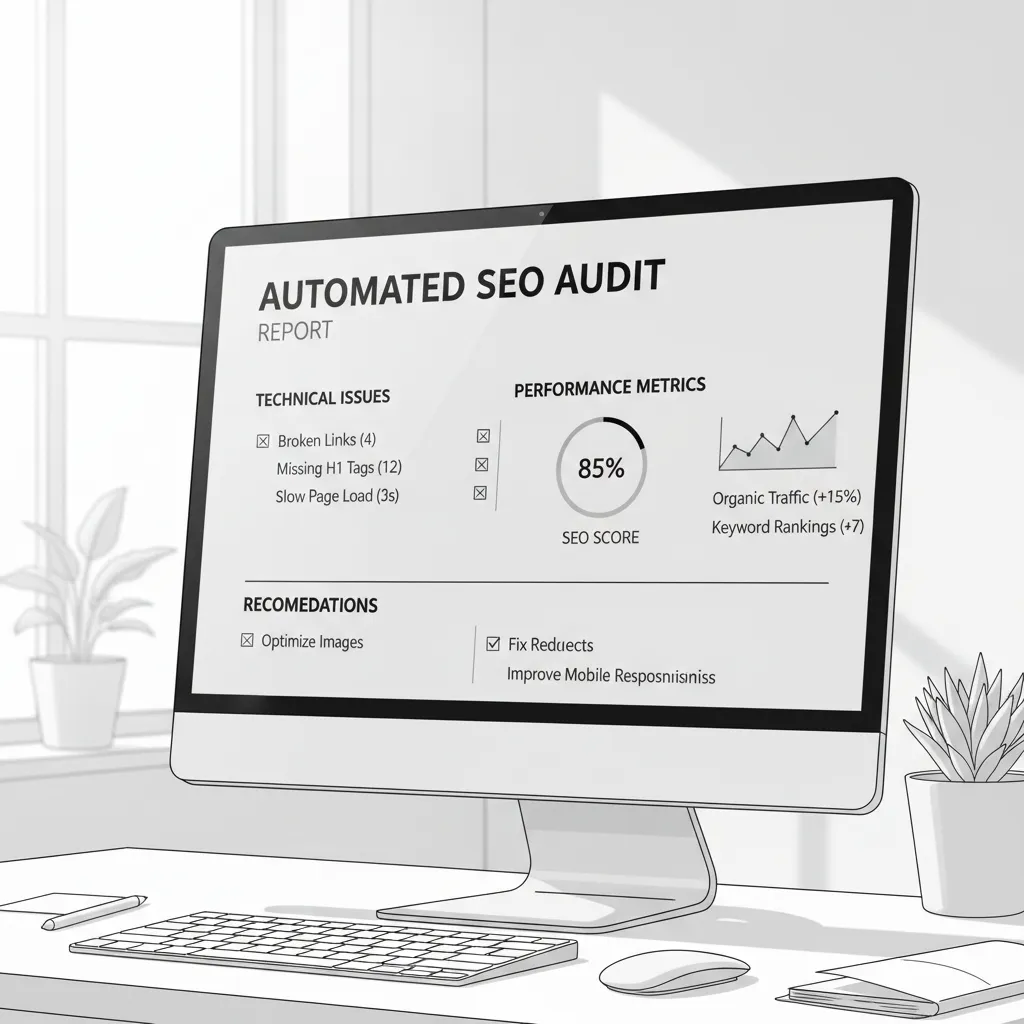
The automation advantage extends beyond time savings. Human auditors typically examine 50-100 pages manually, while automated SEO audit tools crawl entire sites—often thousands of pages—in minutes. This comprehensive coverage reveals patterns and issues that manual processes miss entirely.
Key features distinguish professional-grade automated SEO audit tools from basic checkers. Advanced platforms provide crawl budget optimization, JavaScript rendering analysis, Core Web Vitals monitoring, and structured data validation. These capabilities directly address Google's ranking factors and technical requirements.
Enterprise organizations particularly benefit from SEO automation software because they handle complex site architectures, multiple domains, and international implementations. The tools track changes across development cycles, ensuring new deployments don't introduce SEO regressions.
Benefits of Using Automated Tools
Automated SEO audit tools eliminate the bottleneck of manual analysis that constrains most optimization programs. Teams can audit competitor sites, track algorithm impact, and identify optimization opportunities without dedicating weeks to data collection.
Real-time monitoring capabilities transform how organizations respond to SEO issues. Instead of quarterly audits that discover problems months after they occur, automated SEO audit tools provide immediate alerts when crawl errors, broken links, or performance degradations affect site health.
The data consistency automated tools provide enables accurate trend analysis and performance measurement. Manual audits introduce variability based on who performs them and when, while automated SEO audit tools apply identical criteria across all analyses.
Cost efficiency represents another significant advantage. A single automated SEO audit tool subscription typically costs less than one comprehensive manual audit from an agency, while providing ongoing monitoring that manual processes cannot match.
| Audit Type | Time Required | Pages Analyzed | Cost per Audit | Frequency Possible |
|---|---|---|---|---|
| Manual Audit | 2-4 weeks | 50-100 pages | $5,000-$15,000 | Quarterly |
| Automated Tools | 2-6 hours | Unlimited | $100-$500/month | Daily |
2. Top Automated SEO Audit Tools for 2026
The automated SEO audit tools landscape has evolved dramatically, with platforms incorporating AI-powered analysis, predictive insights, and workflow automation. Based on comprehensive testing and industry adoption, these platforms lead the market in 2026.

Platform selection depends on specific use cases, team size, and technical requirements. Enterprise organizations need different capabilities than small businesses, while agencies require multi-client management features that in-house teams don't prioritize.
The most effective automated SEO audit tools combine technical analysis with actionable recommendations. Raw data without context wastes time, while platforms that translate findings into prioritized task lists accelerate implementation.
Ahrefs: The Backlink Analysis Powerhouse
Ahrefs operates the industry's largest backlink index, crawling over 8 billion pages daily to maintain the most comprehensive link database available. This foundation makes their automated SEO audit tools particularly effective for competitive analysis and link-building opportunities.
The Site Audit feature crawls up to 500,000 pages per project, identifying over 100 different SEO issues including broken links, duplicate content, missing meta tags, and page speed problems. The tool prioritizes issues by potential impact, helping teams focus on changes that drive results.
Ahrefs excels at tracking ranking changes and correlating them with technical issues. When rankings drop, the platform can identify whether technical problems, lost backlinks, or content changes caused the decline. This diagnostic capability accelerates problem resolution significantly.
The Content Gap analysis reveals pages where competitors rank but your site doesn't, while the automated SEO audit tools identify technical barriers preventing your content from competing effectively. This combination of opportunity identification and technical optimization makes Ahrefs particularly valuable for competitive industries.
Pricing starts at $129 monthly for the Lite plan, with enterprise options available for larger organizations requiring advanced features and higher crawl limits.
SEMrush: The All-in-One Solution
SEMrush positions itself as a comprehensive digital marketing platform, with automated SEO audit tools forming one component of an integrated suite. This approach benefits teams managing SEO alongside PPC, social media, and content marketing campaigns.
The Site Audit tool examines technical SEO, content quality, and user experience factors across unlimited pages. Recent analysis shows SEMrush's AI Toolkit provides advanced visibility tracking and brand citation monitoring, making it particularly effective for enterprise brands.
SEMrush automated SEO audit tools include unique features like the SEO Writing Assistant, which optimizes content in real-time, and the Listing Management tool for local SEO. These integrated capabilities reduce the need for multiple platform subscriptions.
The competitive intelligence features distinguish SEMrush from purely technical audit tools. Teams can analyze competitor strategies, identify their top-performing content, and discover the technical optimizations driving their success.
The platform's reporting capabilities excel in agency environments, with white-label options and client-specific dashboards that automated SEO audit tools can populate automatically. This reduces manual reporting time while maintaining professional presentation standards.
Screaming Frog: Technical SEO Audits
Screaming Frog focuses exclusively on technical SEO analysis, making their automated SEO audit tools the preferred choice for developers and technical SEO specialists. The platform crawls websites like search engines do, identifying issues that affect crawlability and indexation.
The SEO Spider tool analyzes page titles, meta descriptions, response codes, redirects, and internal linking structures with exceptional detail. Unlike web-based tools, the desktop application provides complete control over crawl parameters and data export options.
Advanced features include JavaScript rendering analysis, which reveals how search engines see dynamic content, and custom extraction capabilities for analyzing structured data, hreflang implementation, and pagination markup. These technical capabilities make Screaming Frog automated SEO audit tools particularly valuable for complex sites.
The tool excels at large-scale analysis, efficiently crawling sites with millions of pages while maintaining detailed reporting. The data export capabilities integrate seamlessly with other analytics platforms and automated SEO audit tools.
Screaming Frog offers a free version for sites under 500 pages, with the paid version at £149 annually providing unlimited crawling and advanced features.
3. Implementing Automated SEO Audit Tools Effectively
Successful implementation of automated SEO audit tools requires strategic planning beyond simple tool selection. Teams must establish audit schedules, define success metrics, and create workflows that translate insights into actionable improvements.

The implementation process begins with baseline establishment. Before automated SEO audit tools can measure improvement, they need comprehensive initial scans that document current site health, performance metrics, and technical issues. This baseline enables accurate progress tracking.
Integration with existing workflows determines whether automated SEO audit tools accelerate optimization or create additional administrative overhead. The most effective implementations connect audit findings directly to automated SEO workflows, ensuring issues receive appropriate prioritization and tracking.
Setting Up Your First Audit
Initial audit configuration significantly impacts the value automated SEO audit tools provide. Teams should define crawl parameters based on site architecture, prioritize issue categories by business impact, and establish alert thresholds that trigger immediate attention.
Crawl configuration requires understanding your site's structure and technical requirements. E-commerce sites need different analysis parameters than content sites, while international sites require hreflang validation and regional performance monitoring that automated SEO audit tools can provide.
Goal definition ensures audit findings align with business objectives. Teams focused on technical performance need different metrics than those prioritizing content optimization, and automated SEO audit tools should be configured accordingly.
The initial audit typically reveals numerous issues accumulated over time. Rather than attempting to fix everything simultaneously, successful teams use automated SEO audit tools to prioritize issues by potential impact and implementation difficulty.
Interpreting Audit Results
Effective interpretation transforms audit data into strategic insights that drive optimization decisions. Automated SEO audit tools generate extensive reports, but success depends on focusing on actionable findings rather than comprehensive data review.
Issue prioritization should consider both technical severity and business impact. A broken canonical tag on your highest-traffic page requires immediate attention, while missing alt text on rarely-viewed images can wait for systematic cleanup.
Trend analysis reveals whether site health improves or degrades over time. Automated SEO audit tools excel at tracking changes across audit cycles, helping teams understand whether optimization efforts produce measurable improvements.
The most valuable insights often come from correlating audit findings with performance data. When automated SEO audit tools identify technical issues coinciding with traffic drops, teams can prioritize fixes that directly impact business metrics.
4. Case Studies Showcasing the Impact of Automated Audits
Real-world implementations demonstrate how automated SEO audit tools translate technical analysis into business results. These case studies illustrate the strategic approaches that maximize tool effectiveness across different organization types and industries.
Success patterns emerge across different implementation approaches. Organizations that integrate automated SEO audit tools into development workflows prevent issues rather than fixing them reactively. This proactive approach delivers superior results compared to periodic audit-and-fix cycles.
The most successful implementations combine automated SEO audit tools with human expertise. While tools identify issues efficiently, strategic prioritization and implementation planning require human judgment that considers business context and resource constraints.
Case Study: SMB Success Story
A growing software company with 50 employees struggled to maintain SEO performance while rapidly expanding their content library. Manual audits consumed weeks of their marketing team's time while missing critical issues that affected rankings.
The company implemented automated SEO audit tools that revealed over 200 technical issues across their 500-page site. The most impactful problems included broken internal links, duplicate meta descriptions, and slow-loading product pages that automated SEO audit tools identified immediately.
Within three months of systematic issue resolution guided by automated SEO audit tools, organic traffic increased 45% and conversion rates improved 23%. The automation enabled their two-person marketing team to focus on content strategy rather than technical diagnostics.
The ongoing monitoring provided by automated SEO audit tools prevented regression during their website redesign, maintaining SEO performance through a complex technical migration that historically would have caused ranking losses.
Enterprise-Level Implementation
A Fortune 500 retailer with over 10,000 product pages needed automated SEO audit tools capable of monitoring multiple domains, international sites, and complex e-commerce functionality. Manual audits couldn't scale to their operational requirements.
Their automated SEO audit tools implementation included custom dashboards for different teams, automated alerting for critical issues, and integration with their development pipeline. This systematic approach enabled proactive issue prevention rather than reactive fixing.
The results included 60% reduction in technical SEO issues, 35% improvement in Core Web Vitals scores, and $2.3 million additional annual revenue attributed to improved organic visibility. The automated SEO audit tools paid for themselves within the first quarter.
Long-term benefits extended beyond immediate performance improvements. The continuous monitoring provided by automated SEO audit tools enabled data-driven optimization decisions and prevented costly mistakes during major site updates.
Advanced Features Transforming SEO Auditing
The latest automated SEO audit tools incorporate artificial intelligence, machine learning, and predictive analytics that extend far beyond traditional crawling and analysis. These advanced features represent the future of SEO optimization and competitive advantage.
AI-powered automated SEO audit tools can now predict which technical issues will likely impact rankings before Google's algorithms penalize them. This predictive capability enables proactive optimization that maintains competitive positioning.
Machine learning algorithms analyze historical data to identify patterns between technical changes and performance outcomes. Automated SEO audit tools use these insights to prioritize fixes based on expected impact rather than theoretical severity.
Integration capabilities connect automated SEO audit tools with content management systems, analytics platforms, and development workflows. This connectivity enables real-time optimization and prevents issues from reaching production environments.
AI-Powered Issue Detection
Modern automated SEO audit tools leverage artificial intelligence to identify subtle issues that traditional rule-based systems miss. AI algorithms analyze content quality, user experience signals, and technical implementation to provide comprehensive optimization recommendations.
Natural language processing capabilities enable automated SEO audit tools to evaluate content relevance, readability, and semantic optimization. These insights guide content improvements that enhance both user experience and search engine visibility.
Computer vision analysis examines image optimization, alt text quality, and visual content performance. Automated SEO audit tools can identify images that slow page loading or lack proper optimization for search visibility.
The AI-powered features continue evolving as automated SEO audit tools incorporate new ranking factors and algorithm changes. This adaptive capability ensures optimization strategies remain current with search engine requirements.
Predictive Analytics and Trend Forecasting
Advanced automated SEO audit tools use predictive analytics to forecast the impact of proposed changes before implementation. Teams can model different optimization scenarios and select approaches that maximize expected results.
Trend forecasting capabilities identify emerging SEO opportunities and threats based on algorithm updates, competitor activities, and industry changes. Automated SEO audit tools translate these insights into actionable recommendations.
Performance modeling helps teams understand how technical improvements will affect different page types, user segments, and conversion paths. This granular analysis enables targeted optimization that delivers measurable business impact.
The predictive features become more accurate as automated SEO audit tools accumulate historical data and learn from optimization outcomes. Long-term users benefit from increasingly sophisticated insights and recommendations.
Integration Strategies for Maximum ROI
Successful automated SEO audit tools implementation requires integration with existing marketing technology stacks, development workflows, and business processes. Isolated tools provide limited value compared to platforms that connect with organizational systems.
API integrations enable automated SEO audit tools to share data with analytics platforms, content management systems, and project management tools. This connectivity eliminates manual data transfer and ensures insights reach decision-makers promptly.
Workflow automation connects audit findings directly to task assignment, progress tracking, and completion verification. Teams can establish processes where AI for SEO systems create tickets, assign priorities, and monitor resolution status automatically.
Custom reporting capabilities ensure stakeholders receive relevant information in formats that support their decision-making processes. Automated SEO audit tools should provide executive summaries, technical details, and progress tracking appropriate for different audience needs.
Development Pipeline Integration
The most advanced implementations integrate automated SEO audit tools directly into development and deployment pipelines. This approach prevents SEO issues from reaching production environments and maintains optimization standards automatically.
Pre-deployment scanning enables automated SEO audit tools to identify potential issues in staging environments. Development teams receive immediate feedback about SEO implications of their changes before public release.
Continuous monitoring during development cycles ensures new features and content additions maintain SEO best practices. Automated SEO audit tools can block deployments that introduce critical issues or performance regressions.
Post-deployment validation confirms that changes don't negatively impact SEO performance. Automated SEO audit tools monitor key metrics and alert teams immediately if issues arise after updates.
Content Strategy Alignment
Effective automated SEO audit tools integration extends beyond technical analysis to support content strategy and optimization. The tools should identify content gaps, optimization opportunities, and performance trends that guide editorial decisions.
Content performance analysis reveals which pages drive the most organic traffic, convert visitors effectively, and maintain strong search visibility. Automated SEO audit tools provide insights that inform content creation and optimization priorities.
Competitive content analysis identifies opportunities where competitors outrank your content despite inferior technical implementation. Automated SEO audit tools can reveal the factors driving their success and suggest improvement strategies.
Editorial workflow integration ensures content creators receive SEO guidance during the creation process rather than after publication. Automated SEO audit tools can provide real-time optimization suggestions that improve content effectiveness.
Future Trends in Automated SEO Auditing
The automated SEO audit tools landscape continues evolving as search engines incorporate new ranking factors, user behavior patterns change, and AI capabilities advance. Understanding these trends enables strategic tool selection and implementation planning.
Voice search optimization represents a growing focus area for automated SEO audit tools. Platforms increasingly analyze content for natural language patterns, question-answer formats, and conversational search compatibility.
Core Web Vitals and page experience signals receive enhanced attention in modern automated SEO audit tools. Real user monitoring, performance optimization recommendations, and user experience analysis become standard features.
AI-generated content detection and optimization capabilities emerge as automated SEO audit tools help teams balance AI assistance with human creativity. These features ensure content maintains quality and authenticity standards.
Emerging Technologies and Capabilities
Machine learning algorithms enable automated SEO audit tools to provide increasingly sophisticated insights and recommendations. These systems learn from optimization outcomes and improve their guidance over time.
Natural language processing advances allow automated SEO audit tools to evaluate content quality, relevance, and user intent alignment with greater accuracy. This capability guides content optimization beyond keyword density and technical factors.
Real-time optimization features enable automated SEO audit tools to suggest improvements as content creators work. This immediate feedback accelerates optimization and prevents issues from requiring later correction.
Cross-platform analysis capabilities help automated SEO audit tools understand how SEO performance affects social media visibility, email marketing effectiveness, and overall digital marketing success.
Measuring Success with Automated SEO Audit Tools
Effective measurement strategies demonstrate the business value automated SEO audit tools provide and guide optimization priorities. Success metrics should align with organizational goals and provide actionable insights for continuous improvement.
Technical health metrics track the resolution of issues identified by automated SEO audit tools. These include crawl error reduction, page speed improvements, and mobile usability enhancements that directly impact search engine visibility.
Performance metrics correlate technical improvements with business outcomes. Organic traffic growth, ranking improvements, and conversion rate increases demonstrate the real-world impact of automated SEO audit tools implementation.
Efficiency metrics quantify the operational benefits automated SEO audit tools provide. Time savings, cost reductions, and resource allocation improvements justify tool investments and guide optimization strategies.
| Metric Category | Key Performance Indicators | Measurement Frequency | Success Targets |
|---|---|---|---|
| Technical Health | Crawl errors, page speed, mobile usability | Weekly | 90% reduction in critical issues |
| Search Performance | Organic traffic, rankings, click-through rates | Monthly | 25% improvement in 6 months |
| Operational Efficiency | Time savings, cost reduction, resource allocation | Quarterly | 50% reduction in manual audit time |
| Business Impact | Conversion rates, revenue attribution, ROI | Monthly | 15% improvement in organic conversions |
Conclusion
Automated SEO audit tools have transformed from nice-to-have utilities into essential platforms that determine competitive success in digital marketing. The leading solutions combine comprehensive technical analysis with AI-powered insights that accelerate optimization and prevent costly mistakes.
The strategic advantage automated SEO audit tools provide extends beyond time savings to include predictive capabilities, integration opportunities, and scalability that manual processes cannot match. Organizations that implement these tools effectively gain sustainable competitive advantages in search visibility and user experience.
Success with automated SEO audit tools requires strategic selection, proper implementation, and ongoing optimization of processes and workflows. The platforms work best when integrated into broader marketing technology stacks and aligned with business objectives rather than used as isolated diagnostic tools.
Key takeaways for implementing automated SEO audit tools effectively:
- Choose platforms that match your technical requirements and team capabilities - Enterprise organizations need different features than small businesses
- Integrate tools with existing workflows and systems - Isolated tools provide limited value compared to connected platforms
- Focus on actionable insights rather than comprehensive data - Prioritize fixes that drive measurable business impact
- Establish baseline measurements and track progress systematically - Success requires consistent monitoring and optimization
- Combine automation with human expertise - Tools identify issues efficiently, but strategic decisions require human judgment
- Plan for long-term evolution and capability expansion - The best automated SEO audit tools continue improving through AI and machine learning
The future belongs to marketing teams that leverage autonomous SEO solutions to scale optimization efforts while maintaining quality and strategic focus. As search engines become more sophisticated and competitive pressures increase, these platforms provide the speed and accuracy required for sustainable success.
Ready to transform your SEO operations with advanced automation? Explore how AutoRanq's AI-powered platform can streamline your audit processes, identify optimization opportunities automatically, and scale your content strategy with autonomous systems that think, plan, and execute complex workflows independently.