Why is SEO so time consuming? Unpacking the complexities
Why is SEO so time consuming? Unpacking the complexities SEO is time-consuming because it requires coordinating multiple complex disciplines—keyword research,...
Why is SEO so time consuming? Unpacking the complexities
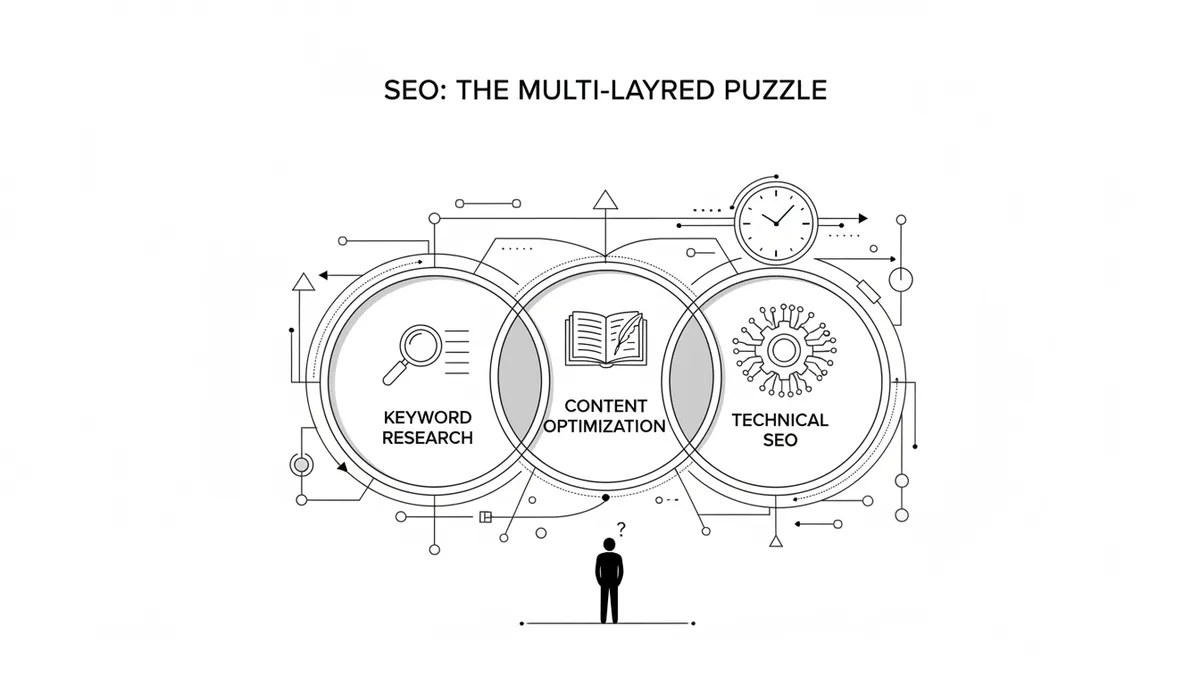
SEO is time-consuming because it requires coordinating multiple complex disciplines—keyword research, content optimization, technical audits, and ongoing performance monitoring—each demanding specialized expertise and continuous refinement. The manual nature of most SEO tasks, combined with constantly evolving search algorithms, creates a perfect storm of time-intensive work that can overwhelm even experienced marketing teams.
You've probably felt this frustration firsthand. Your content calendar is packed. Your keyword research spreadsheets are overflowing. Your technical audit backlog keeps growing. Meanwhile, your competitors seem to publish optimized content effortlessly while you're still debugging meta tags from last month.
This isn't a reflection of your skills or strategy. It's the reality of modern SEO: a discipline that has evolved from simple keyword stuffing into a sophisticated orchestration of technical, creative, and analytical tasks. Each component requires different tools, different expertise, and different timelines to execute properly.
The good news? Understanding exactly why SEO consumes so much time is the first step toward reclaiming it. When you can identify the specific bottlenecks in your workflow, you can start building systems that multiply your output without sacrificing quality.
The intricate nature of SEO tasks
Modern SEO operates across three distinct disciplines, each with its own complexity and time requirements. You're not just optimizing content—you're managing a multi-layered system where technical infrastructure, content strategy, and external relationships must work in harmony.
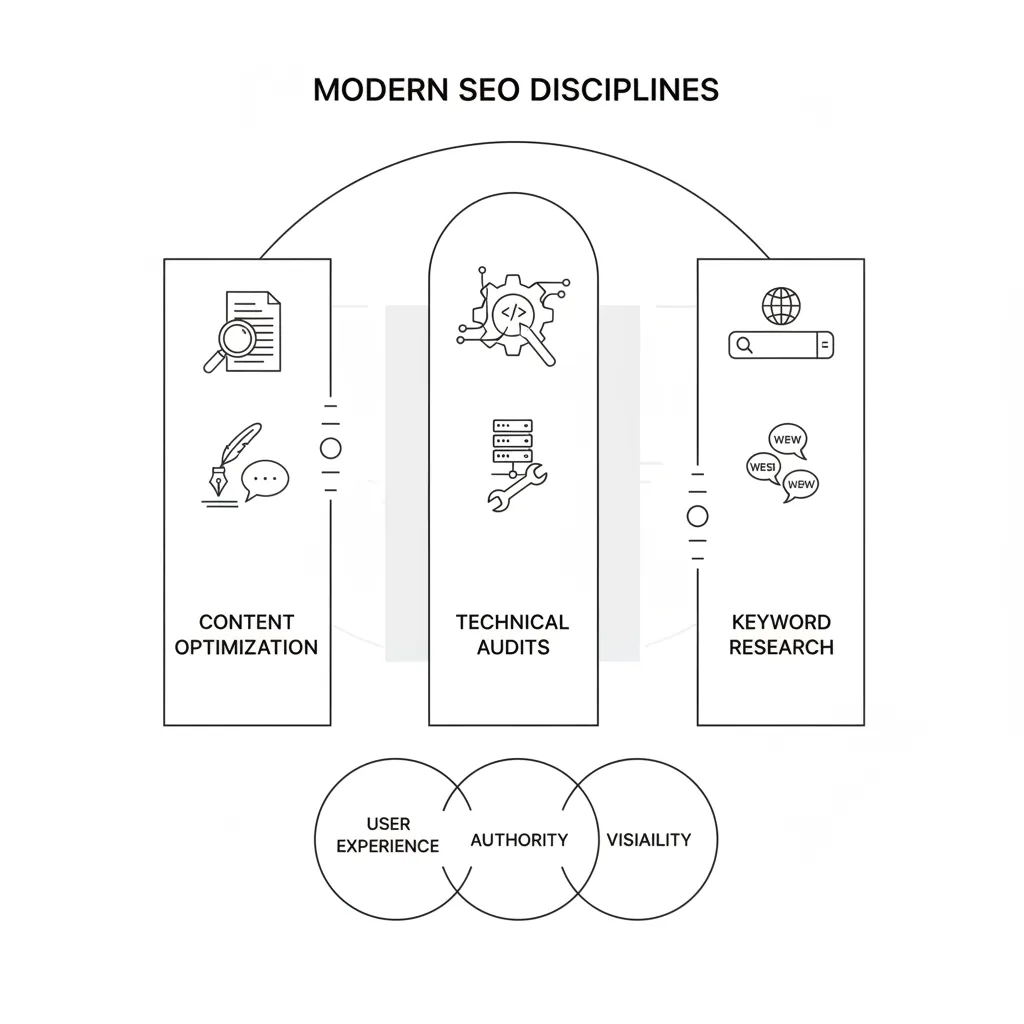
The challenge multiplies when you consider that each discipline requires different skill sets. Your technical SEO specialist understands server configurations and Core Web Vitals. Your content team knows how to craft compelling narratives that satisfy search intent. Your link building manager excels at relationship development and outreach strategy.
Coordinating these different expertise areas creates natural friction points. Technical fixes might break content formatting. Content updates might conflict with existing link anchor text strategies. Performance optimizations might impact user experience elements that drive conversions.
On-page SEO tasks
On-page optimization seems straightforward until you dive into the details. Each page requires title tag optimization based on keyword research, meta description crafting that balances search appeal with click-through rates, and header structure that serves both users and crawlers.
Content optimization goes deeper than keyword placement. You're analyzing search intent, structuring information to match featured snippet formats, and ensuring internal linking supports your site's topical authority. Every paragraph needs to serve both human readers and search algorithms.
The time investment compounds when you consider ongoing maintenance. Google's algorithm updates can shift ranking factors overnight, requiring page-by-page reviews and adjustments across your entire site.
Off-page SEO tasks
Link building represents one of the most time-intensive aspects of why SEO is so time consuming. Quality backlink acquisition requires prospect research, personalized outreach, relationship building, and ongoing relationship maintenance.
Each potential link opportunity demands individual attention. You're researching domain authority, analyzing existing content for natural link placement opportunities, crafting personalized pitch emails, and following up with prospects who don't respond immediately.
Social media amplification adds another layer of complexity. Your content needs promotion across multiple platforms, each with different audience expectations, posting schedules, and engagement strategies. Managing these relationships and maintaining consistent brand voice across channels requires dedicated time investment.
Technical SEO tasks
Technical SEO audits reveal issues that can take weeks to resolve properly. Site speed optimization might require image compression, server configuration changes, and code refactoring. Mobile compatibility issues might demand responsive design overhauls.
Crawl error fixes often uncover deeper architectural problems. Broken internal links might indicate navigation structure issues. Duplicate content problems might require URL canonicalization strategies that impact your entire site hierarchy.
The diagnostic process itself consumes significant time. Tools like Google PageSpeed Insights and Search Console provide data, but interpreting results and prioritizing fixes requires expertise and careful analysis.
Manual processes that consume time
The manual nature of most SEO workflows creates the biggest time drains in modern marketing operations. Every task requires human decision-making, from keyword selection to content optimization, creating bottlenecks that limit your team's output regardless of how hard they work.

These manual processes don't just consume time—they create quality inconsistencies. When every piece of content requires individual attention from research through optimization, maintaining consistent standards becomes increasingly difficult as volume demands increase.
The problem compounds when you consider context switching. Your team jumps between keyword research tools, content management systems, analytics platforms, and optimization checklists throughout each day. This constant tool switching creates cognitive overhead that reduces overall productivity.
Keyword research
Manual keyword research represents one of the clearest examples of why SEO is so time consuming. Each topic requires comprehensive analysis across multiple tools, competitor research, search intent evaluation, and difficulty assessment.
The process starts with seed keyword identification, then expands through related terms, long-tail variations, and semantic keyword clusters. Each keyword requires volume analysis, competition assessment, and relevance evaluation for your specific business context.
Validation adds another time layer. You're checking actual search results to understand what Google considers relevant for each term, analyzing featured snippet opportunities, and evaluating whether your content can realistically compete in each keyword's landscape.
Content creation and optimization
Content creation timelines stretch when SEO requirements intersect with quality standards. Writers need keyword research briefs, competitor analysis, and optimization guidelines before drafting begins. Editors need SEO checklists alongside traditional editing responsibilities.
Optimization requires multiple review cycles. Initial drafts need keyword integration analysis. Revised versions need readability scoring and technical SEO validation. Published content needs performance monitoring and iterative improvements based on ranking data.
The feedback loop between content performance and optimization creates ongoing time commitments. Underperforming content requires diagnosis, revision planning, and republishing workflows that can consume weeks of effort per piece.
| SEO Task Category | Manual Time Investment | Automation Potential | Quality Impact |
|---|---|---|---|
| Keyword Research | 4-6 hours per topic cluster | 70% automatable | High consistency improvement |
| Content Optimization | 2-3 hours per article | 60% automatable | Reduced human error |
| Technical Audits | 8-12 hours per site review | 80% automatable | More comprehensive coverage |
| Performance Monitoring | 3-4 hours weekly | 90% automatable | Real-time insights |
The role of technology in streamlining SEO
Technology transformation represents the most significant opportunity to address why SEO is so time consuming. AI-powered automation can handle repetitive tasks, pattern recognition, and data analysis that currently consume the majority of your team's time.
Automation tools for SEO
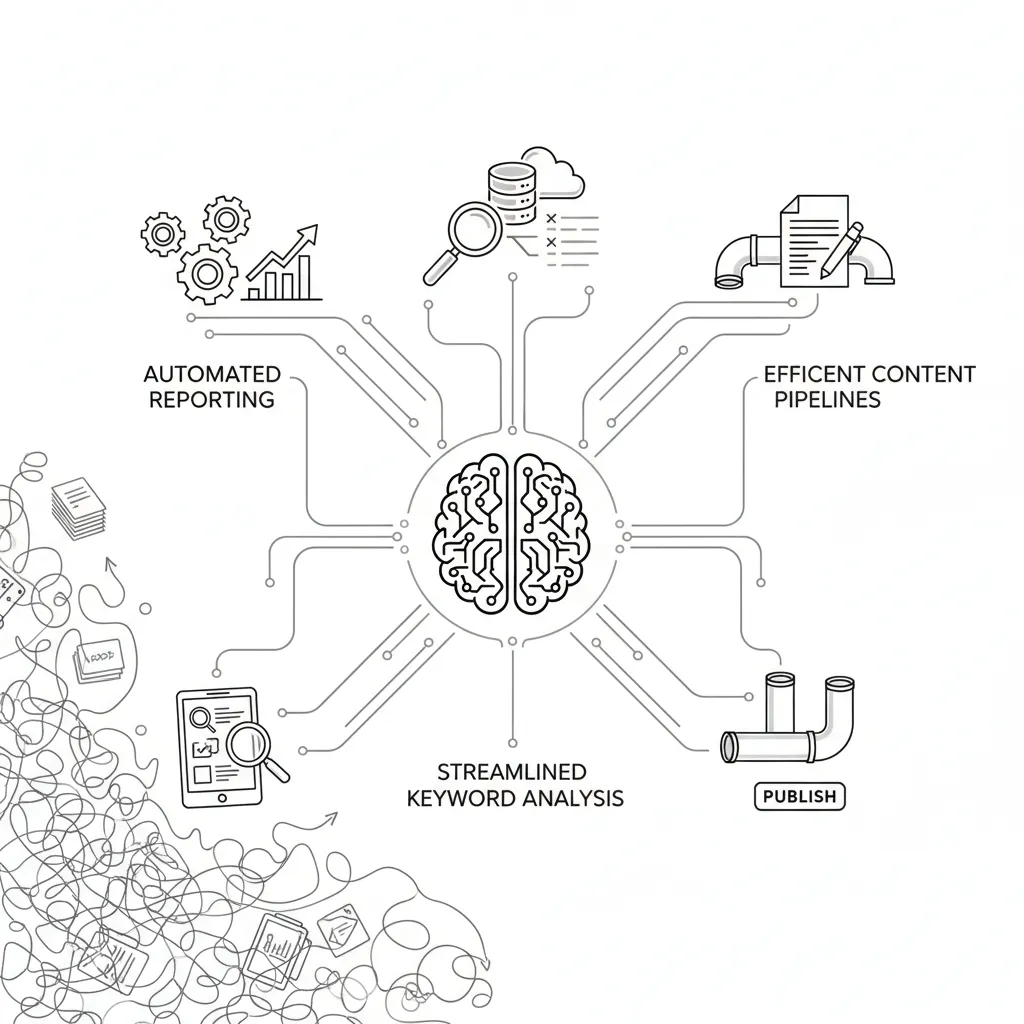
SEO automation platforms like AutoRanq can eliminate the manual bottlenecks that make SEO so time consuming. Automated keyword tracking monitors hundreds of terms simultaneously, providing real-time ranking updates without manual checking across multiple tools.
Content optimization automation analyzes existing content against ranking factors, suggests improvements, and can implement technical SEO elements automatically. This removes the tedious checklist validation that typically follows content creation.
Workflow automation connects different SEO tasks into seamless processes. Keyword research automatically feeds into content brief generation. Published content automatically triggers performance monitoring. Ranking changes automatically generate optimization recommendations.
Integrating AI into workflows
AI integration transforms SEO from reactive to predictive. Machine learning algorithms can identify emerging keyword opportunities before competitors discover them, suggest content topics based on search trend analysis, and optimize content for multiple ranking factors simultaneously.
Real-time optimization represents a major advantage over manual processes. AI can adjust meta descriptions based on click-through rate performance, modify internal linking based on user behavior data, and update content recommendations as search algorithms evolve.
The learning aspect of AI systems means efficiency improves over time. Each optimization cycle teaches the system more about what works for your specific site, audience, and industry, creating compound improvements in both speed and quality.
Breaking down time investment by SEO activity
Understanding exactly where your time goes reveals the specific bottlenecks that make SEO so time consuming. Most teams dramatically underestimate the hidden time costs in context switching, tool management, and coordination between different SEO disciplines.
Research from marketing operations teams shows that 40% of SEO time gets consumed by administrative tasks—updating spreadsheets, copying data between tools, and coordinating team communications. Only 60% goes toward actual optimization work.
This imbalance explains why increasing team size doesn't proportionally increase SEO output. Adding more people often increases coordination overhead faster than it increases productive capacity. The solution lies in systematizing workflows rather than expanding headcount.
Time allocation across SEO functions
Keyword research typically consumes 25-30% of total SEO time when done manually. This includes initial discovery, competition analysis, search intent research, and ongoing monitoring for ranking changes and new opportunities.
Content optimization accounts for another 35-40% of time investment. Writing, editing, technical optimization, and performance monitoring create extended timelines that stretch from initial concept through ongoing refinement.
Technical SEO and link building split the remaining time allocation. Technical audits happen less frequently but require intensive effort when problems emerge. Link building requires consistent daily effort but with longer feedback loops for measuring success.
Hidden time costs in SEO workflows
Tool switching represents a massive hidden cost in SEO operations. Teams typically use 8-12 different platforms for keyword research, content optimization, technical audits, and performance monitoring. Each tool switch requires mental context switching and data transfer.
Quality assurance adds significant time overhead that many teams don't track properly. Content review cycles, technical validation, and performance verification can double the actual time investment per piece of content.
Coordination between team members creates additional friction. When technical SEO specialists, content creators, and link builders work in isolation, integration requires extra communication cycles and revision rounds that extend project timelines.
Case studies of successful SEO strategies
Real-world implementations demonstrate how addressing the question of why SEO is so time consuming can transform marketing operations. These case studies show specific automation strategies, time savings achieved, and quality improvements realized.
Company A: Efficient keyword management
A B2B SaaS company with 50 employees reduced keyword research time from 6 hours per topic cluster to 45 minutes by implementing AI-powered keyword discovery and clustering. Their marketing team went from tracking 200 keywords manually to monitoring 2,000 keywords automatically.
The automation system identified long-tail opportunities that manual research missed, leading to 180% increase in organic traffic within four months. Content creation accelerated because writers received comprehensive keyword briefs instead of basic target terms.
Quality improvements accompanied the speed gains. Automated keyword clustering revealed semantic relationships that improved content topical authority. Competitive gap analysis identified content opportunities that manual research had overlooked.
Company B: Streamlined content creation
An online store automated their content brief generation and optimization workflow, reducing time from content concept to publication from 3 weeks to 5 days. Their team increased monthly content output from 8 articles to 32 without expanding headcount.
AI-generated content briefs included keyword clusters, competitor analysis, and optimization guidelines that previously required manual research. Writers focused on creating compelling narratives while automation handled technical SEO requirements.
Performance improvements exceeded expectations. Automated optimization led to 65% of new content ranking in the top 10 within 60 days, compared to 23% success rate with manual optimization processes.
The evolution of SEO complexity
Understanding why SEO is so time consuming requires recognizing how dramatically the discipline has evolved. What started as simple keyword optimization has become a sophisticated integration of technical infrastructure, content strategy, user experience optimization, and emerging AI platform considerations.
Algorithm sophistication has increased exponentially. Google's RankBrain, BERT, and MUM updates require content that demonstrates expertise, authority, and trustworthiness through comprehensive topic coverage rather than keyword density manipulation.
The rise of answer engines and AI overviews adds new optimization targets beyond traditional search results. Your content now needs to perform across Google Search, AI chatbots, voice assistants, and social media discovery algorithms simultaneously.
Expanding optimization requirements
Core Web Vitals introduced technical performance requirements that intersect with content strategy. Page speed optimization affects user experience, which influences engagement metrics that impact rankings. Every content decision now has technical implications.
Entity-based SEO requires understanding semantic relationships between topics, brands, and concepts. Content must demonstrate topical authority through comprehensive coverage rather than isolated keyword targeting. This depth requirement multiplies research and creation time.
Multi-platform optimization means your content strategy must work across search engines, social platforms, and AI discovery systems. Each platform has different ranking factors, user expectations, and content format requirements.
Future complexity trends
AI-powered search experiences will likely increase rather than decrease SEO complexity. Optimization for large language models requires different content structures, citation formats, and authority signals compared to traditional search optimization.
Personalization algorithms mean the same content might need different optimization approaches for different user segments. Dynamic content optimization based on user behavior and search context will become increasingly important.
Real-time ranking factors will require more responsive optimization strategies. Static content optimization will give way to dynamic systems that adjust based on performance data, user feedback, and algorithm updates.
Building efficient SEO systems
The solution to why SEO is so time consuming lies in building systems that scale human expertise rather than replacing it. Effective SEO operations combine automation for predictable tasks with human judgment for strategic decisions.
Systematic approaches start with workflow mapping. Document every step in your current SEO processes, identify bottlenecks and repetitive tasks, then design automation solutions that eliminate manual work without sacrificing quality control.
Integration between tools and team members creates efficiency multipliers. When keyword research automatically feeds content briefs, and content publication automatically triggers performance monitoring, you eliminate the coordination overhead that consumes so much time.
Automation implementation strategy
Start automation with high-volume, low-risk tasks like rank tracking and technical monitoring. These provide immediate time savings and demonstrate ROI before expanding to more complex content optimization automation.
Establish quality control checkpoints that maintain human oversight where it matters most. Automated content optimization should generate recommendations for human review rather than making changes automatically without validation.
Build feedback loops that improve automation performance over time. Track which automated recommendations produce the best results, and use this data to refine algorithms and increase automation accuracy.
Team structure for efficiency
Organize teams around expertise areas rather than project silos. Technical SEO specialists can support multiple content teams simultaneously when automation handles routine optimization tasks. Content creators can focus on strategy and creativity when technical implementation is automated.
Cross-training reduces bottlenecks when team members understand adjacent disciplines. Content creators who understand technical SEO basics can make better optimization decisions. Technical specialists who understand content strategy can build better automation systems.
Continuous learning ensures teams stay current with algorithm updates and new optimization opportunities. Regular training on automation tools and SEO developments maintains competitive advantage as the discipline evolves.
Measuring SEO efficiency improvements
Tracking the right metrics reveals whether your efforts to address why SEO is so time consuming are actually working. Time savings mean nothing if quality decreases or if automation creates new bottlenecks elsewhere in your workflow.
Efficiency metrics should include time per task, quality scores, and output volume. But also track leading indicators like team satisfaction, error rates, and strategic project capacity. The goal is freeing human expertise for high-value work, not just reducing time investment.
ROI measurement requires tracking both cost savings and performance improvements. Automation tools cost money, but they should generate returns through increased output, improved quality, and team capacity for strategic initiatives that drive business growth.
Key performance indicators
Time-to-publish measures how quickly content moves from concept to live publication. Effective automation should reduce this timeline while maintaining or improving content quality scores and optimization completeness.
Content performance metrics show whether automated optimization actually improves rankings and traffic. Track ranking positions, organic traffic growth, and conversion rates to ensure efficiency gains translate to business results.
Team capacity indicators measure whether time savings enable strategic work. Monitor the percentage of time spent on routine tasks versus strategic planning, experimentation, and optimization innovation.
Long-term efficiency trends
Automation systems should show improving performance over time as machine learning algorithms adapt to your specific content and audience patterns. Track automation accuracy, recommendation quality, and manual override frequency.
Scalability metrics indicate whether your efficiency improvements can support business growth. Measure output per team member, quality consistency across increased volume, and system performance under higher content demands.
Competitive position tracking shows whether efficiency improvements translate to market advantage. Monitor ranking improvements, traffic growth rates, and content output compared to competitors in your space.
Understanding why SEO is so time consuming empowers you to build systems that multiply your team's impact without sacrificing the strategic thinking that drives real business results. The teams winning at SEO have stopped asking how to work faster and started asking how to work systematically smarter.
Conclusion
SEO is time consuming because it requires coordinating multiple complex disciplines—technical optimization, content creation, and relationship building—each with different timelines, tools, and expertise requirements. The manual nature of most SEO workflows creates bottlenecks that limit output regardless of team size or effort level.
The solution isn't working harder or hiring more specialists. It's building systems that automate predictable tasks while preserving human judgment for strategic decisions. Teams that successfully address why SEO is so time consuming focus on workflow automation rather than task automation.
Key takeaways for transforming your SEO operations:
- Audit your current time allocation - Track where your team actually spends time versus where you think they spend time. Hidden costs in tool switching and coordination often exceed actual optimization work.
- Automate high-volume, low-complexity tasks first - Rank tracking, technical monitoring, and basic optimization checks provide immediate time savings with minimal risk.
- Maintain quality control checkpoints - Automation should generate recommendations for human review, not replace human judgment entirely.
- Build integrated workflows - Connect keyword research to content creation to performance monitoring, eliminating manual data transfer between tools and team members.
- Measure efficiency improvements - Track time savings, quality scores, and output volume to ensure automation actually improves results rather than just reducing effort.
The teams that successfully scale SEO operations understand that efficiency comes from systems, not speed. When you address the root causes of why SEO is so time consuming, you free your expertise for the strategic work that actually moves the needle on business growth.